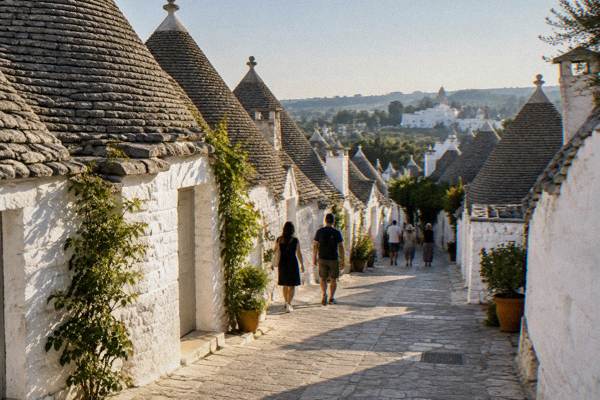
Alberobello From Lecce: Trulli In A Day
Alberobello sits about 114 km north-west of Lecce, a drive of roughly an hour and a half from Piazza Sant'Oronzo, and it is the one Puglia day trip that looks nothing like the baroque capital of Salento you started in.
Short answer
Alberobello is reachable from Lecce by train with a change (about 2h30 to 3h or more, from about 11 to 20 euro), by car in about 91 minutes, or on an organised day trip that pairs it with Ostuni and Polignano a Mare. The trulli district is compact enough to see in half a day.
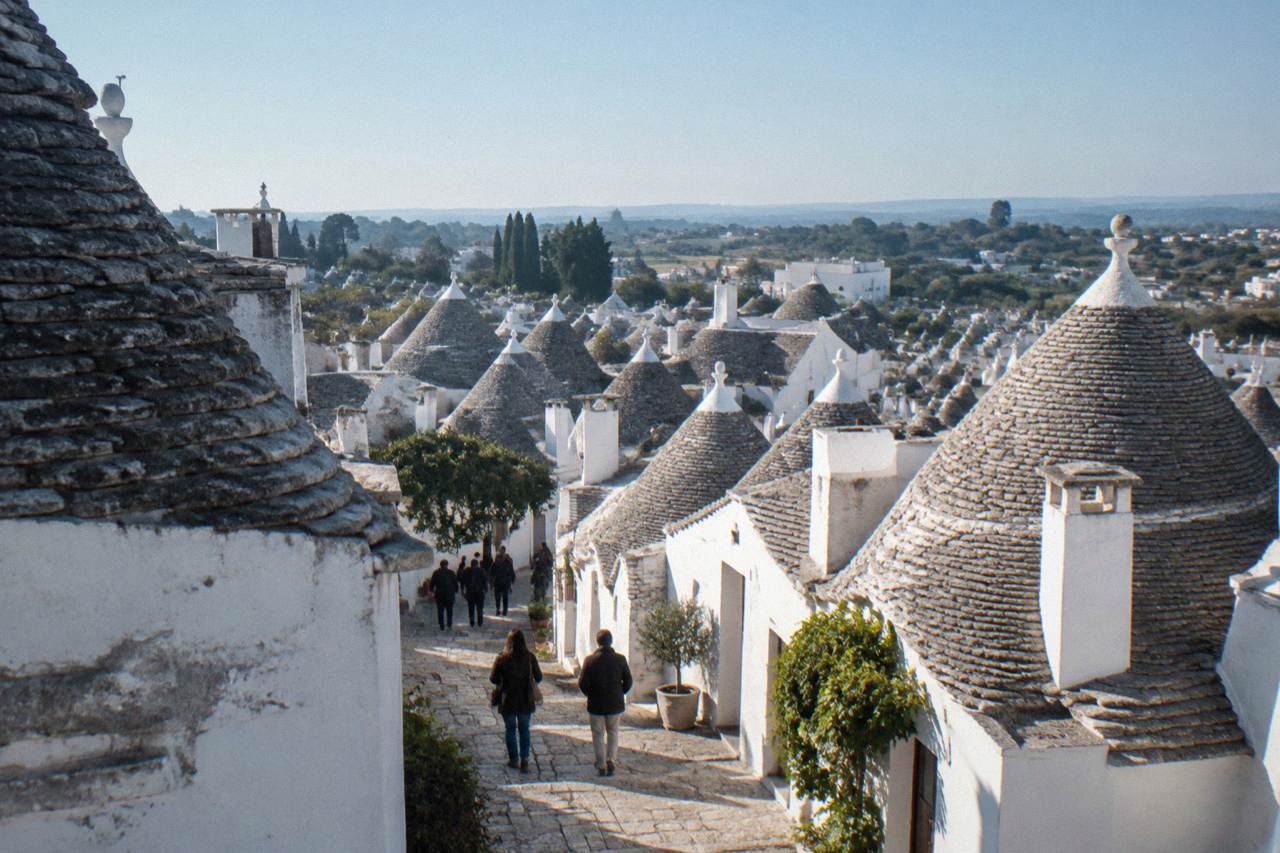
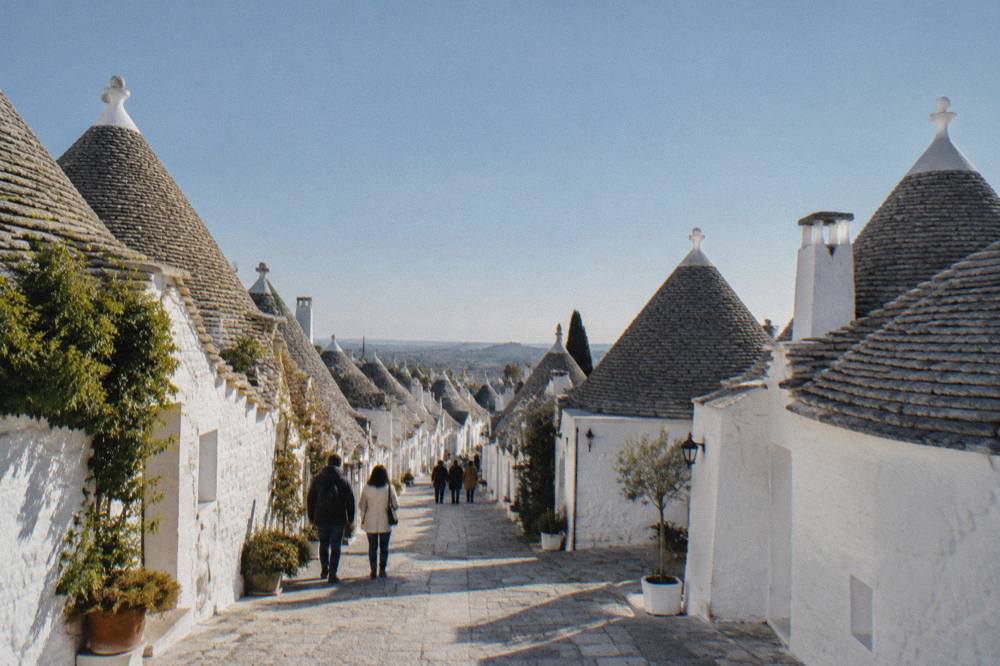
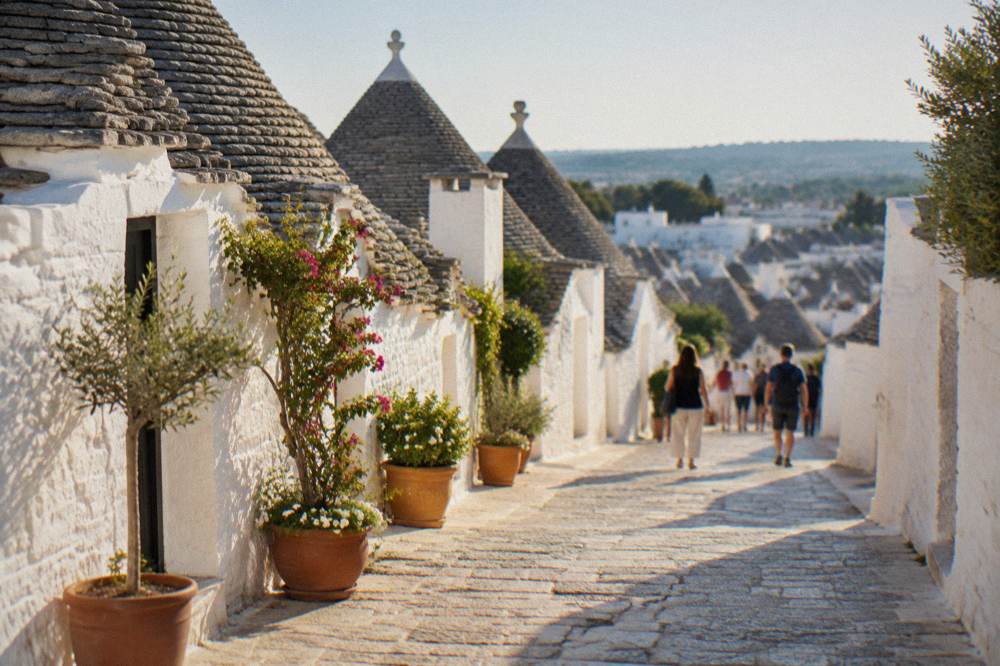
Lecce spends its reputation on pietra leccese and the barocco leccese facades of the centro storico, but Alberobello, about 114 km to the north-west, answers with a completely different Puglia: whitewashed round houses with dry-stone conical roofs, the trulli that give this page its subject. This guide lays out how the journey works from Lecce, what a realistic day looks like, and how the town compares with the Salento and Puglia day trips closer to home, from Otranto to Matera.
How Far Is Alberobello From Lecce?
Alberobello lies about 114 km north-west of Lecce, a free-flowing drive of about 91 minutes from Piazza Sant'Oronzo, which makes it one of the longer day trips on this site's map, roughly triple the run to Otranto and well beyond the reach of the FSE rail network that serves Salento. The figure comes from routing calculations on the open OSRM engine rather than a live traffic feed, so treat it as a planning number, not a promise. In practice the distance matters less than the direction: Alberobello sits in the Itria Valley, inland, so the trip is not a beach errand and the coastal buses of summer play no part in it. For scale, it is closer than Bari and much closer than Matera, and it pairs naturally with Ostuni and Polignano a Mare, which sit between Lecce and Alberobello on the same northward corridor.
That geography is exactly why the organised option exists. A single tour can string Ostuni, Alberobello and Polignano a Mare into one day because the three towns sit in a rough line, and driving yourself means one long outbound leg and one long return.
How Do You Get From Lecce To Alberobello Without A Car?
The train from Lecce to Alberobello requires a change, typically a Trenitalia service towards Bari or Monopoli and then an FSE connection, for a total journey of about 2h30 to 3 hours or more and fares from about 11 to 20 euro, which makes it the slowest practical option but the only fully independent one. There is no direct service on this route; the FSE network that fans out across Salento to Gallipoli, Otranto and Galatina does not reach Alberobello directly. By car, the same trip is about 114 km and about 91 minutes of free-flow driving each way, and an organised day trip from Lecce removes the driving and the rail changes altogether.
| Option | Journey time | Cost | Notes |
|---|---|---|---|
| Train (Trenitalia + FSE change) | about 2h30 to 3h+ each way | from about 11 to 20 euro | No direct service; changes typically at the Bari or Monopoli end |
| Car | about 91 minutes each way free-flow | fuel, motorway tolls and parking | About 114 km from Piazza Sant'Oronzo |
| Organised day trip from Lecce | door-to-door with driver-guide | renders on the tour listing | Usually pairs Ostuni and Polignano a Mare with Alberobello |
Check live timetables on trenitalia.com and fseonline.it before committing to the train, because the connection at the interchange is where the schedule can bite: a missed link turns a three-hour journey into a much longer one. If you do drive, note that Lecce's own ZTL is camera-policed around the historic centre, and you should ask your accommodation about plate registration before moving a car at all.
The train change is the honest trade-off of going independently. You gain a full day in Alberobello on your own clock and you keep the option of stopping in Monopoli or Bari on the way back. You lose the flexibility to add Ostuni or Polignano, which are awkward to string together by rail from Alberobello inside one day. The day trips from Lecce without a car overview on this site covers the same calculation for the Salento towns, where the rail answer is far simpler.
Is The Ostuni, Alberobello And Polignano Day Trip From Lecce Worth Booking?
The organised tour that departs from Lecce and covers Ostuni, Alberobello and Polignano a Mare solves the one problem independent transport cannot: the three towns do not sit on one convenient rail line, so a single booked day buys you all three with the driving, route planning and parking handled, at a from-price and rating that the live listing renders. For a visitor based in Lecce for three or four days, that arithmetic is the whole argument. A day spent reaching Alberobello by train excludes Ostuni and Polignano a Mare almost by definition, because the interchange times do not cooperate.
The tour's value depends on what you want from Alberobello itself. If the trulli are the point, and one unhurried morning among them is enough, then the tour format fits: you arrive, you walk the trulli district, and the day continues elsewhere. If you want a full day inside Alberobello, or you want to linger into the evening when the day-trippers have gone, the train or a hire car serves you better. The Ostuni day trip guide and the Polignano a Mare day trip guide on this site lay out what each stop contributes.
Booking terms are the reassurance worth checking before you commit: cancellation windows and pay-later options appear on the operator's live listing, and the button below reflects the current from-price without promising a date. Free cancellation terms matter more on this route than on a Salento walk, because the itinerary runs rain or shine across open towns.
You can compare the tour with the independent options directly: Check availability, or read the internal tour page first.
What Does A Day In Alberobello Look Like Starting From Lecce?
A realistic Alberobello day from Lecce means an early start, roughly 91 minutes of driving or three hours of rail travel each way, a compact trulli district that rewards two to three unhurried hours, and a return to Lecce in the evening, which is why pairing it with Ostuni and Polignano on a single organised day is the popular shape. The town's core is small and walkable; the trulli quarter is the reason for the trip, and everything of note sits within strolling distance of it. That compactness is a gift for day-trippers, because the long transfer is the only genuinely time-consuming part of the day.
An early departure from Lecce also protects the afternoon. Salento summer traffic on the northbound corridor thickens late morning, and the Itria Valley towns are at their pleasant best before the midday heat. In July and August the ERA5 reanalysis, 1991-2020, puts Lecce's mean daily high at about 31 C in both months, and inland valleys without sea breeze run warmer than the coast. Carry water, start early, and treat the warmest hours as time for a long lunch rather than sightseeing.
For the return leg, the choice is between the train's fixed timetable and the car's flexibility. The train back from Alberobello involves the same change as the outbound journey, so check the last workable connection before you settle into a long dinner. Drivers heading back into Lecce should remember the ZTL hours around the historic centre and, as ever, ask their accommodation about registering the plate.
If a whole day of stone towns sounds heavy, the softer alternative is to keep the morning in Lecce and give the afternoon to one nearer target instead: the Otranto day trip runs about 47 km each way, and the Gallipoli day trip about 41 km, both of them with sea at the end of the drive.
When Is The Best Time Of Year For An Alberobello Day Trip From Lecce?
The shoulder months are the strongest window for an Alberobello day trip from Lecce: the ERA5 reanalysis, 1991-2020, shows Lecce mean highs of about 23 C in May and about 26 C in September against about 31 C in July and August, and November carries the heaviest monthly rainfall of the year in that table, so late spring and early autumn pair comfortable walking weather with thinner crowds. Alberobello is an outdoor town; there is very little of it that you experience indoors, so temperature and rainfall decide the quality of the day more than any opening schedule does.
| Month | Lecce mean high C | Lecce mean low C | Rain mm |
|---|---|---|---|
| Mar | 15.4 | 8.3 | 64.9 |
| Apr | 18.6 | 10.7 | 54.6 |
| May | 23.4 | 14.7 | 39.9 |
| Jun | 28.2 | 19.1 | 18.0 |
| Jul | 31.0 | 21.7 | 15.3 |
| Aug | 31.3 | 22.2 | 18.1 |
| Sep | 26.4 | 19.0 | 58.9 |
| Oct | 21.8 | 15.4 | 91.3 |
| Nov | 17.3 | 11.7 | 93.7 |
These are modelled normals from the ERA5 reanalysis grid cell near Lecce, not a weather-station record, and they describe Lecce rather than Alberobello itself; the inland valley runs a degree or two warmer in summer and cooler at night. October and November carry the highest monthly rainfall totals in the table, which matters when your day is made of walking streets. Winter trips are perfectly possible, with January mean highs around 12 C, but shorter daylight eats into a day that already spends three hours or more on transport.
One calendar note worth folding in: if your Lecce stay straddles late August, the Festa dei Santi Patroni ran 23 to 26 August in 2026 and the Notte della Taranta Concertone in Melpignano fell on 22 August 2026, so that week is both Salento's liveliest and its most booked-up. Alberobello is unaffected by either event, but the accommodation picture in Lecce around those dates is not, and 2027 editions had not been announced.
How Does Alberobello Compare With Other Day Trips From Lecce?
Alberobello is the longest headline day trip north of Lecce at about 114 km and about 91 minutes of driving, against about 47 km to Otranto, about 41 km to Gallipoli and about 28 km to Porto Cesareo, so it costs the most travel time of any trip on this site's standard list except the run to Matera, which sits in another region altogether. The compensation is variety: no other single day from Lecce exchanges baroque limestone for whitewashed trulli so completely. The table below shows the free-flow drive figures computed from Piazza Sant'Oronzo.
| Day trip | Distance from Lecce | Free-flow drive time |
|---|---|---|
| Porto Cesareo | 28.0 km | about 34 min |
| Torre dell'Orso | 27.9 km | about 32 min |
| Otranto | 46.7 km | about 44 min |
| Gallipoli | 41.0 km | about 41 min |
| Galatina | 25.7 km | about 29 min |
| Ostuni | 78.3 km | about 66 min |
| Alberobello | 114.1 km | about 91 min |
| Polignano a Mare | 116.3 km | about 88 min |
| Bari | 152.6 km | about 118 min |
| Matera | 176.9 km | about 161 min |
The pattern is clear: Salento's coast and towns sit within an easy hour, the Itria Valley cluster starts at about an hour and a quarter, and Matera, in the neighbouring region of Basilicata, is a half-day of driving on its own. That is why Alberobello is usually a visitor's second or third day trip from Lecce rather than the first; the nearer options are cheaper in time. But it is also why the organised three-town tour has a niche the train cannot fill: the tour moves you along the corridor efficiently, while the rail network serves Ostuni (direct from Lecce in about 39 to 51 minutes) and Polignano a Mare (direct in about 1h09 to 1h21) but forces the awkward Alberobello change.
If your appetite runs to a second long-haul day, the Matera day trip guide covers the bus option, about 3h30 to 4h10 each way, and the Bari day trip guide the fast-train run. Closer to home, the Salento itinerary strings the southern towns together for a multi-day alternative.
What Should You Know Before Booking The Alberobello Trip?
Confirm the cancellation terms and the departure point on the operator's live listing before booking, because the practical detail that matters on this route is timing: pickup is in Lecce, the day is long, and the operator's own listing carries the from-price, rating and review figures rather than any number printed here. The listing is also where changes to the itinerary appear, and a tour that stitches three towns together does adjust running order from day to day for traffic and season.
A few Lecce-side facts help with planning around the trip. The city's tourist tax exists and is collected by the accommodation, with a top reported rate of 5 euro per night in the high season for the highest category; confirm the exact amount at booking. The LeccEcclesiae combined church ticket, covering the Duomo, Santa Croce, San Matteo, Santa Chiara and the Antico Seminario with MuDAS, costs 11 euro standard and stays valid for 15 days, which means churches you miss on your Alberobello day remain visitable afterwards without buying again. Museo Faggiano charges 5 euro and opens every day from 9:30 to 20:00.
| Lecce extra | Ticket | Good for |
|---|---|---|
| LeccEcclesiae standard (5 churches) | 11 euro, valid 15 days | Days before or after the Alberobello trip |
| LeccEcclesiae with bell tower | 21 euro | Adds the Duomo campanile |
| Museo Faggiano | 5 euro | The layered archaeological house on Via Ascanio Grandi |
| Castello Carlo V guided tour | 10 euro | Interior by guided tour only, courtyard free |
For the evenings you are not on the road, two in-city options from the same roster round out a Lecce stay nicely: a pasta class built around Salento's local flavours, and a guided walk of the ancient synagogue and Jewish quarter. The things to do in Lecce overview is the full index, and the one day in Lecce itinerary sequences the highlights for a shorter base.
What Should You Pack And How Should You Pace The Day?
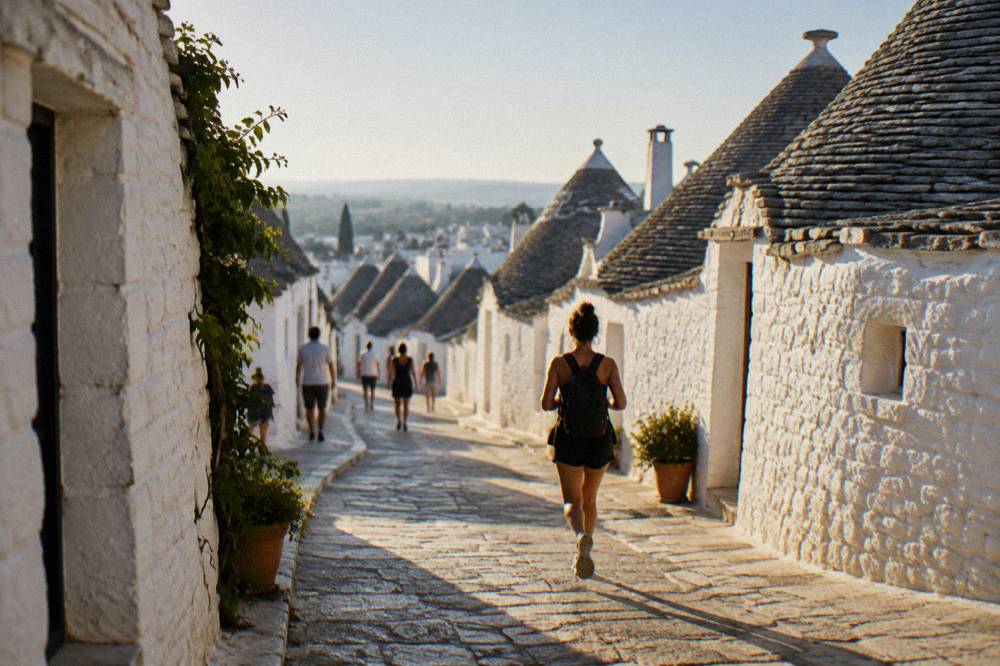
Pack for walking and for the season: the trulli district is cobbled and exposed, July and August mean highs sit around 31 C, and even the shoulder months reward proper shoes, water and sun cover, while the day itself should be paced around an early start, a midday pause and a late-afternoon departure. Nothing on this route demands technical gear. It demands patience with transfer time, because roughly two to three hours of the day belong to the road or the rails whichever way you travel.
Comfort beats style on the trulli lanes, which slope and step without warning. In the hot months, plan the outdoor hours before noon and after four, and let the middle of the day run long over lunch; the inland towns take the afternoon pause seriously and the midday streets empty accordingly. On the train option, the midday pause is also your buffer against a missed connection, so treat it as schedule padding rather than lost time.
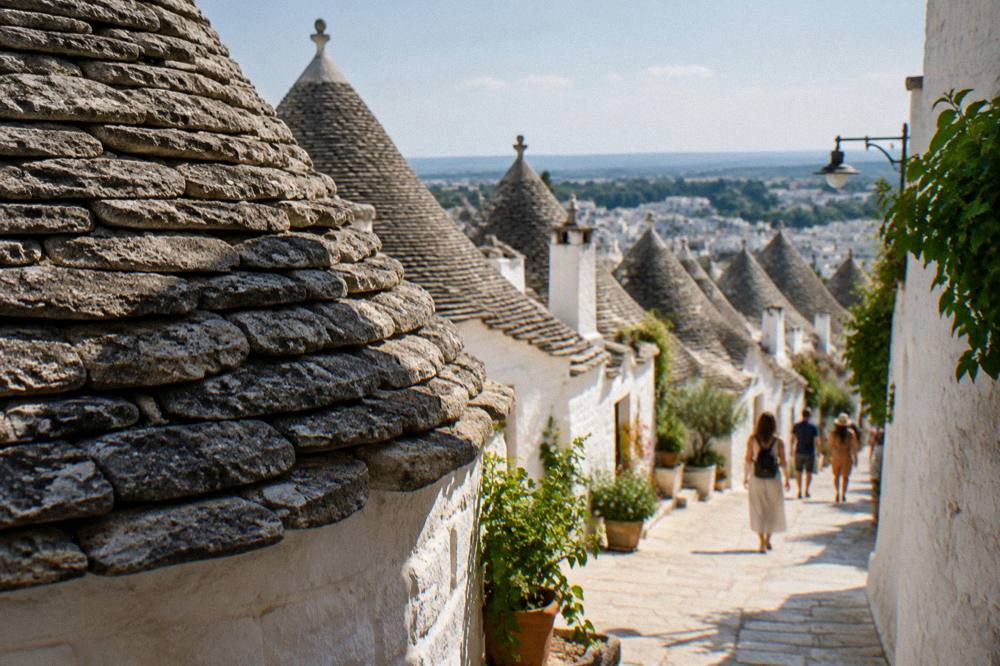
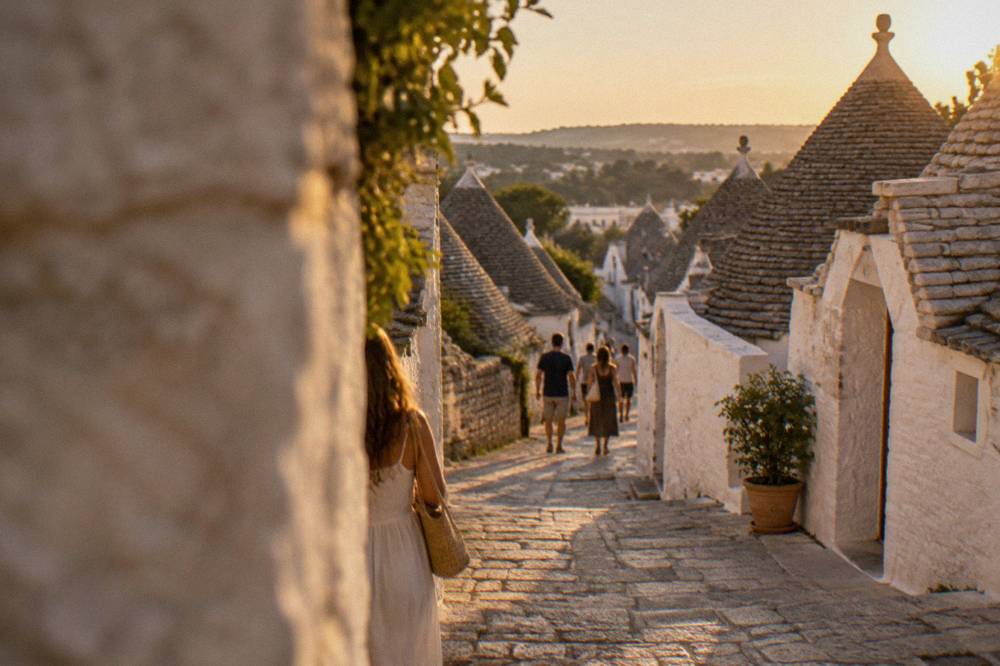
Photography rewards the early and late hours. The conical roofs read best in raking light, and by mid-morning the main lanes fill with visitors arriving on the same corridor from Bari and the coast towns. Walk two streets off the spine of the district and the composition improves immediately; the quarter is small enough that losing yourself costs minutes, not hours.
Money is straightforward. Italy uses the euro, cash still smooths small purchases in the valley towns, and the tourist tax back in Lecce is a per-night item your accommodation handles. The emergency number across Italy is 112.
Can You Combine Alberobello With Ostuni Or Polignano A Mare In One Day?
Yes, and the combination is the standard way to do it: Ostuni sits about 66 minutes from Lecce, Polignano a Mare about 88, and Alberobello about 91, in a corridor that an organised tour covers in a single loop, while independent travellers can reach Ostuni and Polignano by direct train but must accept the changed service to Alberobello. That asymmetry is the entire reason the three-town tour from Lecce exists. By rail you can build an Ostuni day or a Polignano day easily; you cannot cleanly build a three-town day.
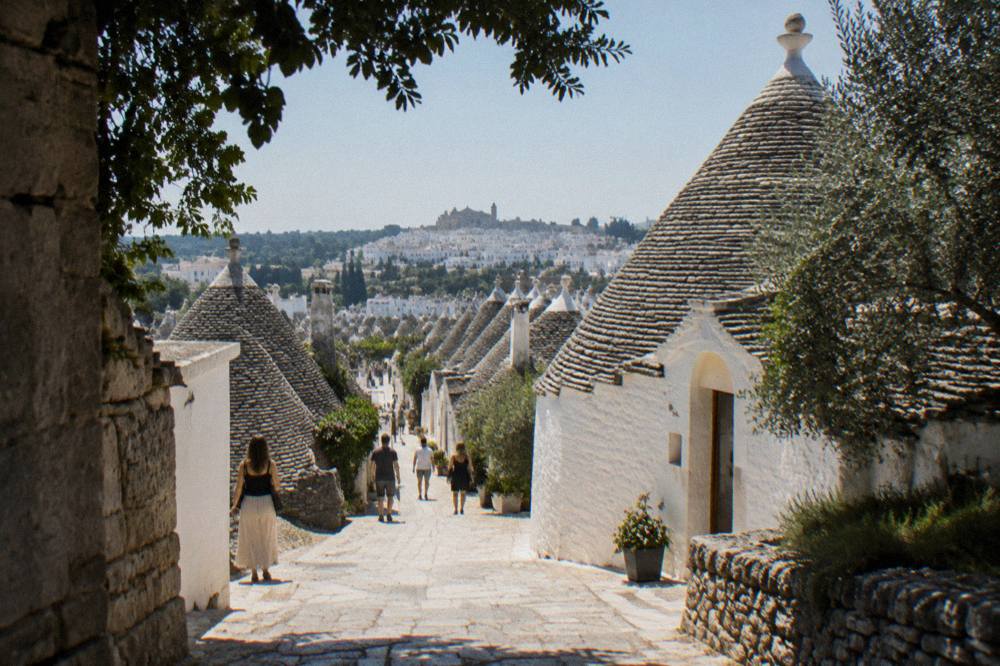
The loop logic works like this: Lecce north to Ostuni, inland to Alberobello, then back down the coast through Polignano a Mare to Lecce. The distances between the stops are short relative to the Lecce legs, so the day distributes efficiently, and each town contributes something the others do not: the white hill town, the trulli district, the limestone cliffs over the Adriatic. Drivers following the same loop should check parking arrangements at each stop rather than improvising, particularly in high summer.
The independent version is possible with discipline: the direct Trenitalia trains put Ostuni 39 to 51 minutes from Lecce and Polignano a Mare about 1h09 to 1h21, so a two-town rail day works comfortably. Adding Alberobello to that rail day is where it breaks; the change of network and the thinner FSE frequencies eat the margin. Choose two towns by train or three by car or tour, and the day holds together.
Common Questions About Alberobello From Lecce
How far is Alberobello from Lecce?
About 114 km by road, a free-flowing drive of about 91 minutes from Piazza Sant'Oronzo, computed on the open OSRM routing engine.
Can you get from Lecce to Alberobello by train?
Yes, with a change: a Trenitalia service towards Bari or Monopoli and then an FSE connection, for a total of about 2h30 to 3 hours or more and fares from about 11 to 20 euro. There is no direct service.
Is one day enough for Alberobello from Lecce?
Yes. The trulli district is compact and walkable, and two to three unhurried hours cover it, with the rest of the day belonging to the transfer and, on the tour option, to Ostuni and Polignano a Mare.
Is an organised Alberobello tour from Lecce worth it?
If you want Ostuni and Polignano a Mare in the same day, the tour is the practical format, because no single rail line strings the three towns together. The from-price and rating render on the operator's live listing.
When is the best month for an Alberobello day trip from Lecce?
May and September: ERA5 reanalysis, 1991-2020, shows Lecce mean highs of about 23 C and 26 C respectively, against about 31 C in July and August, and November tops the rainfall table.
Is Alberobello closer to Lecce than Bari or Matera?
Closer to both: Alberobello is about 114 km from Lecce, while Bari and Matera sit further up the same northward corridor, Matera in Basilicata, a different region.
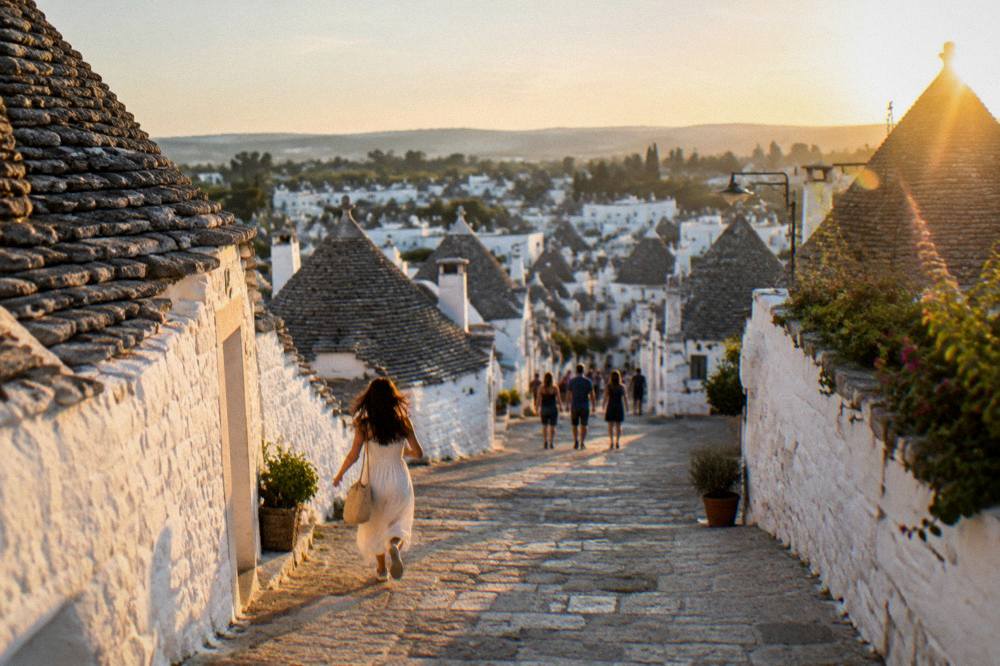
Alberobello rewards the effort of the long leg precisely because it looks like nowhere else within reach of Lecce: leave the barocco leccese behind for a morning, walk the trulli lanes early, and be back under Lecce's own stone by nightfall. For more on shaping the whole stay around the city, start with the Lecce Travel Guide homepage.