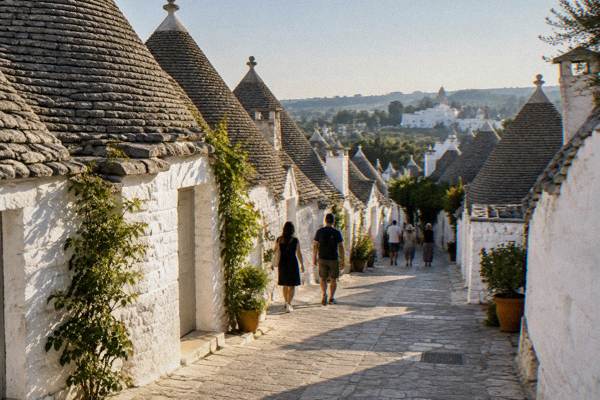
Ostuni From Lecce: The White Town By Train
Ostuni, the white hill town of northern Puglia, is one of the shortest escapes on Lecce's rail timetable. Here is how the train, the road and the guided loops compare.
Short answer
Ostuni sits about 78.3 km north of Lecce by road, a free-flow drive of about 66 minutes, and reported direct trains cover the journey in about 39 to 51 minutes from about 7 euro. The White Town pairs naturally with Alberobello or Polignano a Mare on a northbound loop.
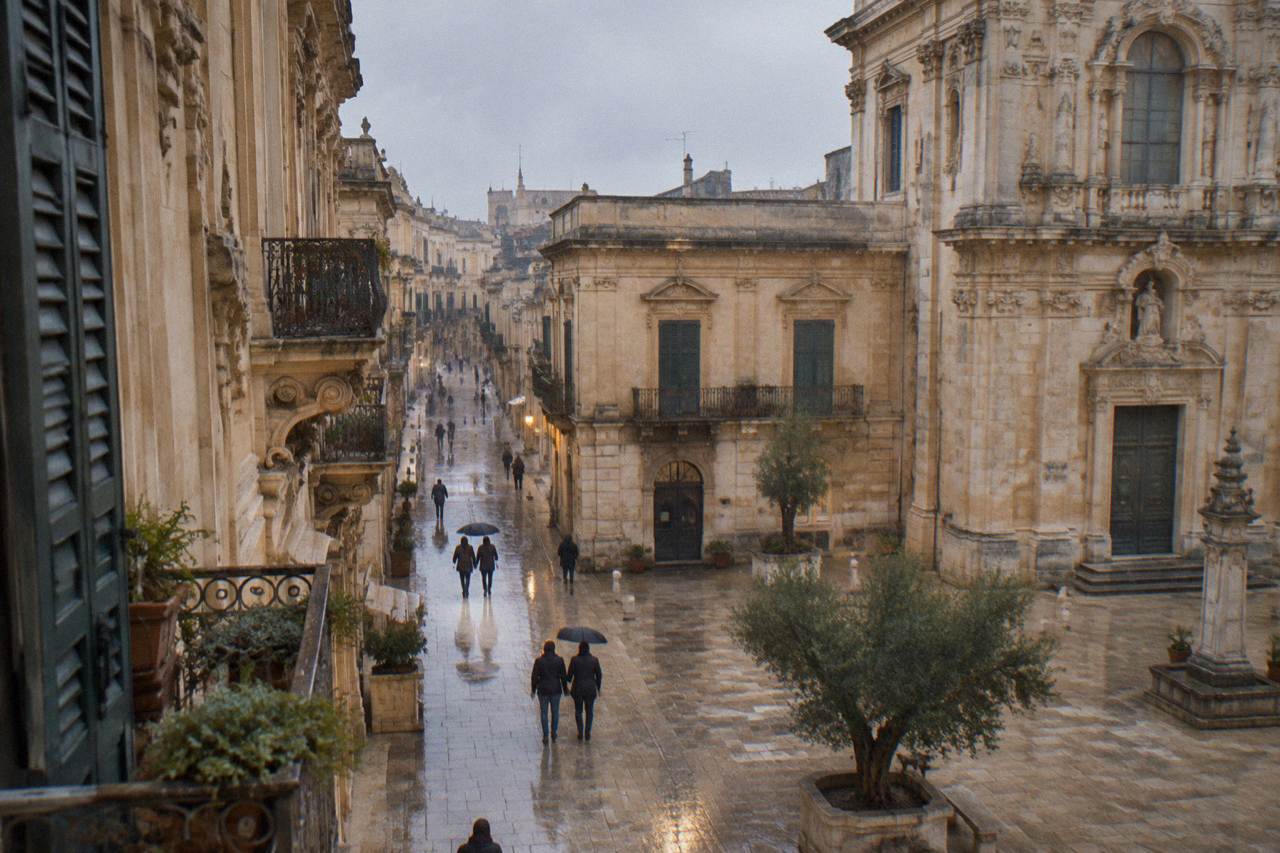
Lecce, the baroque capital of Salento in Puglia, southern Italy, keeps its honey-coloured churches and palazzi a few kilometres inland from the Adriatic, and its rail station doubles as the hub for nearly every escape worth making from the old town. One of the shortest is Ostuni, the white hill settlement on the northbound line toward Bari. Reported direct trains cover the distance in about 39 to 51 minutes, which puts the White Town closer to Lecce in travel time than plenty of places inside the province. This guide sets out the train, the road, the pairings and the seasons, with every figure drawn from the sources this site reports on.
Where Is Ostuni And How Far Is It From Lecce?
Ostuni sits about 78.3 km from Lecce by road, a free-flow drive of about 66 minutes from Piazza Sant'Oronzo, on the rail line that runs north toward Bari. Direct regional trains are reported at about 39 to 51 minutes for the same journey. The town is often billed as the White Town for the limewashed old centre that rises above the plain of northern Puglia.
The position is the whole point. Ostuni stands in the north of Puglia, on the side of the region that tilts toward the Adriatic, roughly midway between Lecce and Bari on the main rail axis. Route calculations put the road distance at 78.3 km from Piazza Sant'Oronzo, Lecce's central square, with a free-flow drive time of about 66 minutes. The town itself climbs a ridge over the surrounding plain, and the white skyline is visible from a long way off on the approach roads.
Lecce, for orientation, sits at the heart of the Salento peninsula. It has no commercial airport of its own; the gateway is Brindisi, about 47.6 km and 43 minutes away by road, and the nearest beach, San Cataldo, is about 13 km out. Everything about the city is baroque, limestone and inland. Ostuni is the opposite mood, a hill town of lanes, arches and lookouts, and the two make a natural pairing precisely because they share nothing but a rail line.
Scale helps when planning. Alberobello is 114.1 km and about 91 minutes by road, Polignano a Mare is 116.3 km and about 88 minutes, and Bari is 152.6 km and about 118. Of the northern hill towns, Ostuni is the nearest to Lecce, and the reported train times reflect that.
How Do You Get From Lecce To Ostuni By Train?
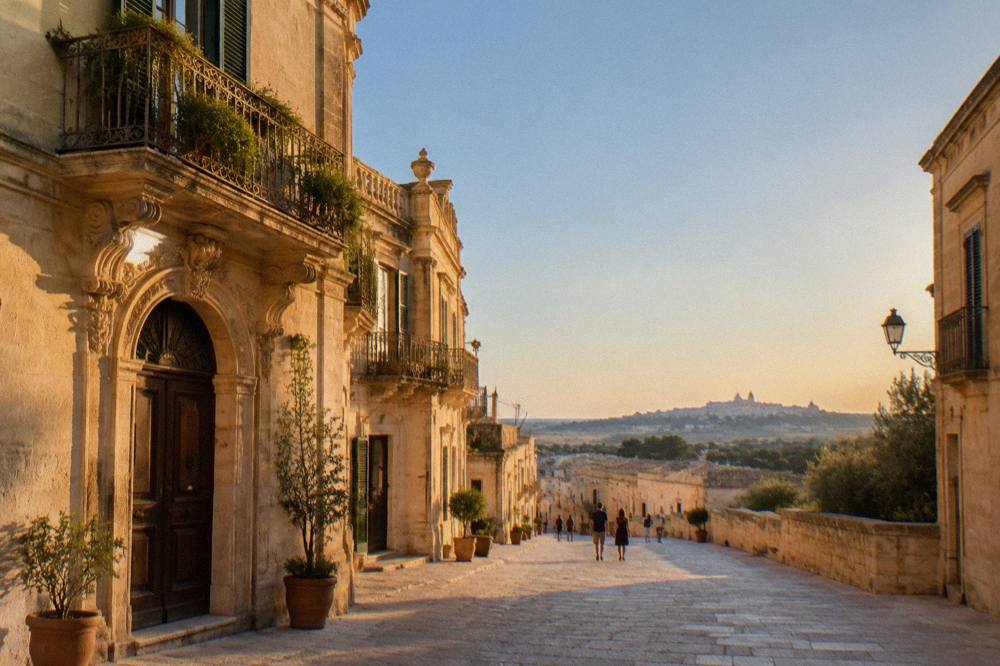
Direct trains run from Lecce to Ostuni with reported journey times of about 39 to 51 minutes and one-way fares from about 7 euro, per rail-planner listings. Lecce is a Trenitalia station and also the operating base of the Ferrovie del Sud Est network, so a single station handles both the northbound line toward Bari and the local Salento lines toward Gallipoli, Otranto and Galatina.
The Ostuni leg is about as simple as Italian rail gets. No change is needed: the town is on the main Trenitalia axis, so the same trains that run north toward Brindisi and Bari stop there. Reported fares start around 7 euro one way, though the listings carry that figure rather than any timetable this site would print, and seats on regional trains are not reserved in the usual way. Check a live planner for the day you travel.
The station itself is modest for the traffic it carries. Trenitalia's regional and long-distance platforms sit on one side, and the Ferrovie del Sud Est network, the little railway that stitches Salento together, departs from the same complex. The Lecce Travel Guide treats Lecce's rail station in detail on its own page, including the connections that matter for day trips.
For comparison, these are the rail journeys from Lecce that the planner listings report. Times and fares are reported figures, not a timetable, and the FSE tariff for 2026 runs from 1.30 euro for a 1 to 10 km hop up to 5.40 euro for 51 to 60 km.
| Destination | Line | Reported journey time | Reported fare from |
|---|---|---|---|
| Ostuni | Trenitalia, direct | about 39 to 51 min | about 7 euro |
| Brindisi | Trenitalia, direct | about 18 to 24 min | about 3.40 euro |
| Bari Centrale | Trenitalia, direct | about 1 h 19 to 1 h 24 fastest | about 9 euro regional, 18 to 24 euro on fast trains |
| Rome | Trenitalia, direct | about 5 h 58 to 6 h 16 | about 32 euro |
| Alberobello | Trenitalia plus FSE change | about 2 h 30 to 3 h or more | about 11 euro |
| Gallipoli | FSE, direct | about 1 h 18 to 1 h 43 | about 5 euro |
| Galatina | FSE, direct | about 38 to 55 min | about 3 euro |
| Otranto | FSE, change at Maglie | about 1 h 33 to 2 h or more | about 4 euro |
Two practical notes follow from the table. First, the Ostuni row is the only northern destination that is both direct and short: everything else north of Brindisi either takes longer or needs a change. Second, the fares are starting prices reported by the planners, so a peak-day ticket may sit above them. Buy at the station or in the official app on the day, and treat the schedule as a question for a live planner rather than for a travel article.
If a hill town morning is not a full day for you, the guided options below bundle Ostuni into longer loops, and the pairing section further down covers how the train and the road compare for combining towns.
Should You Drive From Lecce To Ostuni Instead?
Driving from Lecce to Ostuni covers about 78.3 km and takes about 66 minutes in free-flow traffic from Piazza Sant'Oronzo, per route calculations. A car also opens the loop past Alberobello or Polignano a Mare, at about 91 and 88 minutes of driving each way, though a hill town raises its own parking questions, and the ZTL cameras in Lecce itself are worth understanding before you set off.
The road case is really a pairing case. On its own, Ostuni by car competes badly with a 39 to 51 minute direct train; with Alberobello and Polignano a Mare in the same day, a car saves changes and waiting. The drive times below are free-flow calculations from Piazza Sant'Oronzo, so real traffic, particularly in summer, will sit above them.
| Destination | Distance from Piazza Sant'Oronzo | Free-flow drive time |
|---|---|---|
| Ostuni | 78.3 km | about 66 min |
| Alberobello | 114.1 km | about 91 min |
| Polignano a Mare | 116.3 km | about 88 min |
| Taranto | 107.2 km | about 90 min |
| Bari | 152.6 km | about 118 min |
| Brindisi | 39.8 km | about 35 min |
Before the wheels turn, deal with Lecce's restricted zone. The ZTL is camera-policed, with reported active hours on weekdays of roughly 13:00 to 16:30 and 20:00 to 10:00, plus around-the-clock enforcement on Sundays and holidays, and fines reported from 83 to 332 euro. Ask your accommodation to register your plate; that is the standard arrangement and the one that saves a letter from the municipality weeks later. This site covers the Lecce parking and ZTL rules question in full elsewhere.
Parking at the far end is the second question. A hill town means slopes, narrow lanes and, usually, car parks at the edge of the old centre rather than inside it. Confirm with your accommodation or the town's own material where to leave the car, and budget a walk uphill from wherever it lands.
The drive north also passes within reach of Brindisi, 39.8 km and about 35 minutes from Lecce, if an airport run or a coastal stop belongs in the same day. The Brindisi day trip page carries what this site can report about the province's other capital.
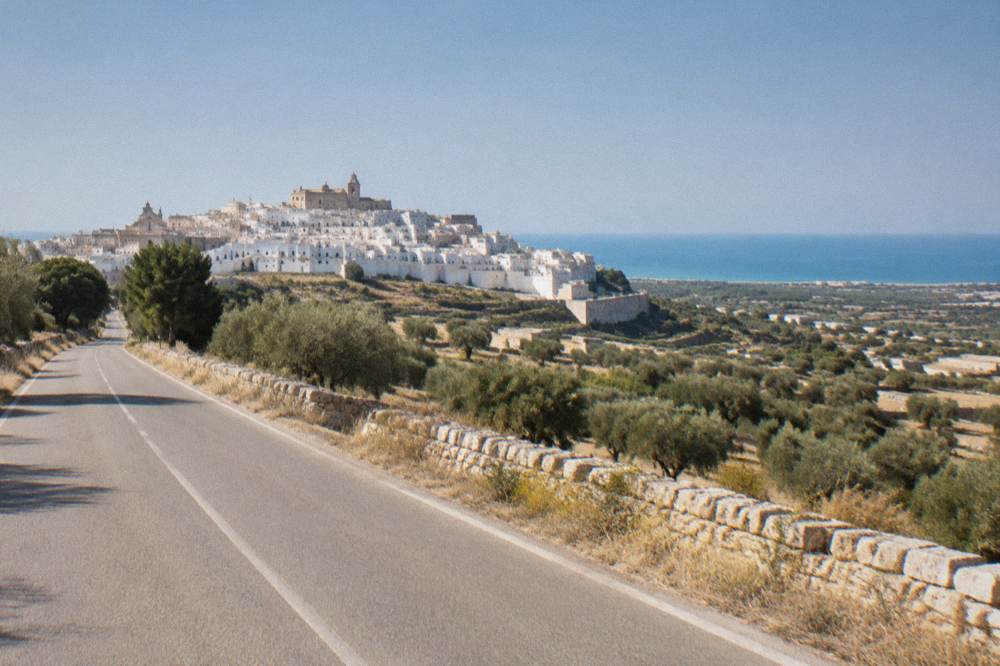
What Is Ostuni Known For Beyond The Whitewash?
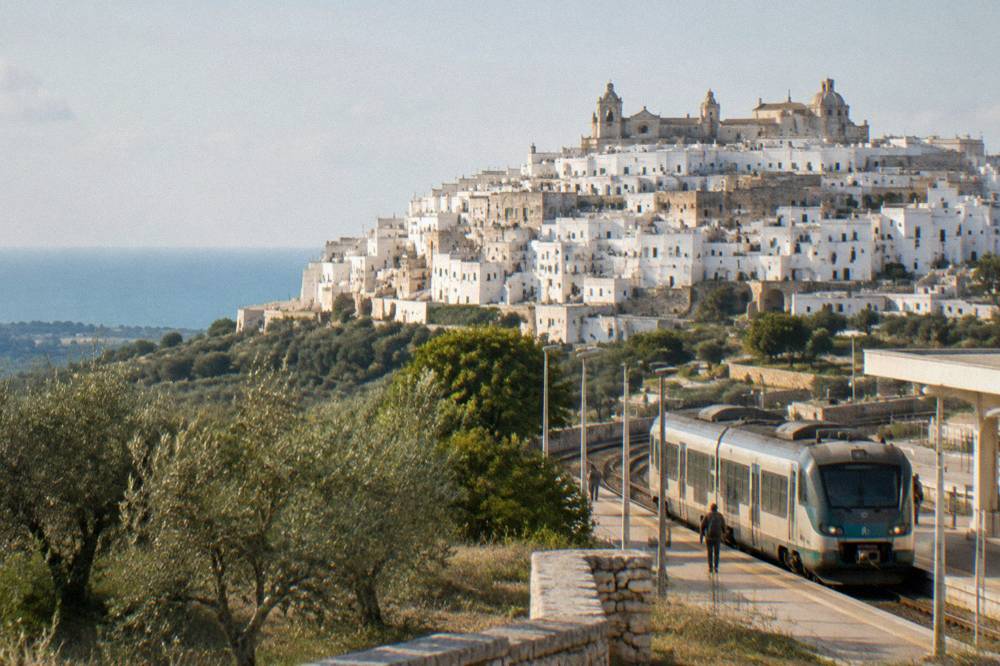
Ostuni is billed as the White Town, a hilltop old centre of whitewashed lanes, arches and stairways above the plain of northern Puglia, a short drive inland from the Adriatic. The name refers to the limewashed walls that cover the historic centre. The billing is the town's own, and opening hours or ticket arrangements for individual monuments in Ostuni are a local question to confirm at the door.
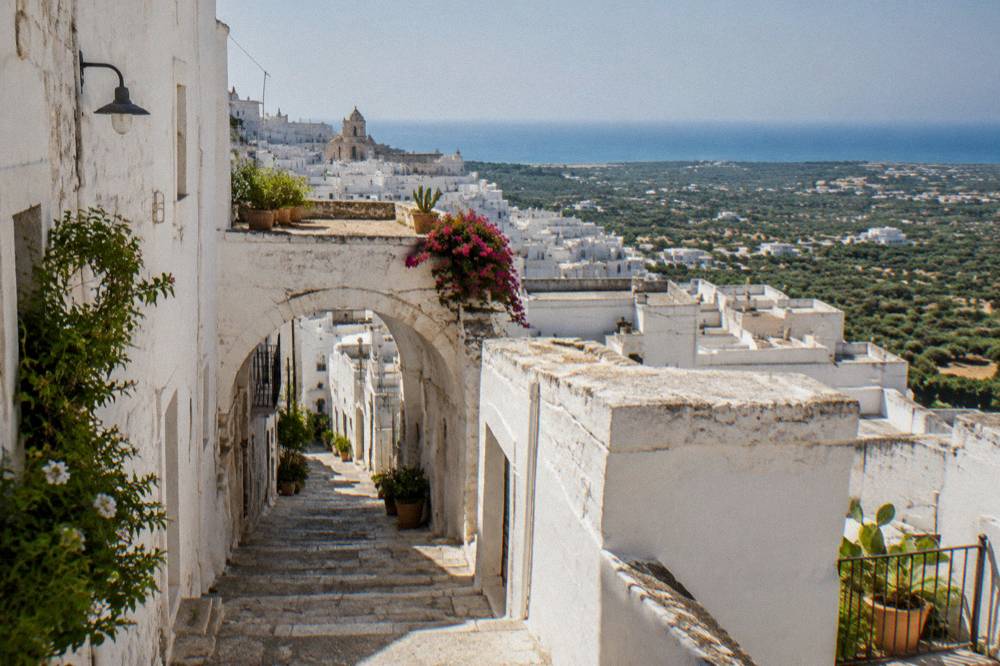
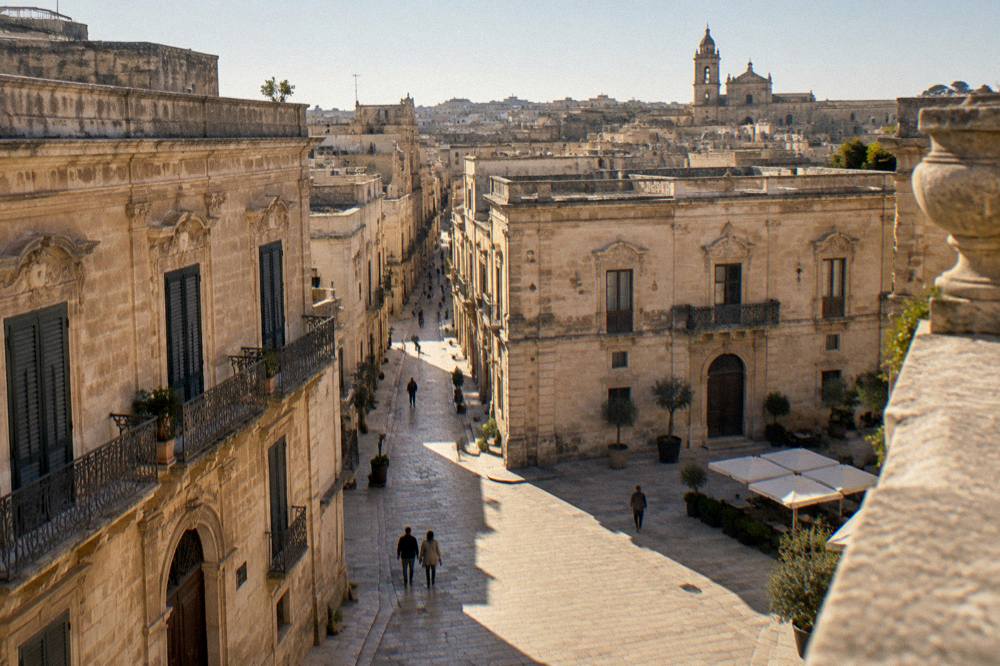
The honest way to describe the place is architectural rather than itinerary-based. The old centre is a compact web of lanes where the limewash gives everything a uniform brightness, arched passages stitch buildings together at first-floor height, and stairways drop suddenly toward viewpoints over the plain. There is no single monument that the sources for this site can price or time, and a day here does not need one. The town is the sight.
That makes planning lighter than for a church-and-museum day. Arrive, walk uphill, get lost in the lanes, come out at a lookout, repeat. Comfortable shoes matter more than tickets. The same rules of Italian church dress apply if you do step inside somewhere sacred: shoulders and knees covered, and visits pause during services.
The tables carry the Salento repertoire you already know from Lecce. Pasticciotto, the custard-filled shortcrust pastry, is the standard sweet across the province, though its 1745 birth year is one Galatina shop's own claim rather than settled history, and historians dispute it. Rustico leccese, the savoury puff pastry with besciamella, tomato and mozzarella, travels just as well. Caffe in ghiaccio con latte di mandorla, espresso over ice with almond milk, is a Lecce invention credited to Antonio Quarta of Quarta Caffe in the 1940s to 1950s, and it is exactly the right drink for a white hill town at midday.
Can You Combine Ostuni With Alberobello And Polignano?
Yes, and the geography cooperates: Ostuni, Alberobello and Polignano a Mare all sit north of Lecce, with free-flow drive times of about 66, 91 and 88 minutes respectively from Piazza Sant'Oronzo. By train, Polignano a Mare is a direct ride of about 1 hour 9 minutes to 1 hour 21 minutes, while Alberobello needs a change onto the FSE network for a total of about 2 hours 30 minutes or more.
The loop logic is straightforward. All three towns sit on the same northern arc, so a car turns them into a single day with sensible legs: Lecce to Ostuni, Ostuni to Alberobello, Alberobello home, or the same loop with Polignano substituted. By train the pairing weakens, because Alberobello's trulli sit off the Trenitalia axis on the FSE network, and the change costs time.
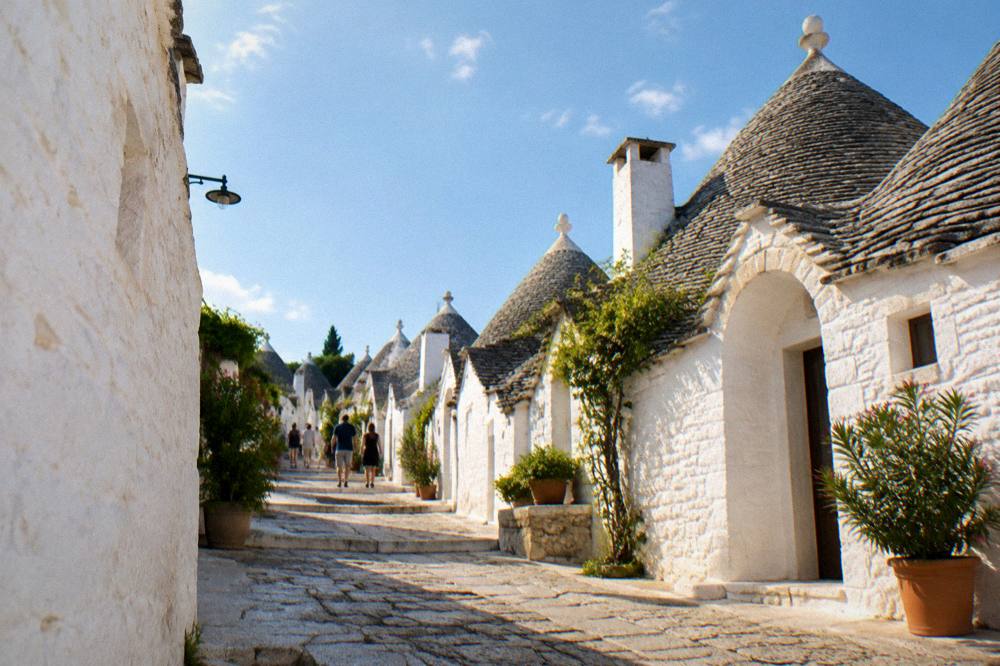
Each town earns its stop differently. Ostuni is the hill town of lanes and lookouts. Alberobello is the trulli town, the cone-roofed settlement that gives inland Puglia its most recognisable skyline, and the Alberobello day trip page carries the drive and rail figures. Polignano a Mare is the cliff town on the Adriatic, and the Polignano a Mare day trip page does the same for the coast.
Two further options sit on the same northbound axis. Bari, the regional capital, is 152.6 km and about 118 minutes by road, or about 1 h 19 to 1 h 24 on the fastest trains, and the Bari day trip page covers it. Matera is a different proposition altogether: it lies in Basilicata, a different region, reached by bus in about 3 hours 30 minutes to 4 hours 10 minutes for reported fares of 11 to 37 euro, and the Matera itinerary treats it as the overnight-scale trip it is.
What Guided Day Trips From Lecce Include Ostuni?
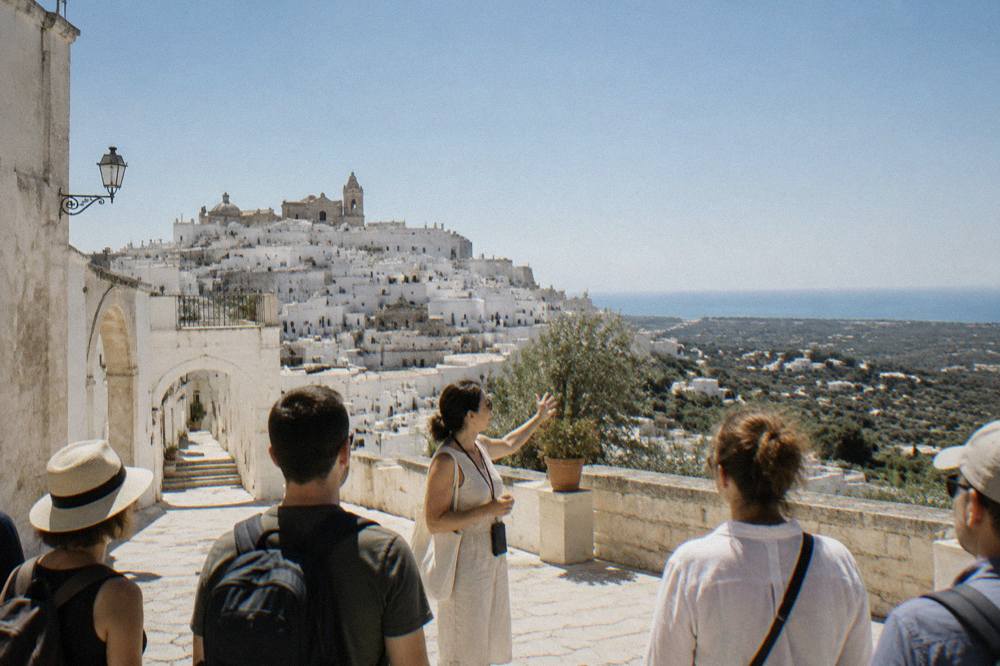
Two guided day trips in this site's roster include Ostuni: a three-town tour covering Alberobello, Locorotondo and Ostuni with tastings along the way, and a second tour pairing Ostuni with Alberobello and Polignano a Mare. Both bundle the driving, the parking and the timing, which matters on a loop of three stops. Current prices, ratings and durations sit on each operator's live listing.
The guided case is strongest exactly where the independent case is weakest. A three-town day by public transport means a change onto the FSE network for Alberobello, station-to-centre walks in each town, and a schedule you do not control. A tour hands the sequence to someone who runs it weekly: the Alberobello, Locorotondo and Ostuni guided day trip covers the trulli capital, the hill town on the ravine and the White Town, with tastings built in, Check availability.
The alternative keeps the coast in the mix. The Ostuni, Alberobello and Polignano a Mare day trip from Lecce swaps Locorotondo for the Adriatic cliff town, which suits a first visit to Puglia better than a second one. Both tours depart from Lecce, so no hotel logistics stand between you and the minibus.
What a guide adds in Ostuni specifically is modest, because the town rewards wandering over commentary. What a guide adds across the whole loop is considerable: no parking searches, no FSE timetables, and a fixed return time that turns three stops into a day rather than an aspiration.
When Is The Best Time Of Year To Visit Ostuni From Lecce?
The ERA5 reanalysis for 1991-2020 puts the mean daily high near Lecce between 12.4 C in January and 31.3 C in August, with mean lows from 6.7 C in January to 22.2 C in August, and about 652 mm of rain across the year. November carries the highest monthly total at 93.7 mm and July the lowest at 15.3 mm. Spring and early autumn are the comfortable walking seasons for a hill town.
A note on the numbers first. These are modelled climate normals from a reanalysis grid cell near Lecce at about 48 m elevation, not readings from a weather station, and this site labels them as such. They describe the climate you walk in, not a forecast for your Thursday.
| Month | Mean high C | Mean low C | Rain mm |
|---|---|---|---|
| Jan | 12.4 | 6.7 | 63.1 |
| Feb | 13.0 | 6.8 | 59.0 |
| Mar | 15.4 | 8.3 | 64.9 |
| Apr | 18.6 | 10.7 | 54.6 |
| May | 23.4 | 14.7 | 39.9 |
| Jun | 28.2 | 19.1 | 18.0 |
| Jul | 31.0 | 21.7 | 15.3 |
| Aug | 31.3 | 22.2 | 18.1 |
| Sep | 26.4 | 19.0 | 58.9 |
| Oct | 21.8 | 15.4 | 91.3 |
| Nov | 17.3 | 11.7 | 93.7 |
| Dec | 13.5 | 8.2 | 75.5 |
Read for the day trip, the table says: winter is mild but damp, with January means of 12.4 C high and 6.7 C low, and October and November the wettest stretch on the calendar. July and August mean highs of 31.0 and 31.3 C make a whitewashed hill town radiant at midday, which is a argument for a morning train and a long lunch in the shade. April, May, June and September sit in the middle on both axes, which is why they carry the walking traffic.
If the coast belongs in the same plan, the sea temperature is worth knowing. Reported figures for the Salento waters run about 22.5 C in June, 25 to 27 C at the August peak, 20 to 22 C in October and about 14 C in February, per sea-temperature listings. The sea is a summer proposition, in plain terms.
| Period | Reported sea temperature |
|---|---|
| June | about 22.5 C |
| August peak | 25 to 27 C |
| October | 20 to 22 C |
| February | about 14 C |
Is Ostuni Worth The Day Trip From Lecce?
For a day trip from Lecce, Ostuni is one of the shortest rail journeys on the board: a reported 39 to 51 minutes direct each way, a town that rewards wandering rather than ticketing, and a position that pairs with Alberobello or Polignano a Mare if one hill town is not enough. The practicalities stay simple: euro, Italian, 112 for emergencies, and a tourist tax collected by the accommodation.
The verdict, in one line: the train makes Ostuni the easiest northern day trip from Lecce, and the town repays the fare with a couple of hours of lanes, lookouts and a coffee in a white piazza. It is not a museum day and does not pretend to be. Go early, walk up, come down for lunch, and take the afternoon train back or onward.
| Item | What To Expect |
|---|---|
| Currency | euro |
| Language | Italian |
| Emergency number | 112 |
| Tourist tax | collected by the accommodation; top reported rate 5 euro per person per night, 5-star high season; confirm at booking |
| Rail operators from Lecce | Trenitalia and Ferrovie del Sud Est |
| Schengen | Italy is a member; no border formalities inside the zone |
Back in Lecce, the evening is yours. The things to do in Lecce page maps the baroque centre, and how to get to Lecce covers the arrivals side for anyone still planning the base rather than the escapes.
If a food-led evening sounds better than a free one, a guided tasting walk through the old town covers the rustico, the pasticciotto and the caffe in ghiaccio with a local explaining all three.
And if the white lanes have you craving the other element, the sea is a short hop south rather than north. Boat trips along the coast at Santa Maria di Leuca run past the sea caves that give that stretch its character, with swimming stops in season.
Three ways to spend the same day, then: a guided loop through the northern hill towns, a boat along the southern caves, or a bicycle around Lecce itself. Each renders its own price, rating and review count on the operator's live listing.
However you arrange it, Ostuni stays what the timetable says it is: a reported 39 to 51 minute ride from Lecce, a white hill above the plain, and the simplest answer to the question of where to go when the baroque churches close for the afternoon.
Common Questions About Ostuni From Lecce
How far is Ostuni from Lecce?
About 78.3 km by road from Piazza Sant'Oronzo, a free-flow drive of roughly 66 minutes, per route calculations. Reported direct trains cover the journey in about 39 to 51 minutes.
Is there a direct train from Lecce to Ostuni?
Yes. Direct regional trains are reported at about 39 to 51 minutes, with one-way fares from about 7 euro, per rail-planner listings. No change is needed; Ostuni is on the main Trenitalia axis toward Bari. Check a live planner for your travel day.
Can you visit Ostuni and Alberobello in one day from Lecce?
Yes. By car the legs are about 66 and 91 minutes respectively from Lecce, so a two-town loop fits comfortably in daylight. By train, Alberobello needs a change onto the FSE network for a reported total of about 2 hours 30 minutes or more, which makes the pairing a stronger case for driving or a guided tour.
Do you need a car in Ostuni?
Not for the town itself. The old centre is compact and pedestrian, built on slopes and lanes, and parking sits at the edge rather than inside. The train station connection from Lecce is direct, so a car only earns its keep if Alberobello or Polignano a Mare share the same day.
How long should you spend in Ostuni?
A morning to mid-afternoon covers the lanes, the lookouts and a long lunch comfortably. The town rewards wandering rather than a fixed itinerary, and there is no monument list with verified hours to work through, so the length of the visit is a matter of appetite rather than logistics.