Locorotondo From Lecce
A practical plan for reaching Locorotondo from Lecce, the baroque capital of Salento in Puglia, with verified transport figures, cost ranges and tour options.
Short answer
Locorotondo is a whitewashed hill town in the Valle d'Itria, north of Lecce in Puglia. There is no direct train from Lecce; the practical options are a organized day trip by road, a train towards Ostuni or Alberobello with onward connections, or a self-drive day combining the Itria valley towns.
Lecce sits at the heart of Salento in Puglia, southern Italy, a baroque city of pietra leccese limestone a few kilometres inland from the Adriatic. Locorotondo is the opposite face of the same region: a compact whitewashed hill town in the green Valle d'Itria to the north, where the flat olive plains of the Salento give way to rolling valleys dotted with trulli and dry-stone walls. The two places make a natural pairing, one baroque and urban, the other rural and luminous, and this page sets out how to connect them with the figures that were checked for this site, what a day in Locorotondo can hold, and what a day trip from Lecce realistically costs once transport, food and time are counted.
The case for the trip is concentration. The old town of Locorotondo is small enough that its lanes, viewpoints and wine bars fill a half day comfortably, and it sits within a short drive of other Itria valley towns, which is why the standard itinerary from Lecce strings it together with Alberobello, Ostuni or both. Against that, public transport from Lecce to the valley is indirect, and the door-to-door time by rail is longer than the map suggests. The sections below give the verified numbers for each option.
Where Is Locorotondo And Why Go From Lecce?
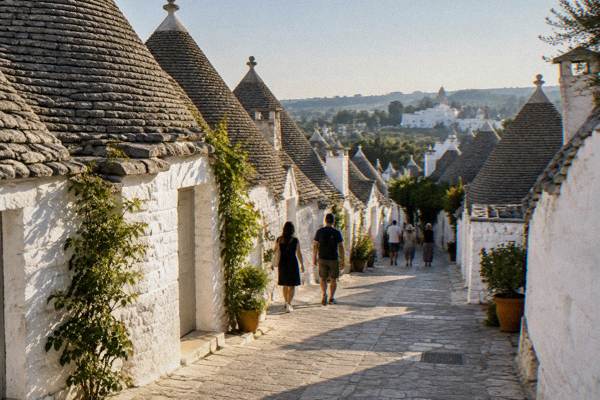
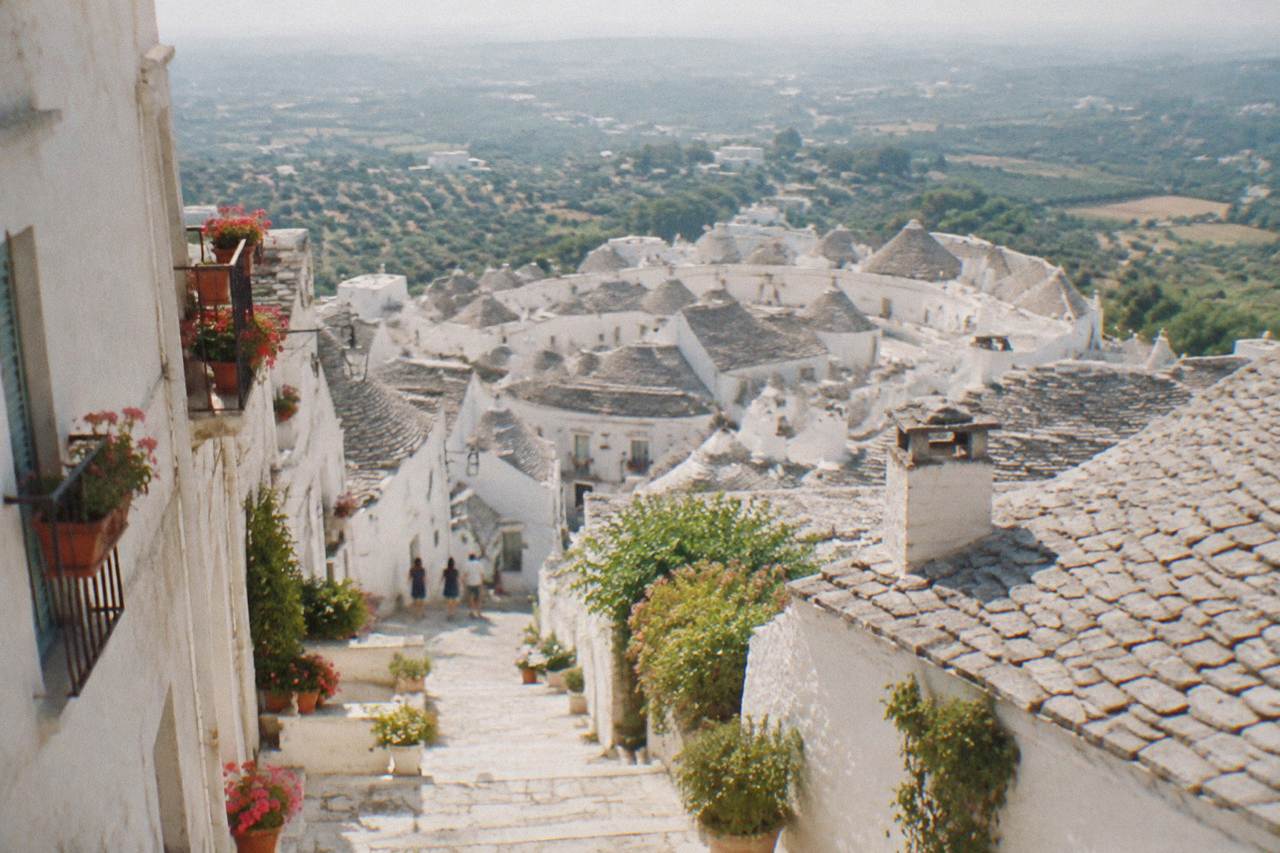
Locorotondo is a hill town in the Valle d'Itria, in the province of Bari to the north of Lecce, roughly on the line between Ostuni and Alberobello, and it is known for its circular whitewashed old town, its panoramic terraces over the valley and its white wine. It is not on the coast and it is not a baroque city like Lecce; the two towns represent two different halves of Puglia within one day's reach of each other.
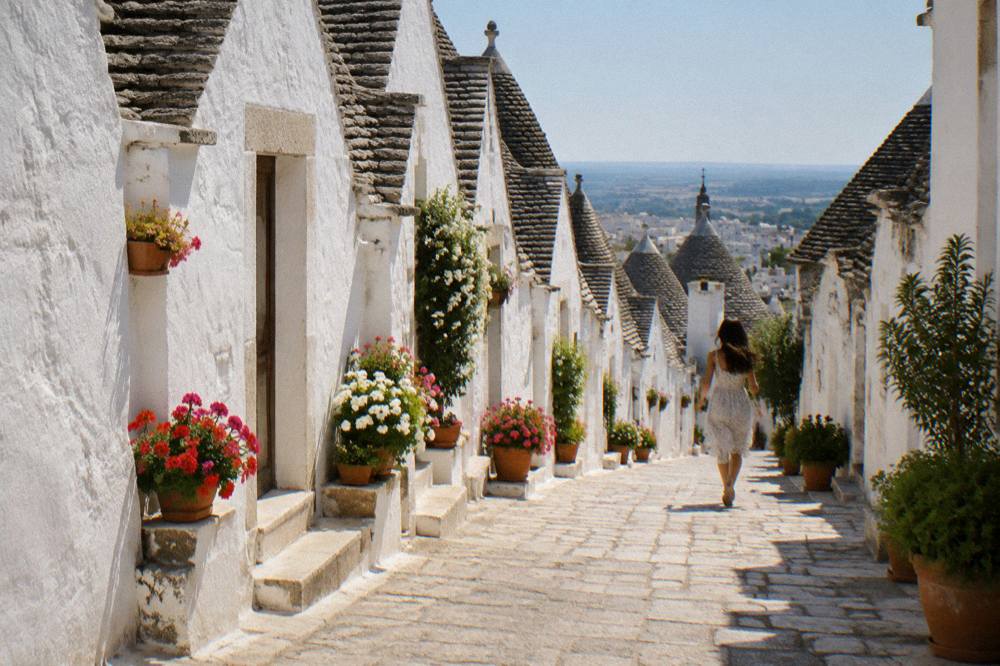
The name itself is a description: the historic centre wraps around the top of a round hill, and a ring road at its base lets a visitor drive around the whole town before parking. Inside the ring, the lanes are narrow, white and largely residential, with the pointed gabled houses the town is recognised for and small balconies hung with plants. The town's look is the product of the same lime-and-stone building culture that produced the trulli of Alberobello and the masserie of the Salento plain, applied to a dense urban hilltop rather than scattered farmsteads.
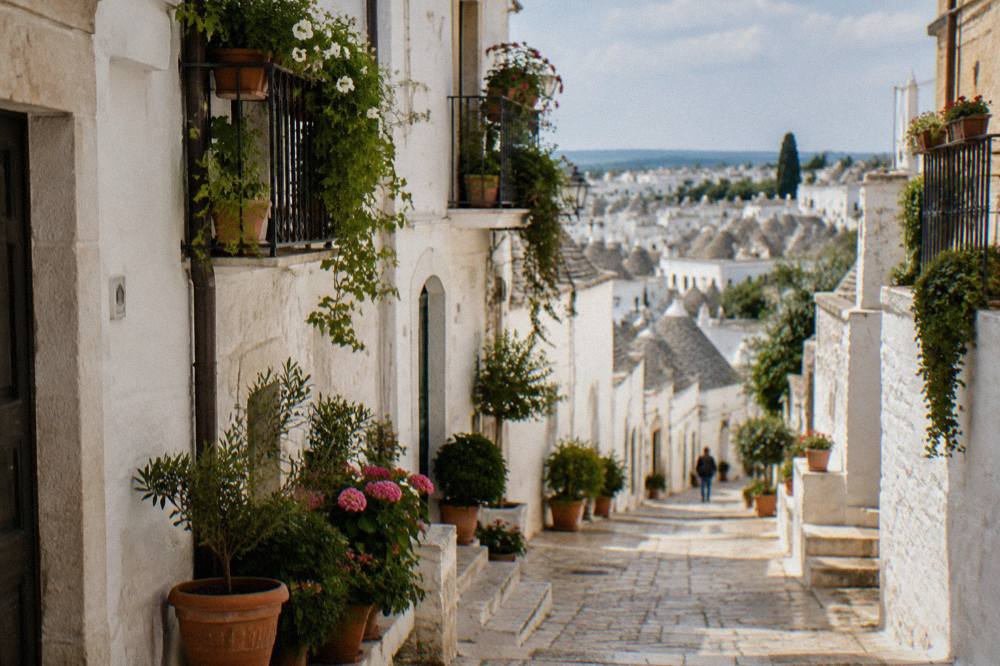
What the town offers a Lecce-based traveller is contrast and scale. Lecce's monuments, the Basilica di Santa Croce, the Duomo, the Roman amphitheatre in Piazza Sant'Oronzo, are grand and urban; Locorotondo has no monument on that scale, and its pleasure is slower: walking the ring of lanes, stopping at viewpoints over the valley, tasting the local white wine that carries the town's name, and photographing a skyline of white cubes against green countryside. A good pairing is a morning or afternoon in Locorotondo and the rest of the day in one of the bigger Itria towns, for which the Alberobello day trip and Ostuni day trip pages carry the details this page does not repeat.
Wine is the town's second identity. The countryside around Locorotondo is planted with vines and olives, and the local white is poured in the town's bars and sold in its shops. Tastings in the valley run through the sameNegroamaro-and-Primitivo-adjacent world described on the Salento wine page, though Locorotondo's own whites are a separate appellation further north. Prices for tastings vary by venue and are best checked on arrival, as no verified list exists for the town's cellars.
How Do You Get From Lecce To Locorotondo?
There is no direct train from Lecce to Locorotondo. The verified rail options from Lecce run to Ostuni, direct in about 39 to 51 minutes from about 7 euro, or towards Alberobello with a change, about 2h30 to 3h or more from about 11 to 20 euro; from either town onward connections or a short transfer are needed. For a single-day visit, a road-based day trip or a self-drive is the practical answer.
The rail geography explains the problem. Lecce's Trenitalia line runs north along the Adriatic coast through Brindisi towards Bari, with direct stops at Ostuni and Polignano a Mare; Locorotondo sits inland, on the Ferrovie del Sud Est network that serves the Itria valley, and reaching it by rail from Lecce means combining the two systems. Details of the surrounding legs follow.
| Route from Lecce | Mode | Time | Fare from |
|---|---|---|---|
| Lecce to Ostuni | Trenitalia direct | 39 to 51 min | about 7 EUR |
| Lecce to Polignano a Mare | Trenitalia direct | 1h09 to 1h21 | on the operator's site |
| Lecce to Alberobello | train with FSE change | 2h30 to 3h+ | about 11 to 20 EUR |
| Lecce to Bari Centrale | Trenitalia direct | fastest 1h19 to 1h24 | about 9 to 24 EUR |
| Lecce to Matera | bus (Itabus, FlixBus, Miccolis) | 3h30 to 4h10 | about 11 to 37 EUR |
For a driver, the Itria valley is a straightforward half-day of road. The verified free-flow drive times from Piazza Sant'Oronzo, computed for this site's research, are:
| Destination | Distance | Drive time |
|---|---|---|
| Ostuni | 78.3 km | about 66 min |
| Alberobello | 114.1 km | about 91 min |
| Polignano a Mare | 116.3 km | about 88 min |
| Taranto | 107.2 km | about 90 min |
| Bari | 152.6 km | about 118 min |
| Brindisi | 39.8 km | about 35 min |
Locorotondo lies between these points in the valley, and the practical planning advice is to treat it as a stop on an Itria loop rather than a solo destination reached by rail from Lecce. Anyone driving should note that Lecce's historic centre is covered by a camera-policed ZTL, described on the Lecce ZTL and parking page, so a valley loop should start from a car park outside the restricted zone, not from a hotel inside it.
The organised option removes the routing question entirely. Day trips departing from Lecce that cover the Itria valley towns run through the year, and the one this site features pairs Ostuni, Alberobello and Polignano a Mare in a single road itinerary from Lecce:
The featured trip is the closest match for a Locorotondo day, since it covers the same northern arc of Puglia from a Lecce departure point. Where a self-drive itinerary can detour into Locorotondo itself between the bigger stops, a fixed-group itinerary follows its published route, so travellers set on standing in Locorotondo's lanes should read the listing's itinerary closely before booking, or drive.
What Can You See And Do In Locorotondo In A Day?
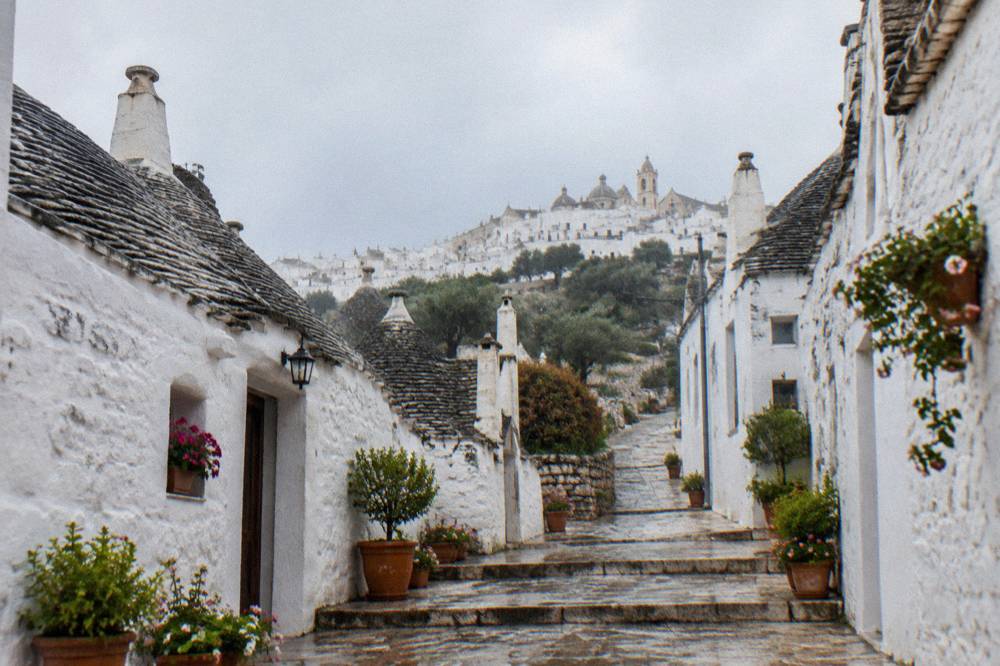
A day in Locorotondo divides into three parts: a slow circuit of the circular old town on foot, time at the panoramic terraces on the valley edge, and a tasting stop for the town's white wine, with the whole walkable centre compact enough that no transport is needed once the car or bus is parked. Schedules, ticket prices and venue lists for the town were not verified for this site, so confirm locally.
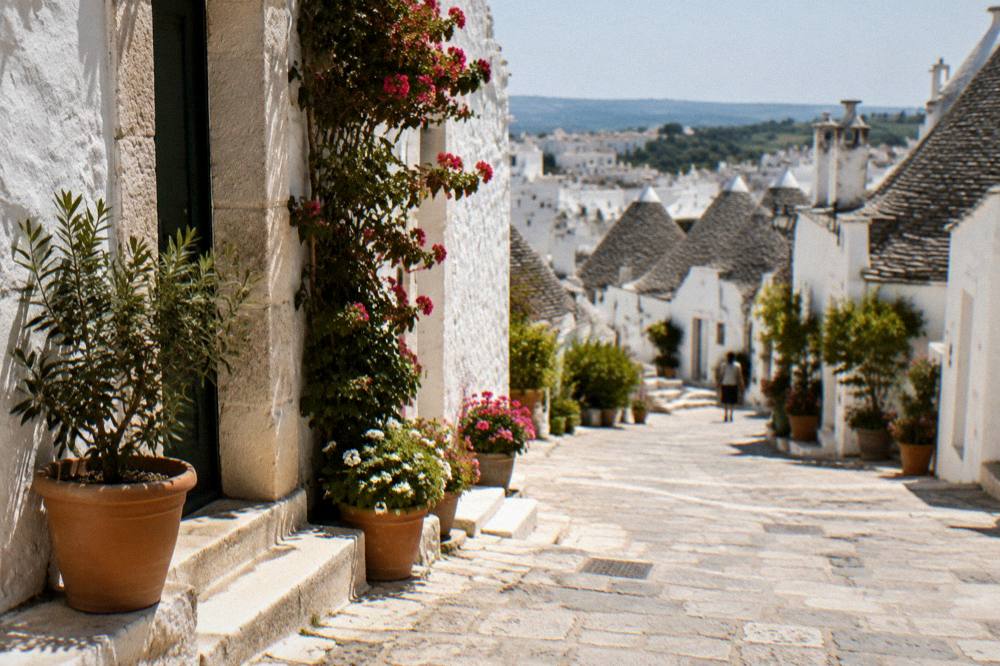
The old town is the whole attraction, and it asks for nothing but time. The lanes run in a rough ring inside the town's circular plan, and walking them takes an unhurried morning: whitewalled alleys, the pointed local houses, small squares and the parish church at the summit. The terraces along the edge of the hill look out over the Valle d'Itria, a landscape of vineyards, olive groves, trulli and dry-stone walls, and the view is the town's signature image.
Food and drink fill the middle of the day. The town's bars pour the local white by the glass, its bakeries and shops sell the same Salento staples covered on the what to eat in Lecce page, from frisa to puccia to pasticciotto, and a long lunch in the valley is the natural pace. This site has no verified restaurant list for Locorotondo and prints no venue names, addresses or prices for it; the bars around the old town's edge are easy to find on foot and prices are best checked at the counter.
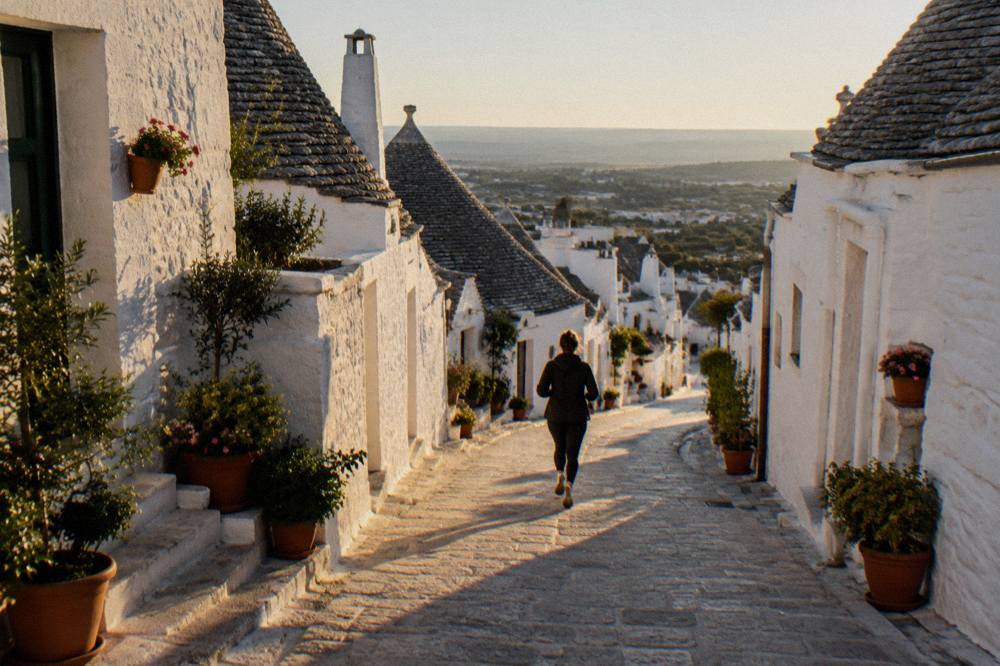
Timing matters more than itinerary. The old town is small, hot in the middle of the day in summer, and at its quietest in the early morning and late afternoon, which suits a plan that arrives mid-morning, lunches slowly, and leaves in the late afternoon. Travellers combining the town with Alberobello, which draws the valley's biggest crowds around its trulli district, usually do better visiting Locorotondo first or last in the day rather than at peak hours.
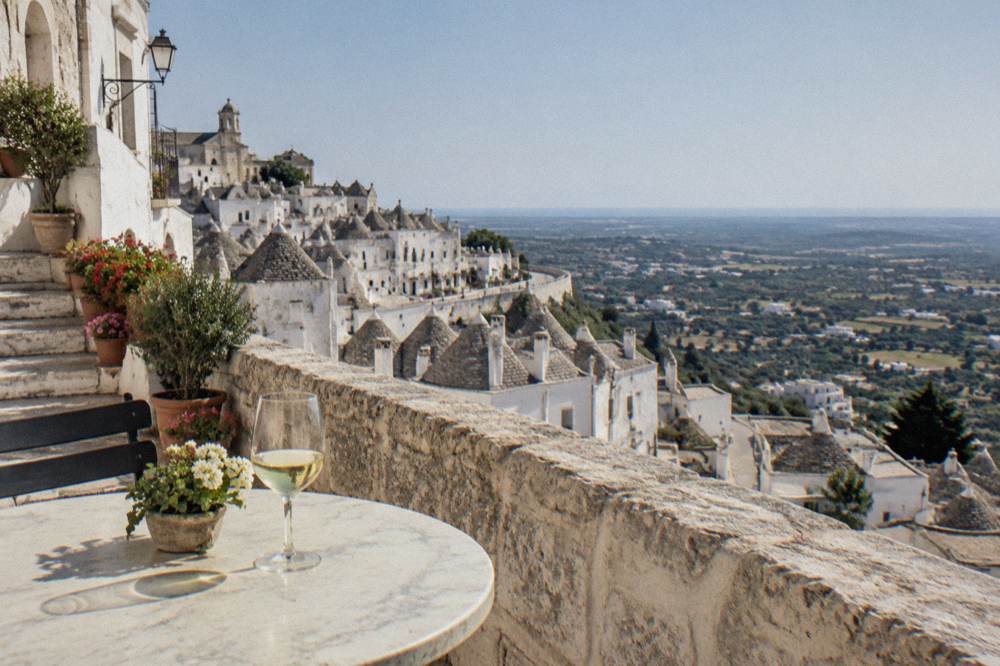
One honest caveat: this page does not carry a sight list with opening hours for Locorotondo. The walk itself, the views and the wine are the substance of a visit, and none of them needs a ticket. Anything specific, a museum, a church interior, a cellar tour, should be confirmed on arrival or at booking.
Can You Combine Locorotondo With Alberobello And Ostuni?
Yes, and that combination is the standard way to see the Valle d'Itria from Lecce in one day. The verified road distances from Lecce are about 91 minutes to Alberobello and about 66 minutes to Ostuni, with Locorotondo sitting in the valley between them, so a self-drive loop of two or three towns is a full but feasible day, and guided day trips from Lecce cover the same arc by road.
The geography makes the loop natural. Ostuni, the white city on its own hill, sits closest to Lecce and to the coast road; Alberobello, the trulli town, lies further north and inland; Locorotondo sits between them in the valley. A driver leaving Lecce after breakfast can reach Ostuni in about an hour, spend the late morning there, drive on to Locorotondo for lunch and the afternoon circuit, and finish in Alberobello before returning south, or reverse the order to hit Alberobello early before its crowds build. The full index of guides sits on Lecce Travel Guide.
For travellers without a car, the combination is exactly what the organised day trips are for. The featured trip from this site's roster runs from Lecce to Ostuni, Alberobello and Polignano a Mare in one itinerary, with a driver handling the valley roads and the timing; its coverage, price and rating render on its own page and listing rather than being typed here. Polignano a Mare, the clifftop town on the coast, adds a sea finale to the valley day, and the Polignano a Mare day trip page covers it in depth for anyone building their own route.
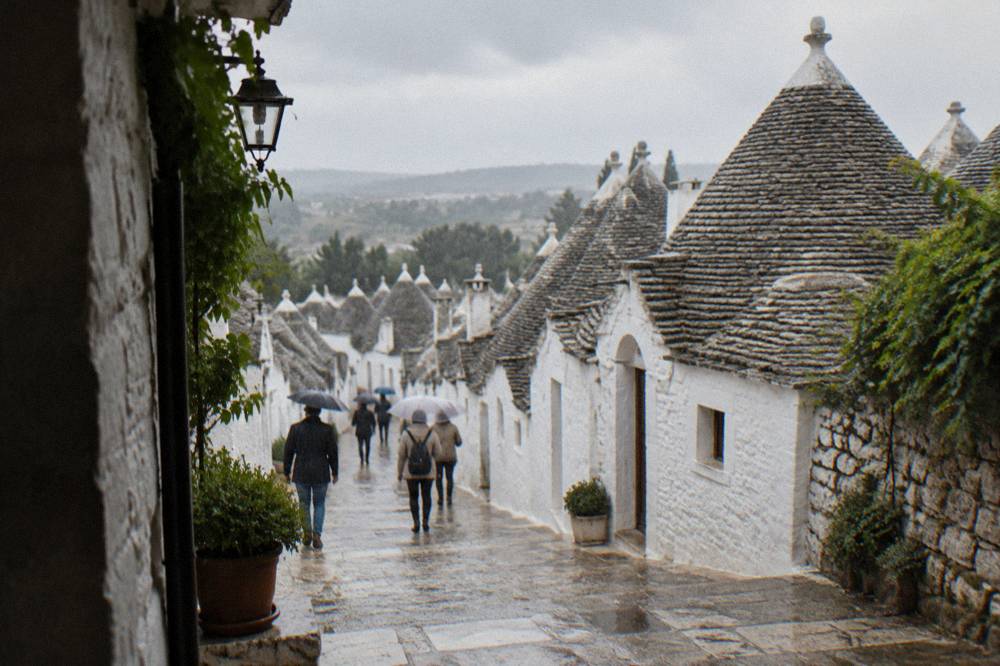
Two planning notes carry over from the Lecce research. First, the valley's towns are all small and all walkable, so the day is really a sequence of short walks with drives between them, and comfortable shoes matter more than any ticket. Second, summer weekends in the Itria valley mean traffic and full car parks, and a weekday visit runs smoother; anyone starting from Lecce should also check the best time to visit Lecce guidance, since the same seasonal logic applies to the whole region.
What Does A Day Trip To Locorotondo Cost?
The verified cost inputs are these: a train from Lecce towards Ostuni starts at about 7 euro, the rail-and-FSE journey towards Alberobello at about 11 to 20 euro, and a day trip by road is priced on the operator's listing. Lido and museum prices do not apply here; the remaining spend is food and wine, which this site does not price for Locorotondo. No nightly hotel rate, taxi fare or transfer fare is quoted anywhere on this page.
The honest budget picture for a valley day, using only honest ranges:
| Cost item | Planning range | Basis |
|---|---|---|
| Train, Lecce to Ostuni | from about 7 EUR one way | verified fare |
| Train plus FSE, Lecce towards Alberobello | about 11 to 20 EUR one way | verified fare |
| Organised Itria valley day trip from Lecce | on the operator's listing | price renders from the tour page |
| Lunch and wine in Locorotondo | check the menu on arrival | no verified venue prices |
| Car parking in the valley towns | pay-and-display, check machines locally | no verified tariff |
Two costs that do recur in the region are worth carrying in the plan. The tourist tax in Lecce, collected by the accommodation, runs up to a reported top rate of 5 euro per person per night by category and season, and should be confirmed at booking. And if the day trip idea widens beyond the valley, the same departure point in Lecce feeds boat days on the coast and e-bike days through the olive groves, which the picks below show alongside the valley tour.
When Is The Best Time To Visit Locorotondo From Lecce?
The best months for an Itria valley day from Lecce are May, June, September and October, when the ERA5 reanalysis for Lecce, 1991-2020, shows mean daily highs of about 21.8 to 28.2 C and rainfall between 18 and 91 mm a month, and July and August, with mean highs of 31.0 and 31.3 C, are workable but hot for walking white-walled hill towns at midday.
The climate table for Lecce is the closest verified series for the region, and it reads like this:
| Month | Mean high C | Mean low C | Rain mm |
|---|---|---|---|
| Jan | 12.4 | 6.7 | 63.1 |
| Feb | 13.0 | 6.8 | 59.0 |
| Mar | 15.4 | 8.3 | 64.9 |
| Apr | 18.6 | 10.7 | 54.6 |
| May | 23.4 | 14.7 | 39.9 |
| Jun | 28.2 | 19.1 | 18.0 |
| Jul | 31.0 | 21.7 | 15.3 |
| Aug | 31.3 | 22.2 | 18.1 |
| Sep | 26.4 | 19.0 | 58.9 |
| Oct | 21.8 | 15.4 | 91.3 |
| Nov | 17.3 | 11.7 | 93.7 |
| Dec | 13.5 | 8.2 | 75.5 |
November carries the highest monthly rainfall in the series at 93.7 mm, and July the lowest at 15.3 mm; the figures are modelled normals for the Lecce grid cell, not a station record, and the valley to the north follows the same Mediterranean rhythm of hot dry summers and mild damper winters. For a day of walking white lanes with no shade, the shoulder months are the comfortable choice, and the towns are quieter outside the Italian holiday weeks of August.
Seasonal events tilt the calendar too. The Festa dei Santi Patroni in Lecce ran 23 to 26 August 2026, and the Notte della Taranta Concertone in Melpignano was held on 22 August 2026, so late August in the region pairs a valley day with festival energy but also with peak crowds, a trade-off worth knowing before booking anything fixed.
Where Else Can You Go From Lecce On The Same Day Out?
The same day-out logic that reaches Locorotondo also reaches Ostuni in about 66 minutes by road, Alberobello in about 91, Polignano a Mare in about 88 and Matera by bus in about 3h30 to 4h10, so the northbound day trip is really a choice between an Itria valley loop, a coast-and-cliffs day, or the longer crossing into Basilicata to see the sassi of Matera.
Each of those has its own page with the verified logistics. The Ostuni day trip, Alberobello day trip and Polignano a Mare day trip pages cover the towns closest to Locorotondo; the Matera itinerary covers the longest option, noting that Matera is in Basilicata, a different region from Puglia, reached from Lecce by bus in about three and a half to four hours or by car in about 2h40. South of Lecce instead, the Salento itinerary strings together Otranto, Gallipoli, Leuca and the beaches, a different day-out vocabulary of sea and baroque rather than hill towns and vines.
The broader planning pages pull it together: things to do in Lecce for the base city itself, and the Puglia itinerary and Puglia road trip pages for anyone turning a single valley day into a full route through the region. Locorotondo earns its place on any of those routes as the pause between the bigger names, the town you walk slowly rather than tour.
Common Questions About Locorotondo
Is Locorotondo worth a day trip from Lecce?
Yes, for travellers who want the contrast of a small whitewashed valley town after Lecce's baroque streets. The old town is compact and walkable, the views over the Valle d'Itria are the main draw, and the town pairs naturally with Alberobello and Ostuni on the same day.
How do I get from Lecce to Locorotondo without a car?
There is no direct train. The verified rail options from Lecce are direct trains to Ostuni in about 39 to 51 minutes or journeys towards Alberobello with a change, taking about 2h30 to 3h or more, with onward connections needed to reach Locorotondo itself. A guided day trip by road from Lecce, or a hire car, is the practical single-day option.
How far is Locorotondo from Lecce?
This site's verified drive-time table covers the surrounding towns from Piazza Sant'Oronzo, about 66 minutes to Ostuni and about 91 minutes to Alberobello, with Locorotondo lying in the valley between them. An exact verified Lecce-to-Locorotondo driving time is not carried on this page.
Can you visit Locorotondo and Alberobello in one day from Lecce?
Yes. Both towns sit in the Valle d'Itria within a short drive of each other, and a self-drive loop that adds Ostuni is a standard full-day itinerary. Guided day trips from Lecce cover the same arc, with routes and stops listed on each operator's listing.
What is Locorotondo famous for?
Its circular whitewashed old town, its panoramic position over the green Valle d'Itria, its pointed gabled houses and its white wine. It is a town for walking, viewing and tasting rather than for monument-hopping.
Do you need tickets for anything in Locorotondo?
The old town, lanes and viewpoints are public space. No opening hours or ticket prices for the town's museums, churches or cellars were carried into this site's research, so confirm anything specific on arrival or at booking.