Lecce Souvenirs And Shopping: What Is Actually Made Here
Lecce shopping is really about two things: crafts made in the city itself, papier mache above all, and food and wine from the Salento plain around it. This guide separates what is actually produced here from what is imported filler.
Short answer
Buy cartapesta figures and pietra leccese objects in Lecce's old town, and Salento wine, olive oil and pasticciotto from the surrounding province. No single shop is verified as a recommendation, so this page covers the crafts, the districts, the fairs and the logistics instead.
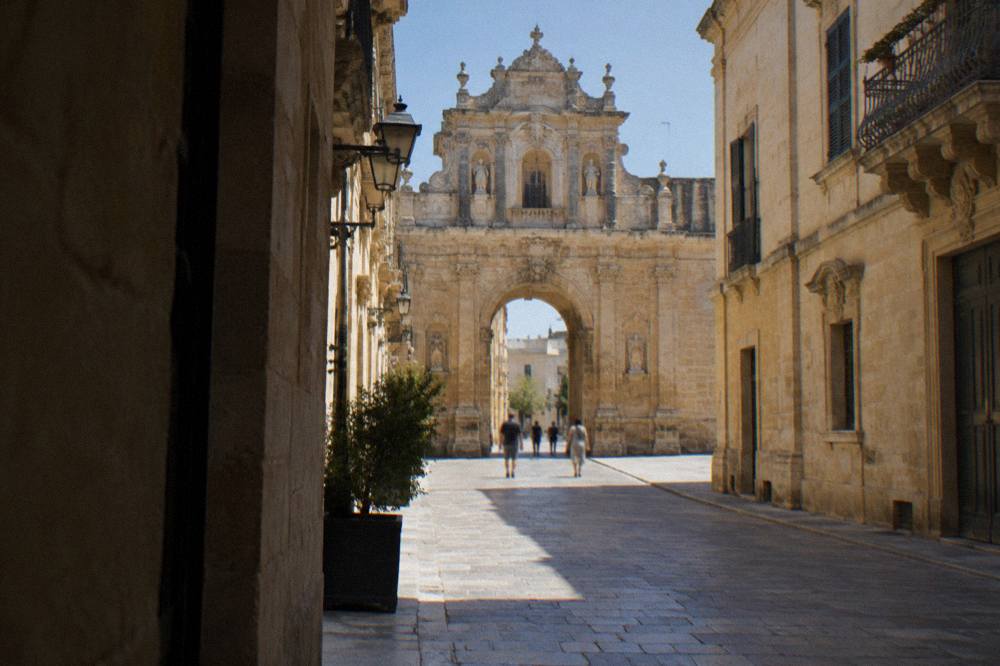
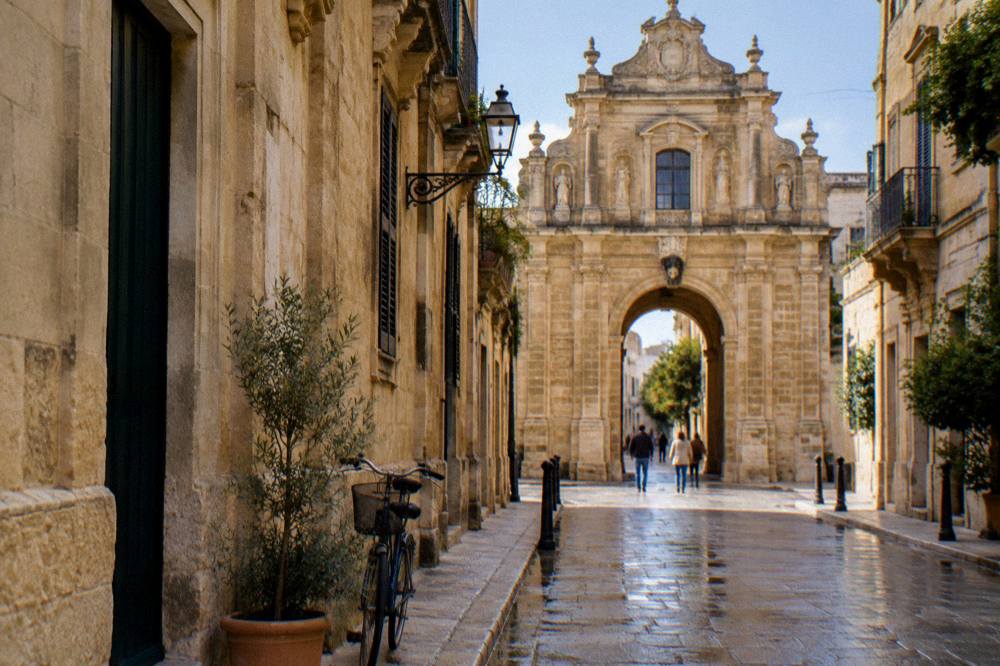
Lecce, the baroque capital of Salento in Puglia, southern Italy, is a small city whose shopping scene is unusually honest about what it sells, because the two things it is genuinely famous for making, papier mache figures and carved pietra leccese limestone, are both produced by hand within a few streets of the main squares. The honey-coloured stone of the facades is the same material local artisans shape into objects, and the cartapesta workshops of the historic centre, clustered around the Basilica di Santa Croce, continue a craft tradition tied to religious figures and nativity scenes, as the local craft documentation describes. Around the city, the Salento plain supplies the rest: Negroamaro and Primitivo wines, olive oil, and the pastry case of pasticciotto. This page, from the Lecce Travel Guide editorial desk, covers what is actually made here, where the shopping districts sit, what the Christmas fair adds, and how the ZTL and the buses shape a shopping day. No individual shop was checked or verified, so none is named as a recommendation, and no shop price is printed anywhere below.
What Souvenirs Are Actually Made In Lecce?
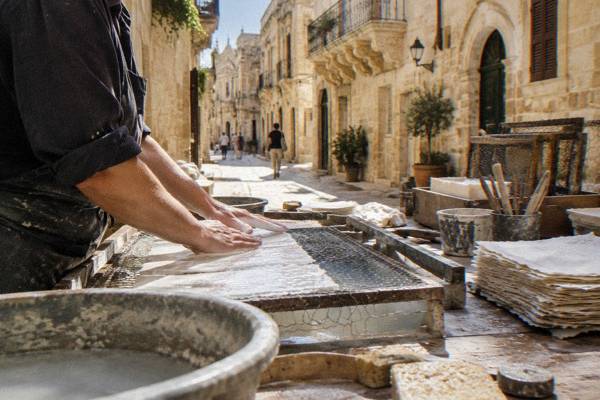
The genuine local products are papier mache (cartapesta) figures carved and layered in city workshops, objects shaped from pietra leccese, the same Miocene limestone the baroque facades are built from, and, from the province around the city, Negroamaro-based Salento wines, olive oil, almond sweets and pasticciotto. The craft documentation lists working artisans in the historic centre, with botteghe clustered near Santa Croce, making religious figures and nativity scenes from paper, glue and molds.
Cartapesta is the craft most tied to Lecce's identity. Local sources describe a tradition of shaping religious statues and presepe, nativity scenes, from layered paper and paste, a technique that grew up because pietra leccese was cheap to carve but the finished statuary was not. Artisans listed by local craft directories include workshops in the historic centre, near Santa Croce and in the streets running off Piazza Sant'Oronzo. What a given bottega sells, at what price and in which hours was not checked for this page, so confirm with each workshop directly.
Pietra leccese is the other city product. The geological literature describes it as a Miocene calcarenite, soft and workable when quarried, hardening with exposure, which is exactly why the baroque facades carry such deep carving. Small objects in the same stone are sold around the old town. Beyond the city walls, the province supplies wine and food, covered in detail further down.
Readers who want to go beyond buying and actually make something can book a class; the site's product blocks below list what is available, with prices rendered from live listings.
A rickshaw loop is one way to see the workshop streets before committing to a purchase, and the papier mache class below is the deeper option for anyone who wants the craft rather than the object.
Where Do You Shop In Lecce, District By District?
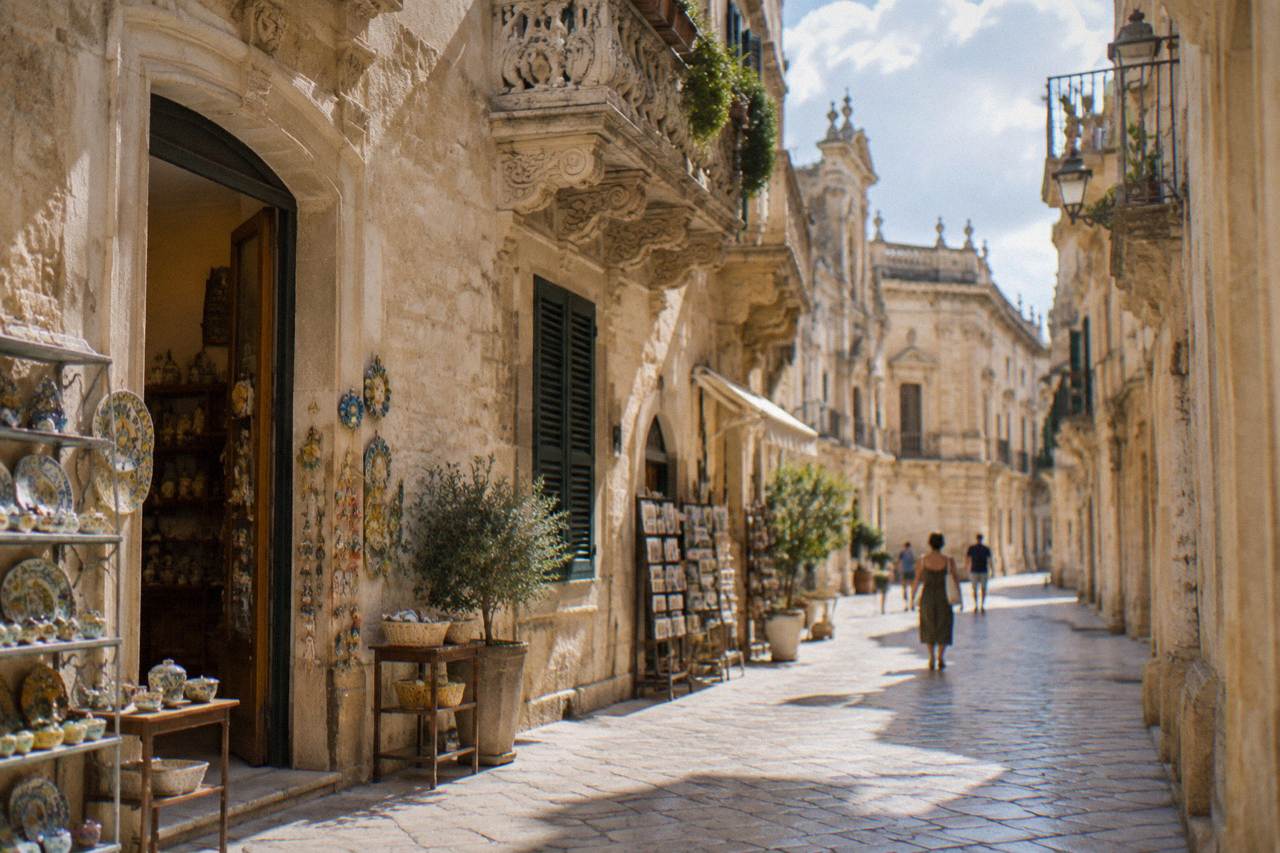
Lecce splits into two shopping zones: the historic centre inside the walls, a compact maze around Piazza Sant'Oronzo, Piazza del Duomo and Via Giuseppe Libertini, holding the craft workshops, boutiques and pasticcerie, and the modern city outside, centred on Piazza Mazzini and Corso Vittorio Emanuele II, which is where the department stores, chain retail and everyday shopping sit. The two zones are about a 15 minute walk apart through Porta Napoli.
The centro storico is the visitor's shopping ground, and it is small enough to cover on foot in a morning. The craft streets run around the Basilica di Santa Croce and out towards the Duomo. The pasticcerie of note sit in and around Piazza Sant'Oronzo, including Caffe Alvino, whose roots in the square go back to about 1880, and Pasticceria Natale, family-run since 1978, both covered in the site's cafes guide. No address, opening time or price for any venue is printed here, per the sourcing rules above.
Piazza Mazzini and the corso beyond it are where leccesi themselves shop. If the list includes batteries, shoes or a phone charger, this is the zone for it, not the old town.
| Zone | What it holds | Character |
|---|---|---|
| Centro storico, around Piazza Sant'Oronzo | Pasticcerie, cafes, craft and souvenir shops | Visitor-facing, compact, car-free core |
| Streets around Basilica di Santa Croce | Cartapesta botteghe and artisan workshops | Craft quarter, per local craft listings |
| Piazza del Duomo and Via Libertini | Boutiques, bookshops, galleries | Mix of local and visitor retail |
| Piazza Mazzini and Corso Vittorio Emanuele II | Department stores, chains, everyday retail | Modern city, where residents shop |
Getting between the zones is a walk, or the SGM city bus network if purchases get heavy: an ordinary 60-minute ticket costs about 1.20 euro, 1.50 euro bought on board, and a day ticket about 3 euro, per the operator's tariff page. Full detail sits in the getting around Lecce guide.
What Food And Drink Should You Carry Home From Lecce?
The sourced food souvenirs from Lecce and its province are pasticciotto, the custard-filled shortcrust pastry, caffe in ghiaccio's key ingredient, almond milk syrup, Negroamaro-based wines such as Salice Salentino DOC, established 1976, Primitivo di Manduria, and olive oil from the Salento plain. Pasticceria Natale's menu lists a Santo Pasticciotto at 2.20 euro, the one verified pastry price. Sealed, shelf-stable items travel best; fresh pasticciotto is a same-day pleasure.
Pasticciotto deserves its caveat. The 1745 invention date belongs to Pasticceria Ascalone's own claim, the shop is in Galatina, not Lecce, and historians dispute it. What is not disputed is that the pastry is the signature sweet of the Salento, sold in every pasticceria in Lecce, best eaten the day it is made. For gifts, the practical move is the region's hard pantry goods instead: taralli, frisa rusks and jars, described in the what to eat in Lecce guide.
Wine is the serious purchase. Salice Salentino DOC, established in 1976 and built on Negroamaro, covers parts of the Lecce and Brindisi provinces; Primitivo di Manduria is the other Salento flagship. Rather than carry bottles, a tasting-first approach works well, and the site lists both a Negroamaro tasting and a masseria visit with burrata among its bookable products.
| Food souvenir | What it is | Travel suitability |
|---|---|---|
| Pasticciotto | Shortcrust custard pastry, Salento signature | Poor: eat same day |
| Taralli and frisa | Baked rusks and ring crackers, dry | Excellent: sealed bags travel well |
| Salice Salentino DOC | Negroamaro-based red, DOC since 1976 | Good: bottles in checked luggage |
| Primitivo di Manduriadi | Primitivo red from Manduria area | Good: same as above |
| Olive oil | Salento plain production | Good: sealed tins or bottles |
| Almond milk syrup | Base for caffe in ghiaccio con latte di mandorla | Good: bottled syrup keeps |
The coffee itself has a story worth knowing when buying the syrup: the iced espresso with almond milk is credited to Antonio Quarta of Quarta Caffe in Lecce in the 1940s to 1950s, per the local press history, and the drink entered Italy's PAT traditional-products list in 2026. More background sits in the pasticciotto guide and the dedicated caffe page.
For a guided route through the edible side, the street food tasting walk below covers tastings with a local guide.
When Is The Best Time Of Year For Shopping In Lecce?
The two dated shopping events in the sources are the Fiera dei Pupi, the papier mache and Christmas fair held at the ex-Convento dei Teatini in early to mid December following the 6 to 24 December 2025 pattern, and the Festa dei Santi Patroni from 23 to 26 August 2026, which brings a fair and stalls to the city. For plain retail, the ordinary shop rhythm applies: shops commonly close for riposo roughly 13:00 to 16:00 or 17:00, and December is the craft-buying month.
The Fiera dei Pupi is the single best calendared moment for cartapesta. The fair traditionally runs in the run-up to Christmas, with the 2025 pattern running to 24 December, and it is where the nativity-figure makers show work. The 2026 dates had not been published when the event sources were checked, so confirm on the comune's site closer to the season. The patronal feast in late August adds a fair, concerts and a Luna Park to the city, per the comune's own programme.
Ordinary weeks have their own rhythm. The riposo closure means a shopping day should run morning and late afternoon, with the sightseeing squeezed into the middle, when churches also pause tourist visits during services. Month by month, the ERA5 reanalysis for Lecce, 1991-2020, puts November as the wettest month at 93.7 mm of rain and July the driest at 15.3 mm, with mean highs of 31.3 C in August against 12.4 C in January, which argues for the shoulder months if the shopping is mostly on foot outdoors.
| Period | What happens | Notes for shopping |
|---|---|---|
| Early to mid December | Fiera dei Pupi craft fair, ex-Convento dei Teatini | 2025 pattern ran 6 to 24 Dec; 2026 dates unconfirmed |
| 23 to 26 August | Festa dei Santi Patroni, fair and stalls | 2026 edition per comune programme |
| July and August | Summer season, Salento in Bus running | Heat: mean high about 31 C |
| November | Wettest month, 93.7 mm rain | Indoor craft shopping, fewer crowds |
The Christmas season gets a full treatment in the site's Lecce at Christmas coverage, and the broader events calendar, including the Notte della Taranta in August, is listed in Lecce events. Choosing between seasons is easier with the best time to visit Lecce guide.
How Does The ZTL And Parking Affect A Shopping Trip To Lecce?
The historic centre's ZTL is camera-policed, active on weekdays roughly from 20:00 to 10:00 and 13:00 to 16:30, and 24 hours on Sundays and holidays, with fines of 83 to 332 euro, so a shopping day by car means parking outside the zone and walking in. Park Liberty, an underground car park with 466 spaces near the centre, is one option; SGM blue-zone street parking costs about 1.10 euro per hour in blue areas and up to about 2 euro in central zones.
Porta Napoli is always closed to traffic. The hours are reported rather than guaranteed, and the standing advice is to ask the accommodation to register a plate if any driving into the restricted area is planned; the fines escalate quickly and arrive by post. The full rules are broken down in the ZTL and parking guide, and the wider trade-offs of hiring a car in Salento, where the beaches and masserie spread out, are covered in car rental and driving in Lecce.
For anyone arriving without a car at all, Lecce is a rail terminus: Trenitalia runs direct from Bari Centrale in about 1h19 to 1h55 on the fastest trains, and from Brindisi in about 18 to 24 minutes, while the FSE regional lines serve Gallipoli in about 1h18 to 1h43 and Galatina in about 38 to 55 minutes. The station sits a short walk from the edge of the old town, and luggage storage near the station, through app-based networks at roughly 2.50 to 3.50 euro per day, makes a shopping stop possible on a travel day. Details are in the Lecce train station guide.
Which Towns Near Lecce Are Worth A Shopping Day Trip?
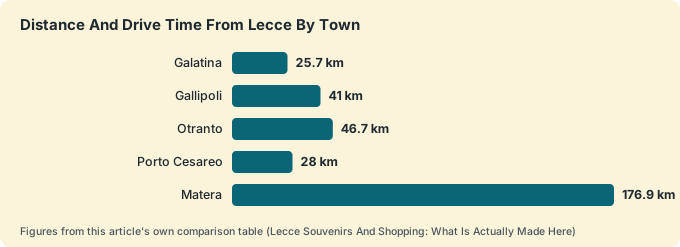
The sourced craft-and-food towns within easy reach of Lecce are Galatina, home of the pasticciotto claim and the frescoed Basilica di Santa Caterina d'Alessandria with free entry, about 25.7 km and 29 minutes by car or 38 to 55 minutes by FSE train; Gallipoli, the old town on a limestone island about 41 km away, 41 minutes by car; and Otranto, about 46.7 km and 44 minutes by car, with its 1163 to 1165 cathedral mosaic. Each pairs sights with food shopping.
Galatina is the closest and the most shopping-relevant, because Pasticceria Ascalone, the shop claiming the pasticciotto, is there, and the basilica is free to enter with split morning and afternoon hours. Gallipoli adds a fish-market town atmosphere and the old town across the bridge, and Otranto pairs the mosaic with Adriatic shopping streets. No market day, stall price or venue detail was verified for any of them, so confirm locally.
| Town | Distance and drive time from Lecce | Train option | Main draw for shoppers |
|---|---|---|---|
| Galatina | 25.7 km, about 29 min | FSE, 38 to 55 min, from about 3 euro | Pasticciotto claim, free basilica |
| Gallipoli | 41.0 km, about 41 min | FSE, about 1h18 to 1h43 | Island old town, food shops |
| Otranto | 46.7 km, about 44 min | FSE via Maglie, 1h33 to 2h+ | Mosaic, Adriatic streets |
| Porto Cesareo | 28.0 km, about 34 min | Summer bus line 104 | Seafood town, Ionian coast |
| Matera | 176.9 km, about 161 min | Bus, about 3h30 to 4h10, 11 to 37 euro | Different region, Basilicata |
In summer, the Salento in Bus network, which ran 13 June to 13 September in 2026 with fares from 1.10 to 5 euro, connected Lecce to the coastal towns, but the 2027 dates are not published, so check before planning a car-free shopping loop; the Salento in Bus guide tracks it. A guided alternative that removes the logistics entirely is the four-town Salento day trip listed below.
Can You Take Stone, Wine And Food Through Customs From Lecce?
Within the Schengen area and the EU there are no customs limits on wine, oil or food bought in Lecce and carried to another member state for personal use, and Italy's Schengen membership means no border formalities on the way out. For destinations outside the EU the rules belong to the arrival country: the common constraint on liquids in checked wine shipments is the airline's own packaging policy, and stone objects are unrestricted but heavy.
The sources for this page contain no customs figure, so confirm allowances with the arrival country.
Practical points follow from the products themselves. Pietra leccese is soft when quarried and hardens with exposure, which makes finished objects sturdy enough for luggage but heavy enough to matter on a low-cost airline with a 7 kg cabin limit. Cartapesta is the opposite: light and fragile, so it wants cabin baggage and padding. Wine and olive oil go in a sealed case in the hold; a case of six bottles is the standard local format.
For anything bought in December at the Fiera dei Pupi, the same logic applies with one addition: nativity figures can be tall, and the fair's papier mache pieces are often sized for a church-scale presepe rather than a mantelpiece. Measure before buying.
How Do You Fit Shopping Into A Sightseeing Day In Lecce?
The workable pattern is sights in the middle of the day and shopping at the edges: buy in the morning before the 13:00 riposo closures, sightsee through the afternoon when shops shut and the LeccEcclesiae churches run their 9:00 to 18:00 winter or 9:00 to 21:00 summer hours, then shop again after 17:00.
The LeccEcclesiae combined ticket, 11 euro standard and valid 15 days, covers the Duomo, Santa Croce, San Matteo, Santa Chiara and the Antico Seminario, so it can be split across days rather than crammed into one.
That ticket structure is what makes the split-day work. Because the ticket stays valid for 15 days, per the chieselecce.it ticket information, a shopper can see one church in the dead afternoon hours and save the rest for another day, keeping the mornings free for the botteghe. The Lecce churches ticket guide has the full tariff detail, and the free things to do in Lecce guide covers the squares, Porta Napoli and the amphitheatre view from Piazza Sant'Oronzo, all open public space and all on the walking route between shops.
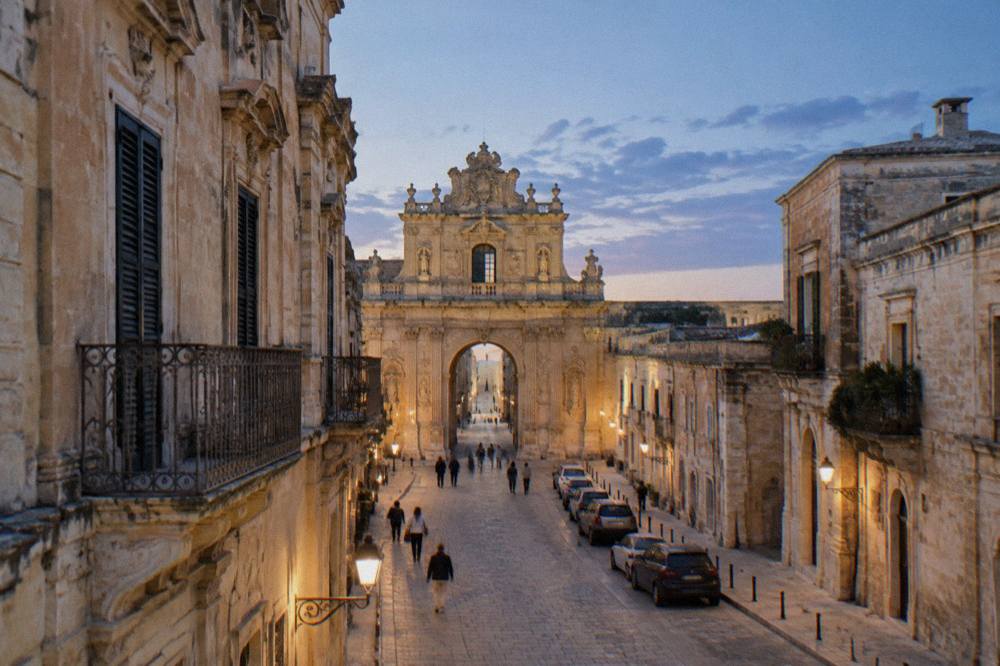
The Rickshaw tour below is the efficient version of the same idea: a guided loop of the city highlights that ends where the workshops are, with the guide's local knowledge standing in for the research this page cannot do, since no shop was verified. Prices and availability render from the live listing.
The masseria visit in that band deserves a note for shoppers: it is the one product in the roster that shows where the cheese in the shops actually comes from, with a burrata tasting at the source, and it doubles as an olive-oil and dairy buying opportunity if the farm sells direct. Confirm what is for sale on the day, since no farm shop detail was verified.
What Should You Not Buy In Lecce?
The items not worth buying in Lecce are the generic imports that fill souvenir racks anywhere in Italy, mass-produced ceramics and masks with no local workshop behind them, and any product presented as Lecce-made that the seller cannot attribute to a local bottega. The sourced local products are specific: cartapesta from historic-centre workshops, pietra leccese objects, Negroamaro and Primitivo wines, and the food items listed above. If a shop cannot say who made a thing, that is the answer.
Two factual traps sit inside Lecce souvenir shopping, both drawn from the verified corrections. First, if a shop or label calls Lecce a UNESCO World Heritage Site, it is wrong: "Salento and the Barocco Leccese" sits on Italy's Tentative List, submitted in 2006, and is not inscribed. Second, pasticciotto packaging claiming a 1745 Lecce origin is repeating a Galatina shop's own contested story. Neither affects the product, but both are worth knowing when a label makes a heritage claim to justify a price.
A third trap is the "Florence of the South" nickname printed on souvenirs with a confident attribution. The nickname is real, Lecce is often called that, but its origin is contested between two historical names and no souvenir print settles it.
Common Questions About Shopping In Lecce
What is the best souvenir from Lecce?
A cartapesta figure from a historic-centre workshop is the most locally rooted souvenir, followed by an object in pietra leccese, the same stone as the baroque facades. Food souvenirs: sealed taralli, olive oil, and bottles of Salice Salentino DOC or Primitivo travel well.
Where are the craft workshops in Lecce?
Local craft documentation lists botteghe in the historic centre, clustered near the Basilica di Santa Croce. No individual shop address or hours appear on this page, so confirm with each workshop directly.
When is the Fiera dei Pupi in Lecce?
The papier mache Christmas fair traditionally runs early to mid December at the ex-Convento dei Teatini, following a 6 to 24 December pattern. The 2026 dates had not been published at the time of research; check the comune's site closer to the season.
Can I bring Lecce wine home on a plane?
Within the EU and Schengen there are no customs limits for personal use. Pack bottles in checked luggage in a sealed case; the constraints are the airline's baggage rules, not Italian export rules.
Do shops in Lecce close in the afternoon?
Many follow the riposo pattern, closing roughly 13:00 to 16:00 or 17:00, though tourist-oriented shops may stay open. Shop in the morning and after 17:00, and use the middle of the day for churches and museums.
Can I drive into Lecce's centre to shop?
The ZTL is camera-policed on weekdays roughly 20:00 to 10:00 and 13:00 to 16:30, and all day Sundays and holidays, with fines of 83 to 332 euro. Park outside the zone, at Park Liberty for example, and walk in.
One last planning note: pair the shopping with the food. The cafes around Piazza Sant'Oronzo, Caffe Alvino among them, serve the iced coffee with almond milk that the syrup bottles in the shops are meant to recreate, and the Lecce cafes guide maps them. Buy the stone, drink the coffee, and carry the wine home in the hold.