Naples To Lecce: Train Via Caserta Or The Bus
Naples to Lecce is a crossing of Italy's ankle rather than a single hop, and it ends in the honey-coloured baroque capital of Salento. Here is how the train, the coach and the Brindisi flight alternative each work, reported from primary sources rather than guesswork.
Short answer
There is no sourced single-seat time from Naples to Lecce in this site's research. Rail travellers ride the inland line towards Caserta and change onto the Adriatic services towards Bari and Brindisi; coach travellers take an intercity service the whole way; flyers land at Brindisi (BDS) and take the airport bus about 40 minutes into Lecce. Check an official planner or the operator's live listing for the exact itinerary.
Lecce sits at the flat southern end of Puglia, the baroque capital of Salento at the heel of Italy, built from honey-coloured pietra leccese limestone and sitting a few kilometres inland from its nearest beach at San Cataldo. Getting there from Naples means crossing the full length of the Italian ankle, from the Tyrrhenian coast down through Basilicata and across the plain of Puglia to the Adriatic side of the peninsula. It is a real journey, not a commuter hop, and the way you make it shapes the first evening in the old town.
The honest starting point is what the sources do and do not say. What the research does carry is a full picture of Lecce as a rail terminus, the airport gateway at Brindisi, the summer beach buses, the climate, the tickets and the day trips that open up once the journey is done. That is the trip, reported from primary listings and official pages rather than from memory.
For the wider context of reaching the city from every direction, the site's guide to reaching Lecce covers the full set of approaches, and Lecce Travel Guide treats this route in detail below.
How Do You Get From Naples To Lecce?
There is no sourced single-seat time from Naples to Lecce in this site's research, and the practical answer is that the trip means either a change of train or one long coach ride down the length of Puglia. Rail travellers head inland towards Caserta and then swing onto the Adriatic corridor towards Bari and Brindisi, while coach travellers stay in one seat and let the driver handle the route.
Three formats compete for the booking. The train is the classic choice, running through the Campanian interior and along the coast of Puglia, but it is a multi-leg itinerary rather than a through service as far as this site's sources show. The coach is the format that avoids every transfer: one vehicle, one seat, luggage stowed once. The third format is not a surface route at all but a shortcut, flying from Naples to Brindisi and finishing the last stretch by airport bus.
Which one wins depends on what the traveller values. The train suits anyone who wants to stretch their legs at a change and who prefers rail to a long road seat. The coach suits anyone travelling with luggage who would rather not carry it between platforms. The flight suits anyone who wants the journey over fast and is happy to start from an airport rather than a city centre. None of the three has a sourced timetable on this page, so the exact departure, duration and fare must come from an official planner or the operator's live listing at the moment of booking.
What Does The Train From Naples To Lecce Involve?
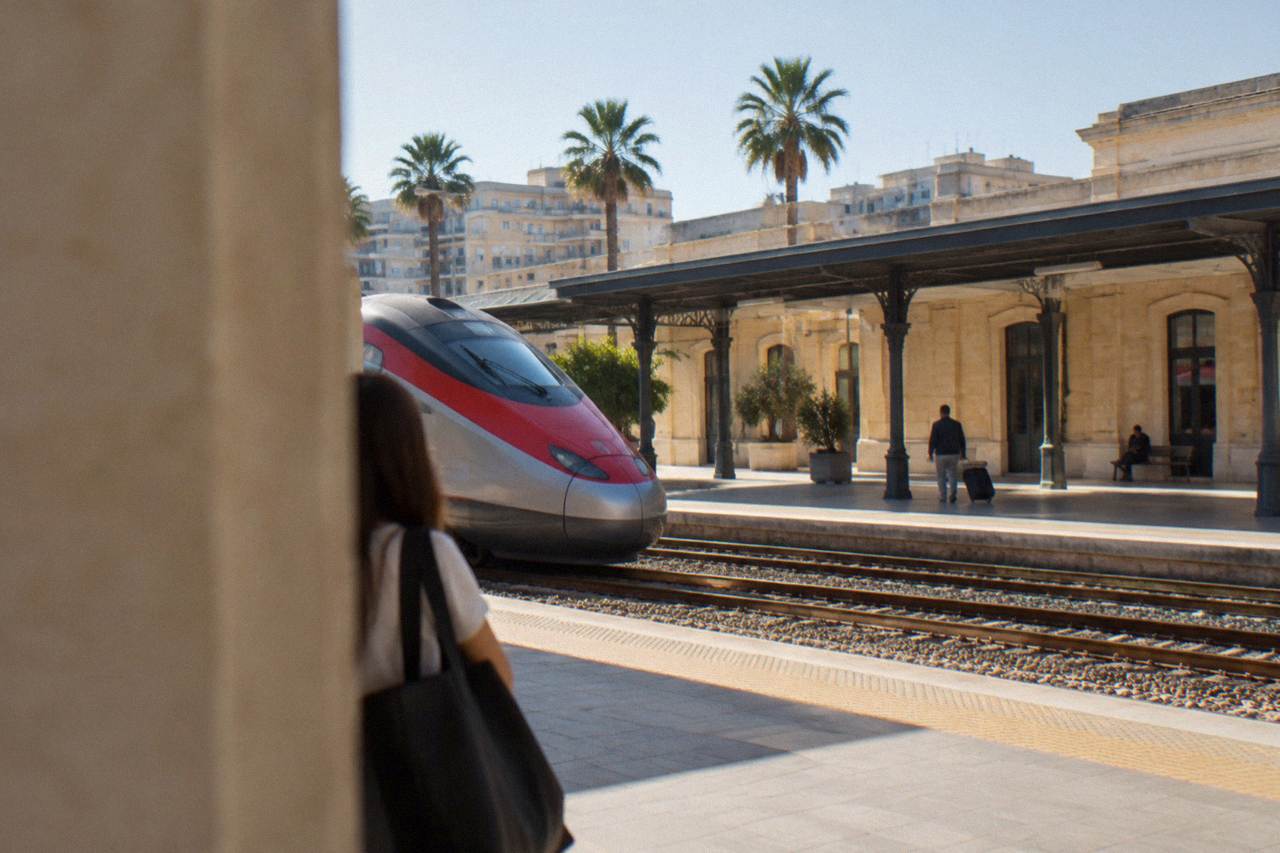
The rail route from Naples to Lecce runs through the inland corridor towards Caserta and then down the Adriatic side of Puglia, and it is a journey of legs rather than one seat: this site's sources give no Naples to Lecce time, so the working method is to book towards Bari or Brindisi, change there, and finish on the Adriatic services that terminate at Lecce, checking an official planner for the full itinerary.
Lecce is a terminus, not a through station. Trains arrive from the north along the Adriatic line, and the last stretch of any long rail journey into the city runs through Brindisi. The reported Lecce to Brindisi leg takes about 18 to 24 minutes and starts from about 3.40 euro, with departures roughly every half hour, and the reported Lecce to Bari Centrale connection runs about 1 hour 19 to 1 hour 24 minutes at its fastest on the high speed sets. Those are Lecce-side figures, printed here because they describe the final legs of the Naples journey, not because they are Naples times.
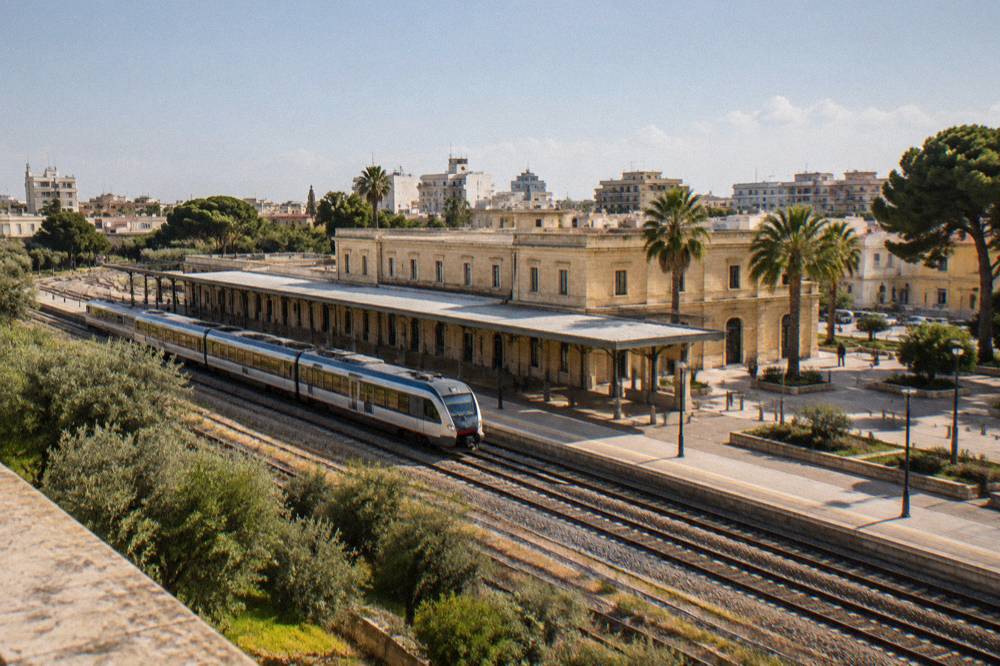
The change of train is the part worth planning. A traveller who breaks the journey at Bari arrives into a major interchange with services, shops and the onward Adriatic platforms; a traveller who changes at Brindisi has a shorter final leg but a smaller station. Both patterns are normal for this route, and the choice between them is usually made by which connection an official planner shows as the tighter or the more comfortable on the day.
| Rail leg from Lecce (reported) | Connection | Time | From-price |
|---|---|---|---|
| Lecce to Brindisi | Direct Trenitalia | about 18 to 24 min | about 3.40 euro |
| Lecce to Bari Centrale | Direct, fastest sets | about 1 h 19 to 1 h 24 | regional about 9 to 13 euro, fast trains 18 to 24 euro |
| Lecce to Rome | Direct long distance | about 5 h 58 to 6 h 16 | about 32 euro |
| Lecce to Ostuni | Direct | about 39 to 51 min | about 7 euro |
| Lecce to Polignano a Mare | Direct | about 1 h 09 to 1 h 21 | See current price |
| Lecce to Gallipoli | Direct FSE | about 1 h 18 to 1 h 43 | about 5 euro |
| Lecce to Otranto | FSE, change at Maglie | about 1 h 33 to 2 h or more | about 4 to 5 euro |
| Lecce to Galatina | Direct FSE | about 38 to 55 min | about 3 euro |
The table reads from Lecce outwards, which is the direction that matters for the arrival: every one of those legs is a trip that opens up after the Naples journey is finished, and the Brindisi and Bari rows are the two legs a Naples rail traveller rides last. The Rome row is included as the comparator, because the capital is the other long rail approach to the city covered on this site in the Rome to Lecce route guide.
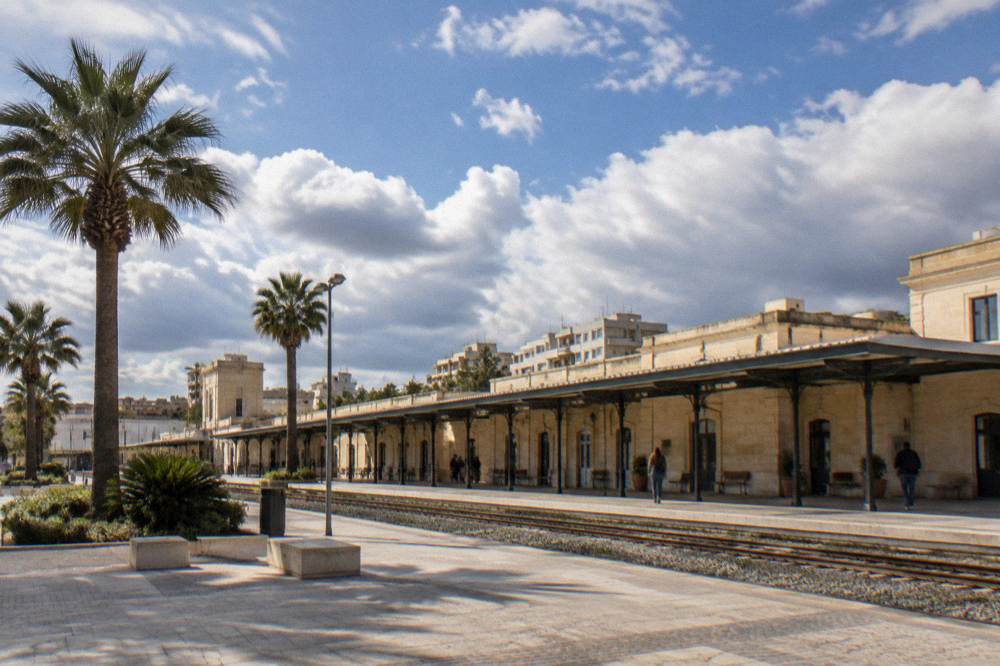
Once the train pulls in, the journey is genuinely over: Lecce's station is close to the historic centre, and the old town rewards the arrival immediately. The site's Lecce station guide covers the arrival practicalities in full.
Is The Long-Distance Coach A Simpler Option From Naples?
Intercity coaches link Naples and Lecce with one vehicle and no changes, which is the format's whole appeal: no transfer with luggage across a station, no platform hunt at an interchange. This site's sources carry no Naples to Lecce coach time or fare, so any figure a booking page displays is the operator's own live data, and the departure point, the duration and the stops should be confirmed at booking.
The coach trade-off is simple. What the train splits across a change, the coach takes in a single long sitting, down the motorway spine of Campania and across the plain of Puglia. For a traveller with suitcases, that is a real comfort: bags go under the coach once and come out once, at the end. Against that sits the plain fact of a road journey across the full width of the ankle, which is hours in a seat regardless of how the route is dressed up.
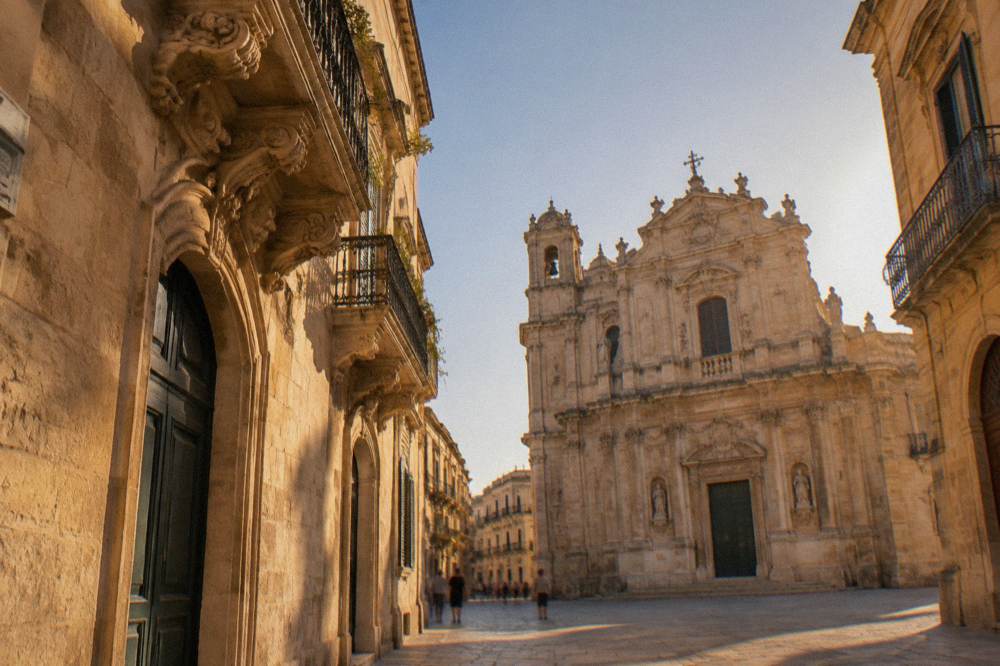
The booking mechanics matter more on a coach than on a train, because there is no fallback if a seat is missed. The departure terminal in Naples, the arrival stop in Lecce and the number of rest breaks are all operator details, and none of them is in this site's research. The one rule worth following is to read the listing rather than the summary: the operator's live page will state the duration, the stops and the luggage allowance, and that is the data to book on.
There is a middle path worth naming. Some travellers split the journey with a stop in Matera, in Basilicata, which sits on the western side of the crossing and is reached from Lecce by coach in about 3 hours 30 to 4 hours 10 at a reported fare of about 11 to 37 euro. The site's Matera day trip guide covers what that detour adds; as a break in the Naples to Lecce journey it turns one long ride into two shorter ones with a spectacular city in the middle.
However the journey is made, the first evening in Lecce is better spent on foot than in another vehicle, and a guided walk is the fastest way to convert arrival fatigue into orientation.
Should You Fly Into Brindisi Instead Of Starting From Naples?
Flying changes the shape of the trip entirely: Brindisi airport (BDS) is the commercial gateway for all of Salento, about 47.6 km and roughly 43 minutes by road from Lecce, and Terravision's airport bus lists 6.50 euro one way and 13 euro return, taking about 40 minutes. A Naples traveller who flies lands on the far side of the crossing in under an hour of air time.
Lecce has no commercial airport of its own, and every flight-based approach to the city routes through Brindisi. That fact reframes the Naples comparison: the question is not whether flying is nicer than the train but whether the airport transfer overhead at both ends is worth skipping the surface journey. For a short trip, the flight plus bus combination can win on total time; for a traveller who wants to see the country between the two cities, it removes exactly the part worth seeing.
| Brindisi gateway fact | Figure | Source basis |
|---|---|---|
| Airport to Lecce bus, one way | 6.50 euro | Terravision listing |
| Airport to Lecce bus, return | 13 euro | Terravision listing |
| Airport bus journey time | about 40 min | Terravision listing |
| Road distance to Lecce | about 47.6 km, roughly 43 min | computed route |
| Lecce to Brindisi train | about 18 to 24 min, from about 3.40 euro | reported rail data |
The airport bus is the piece that makes the flight format workable. It runs between the terminal and Lecce with a listed fare and a listed duration, and it removes the last-mile question that airport arrivals usually carry. The full arrival sequence, including what happens at the Lecce end, is covered in the site's Brindisi airport to Lecce guide, which treats the transfer as its own subject rather than a footnote.
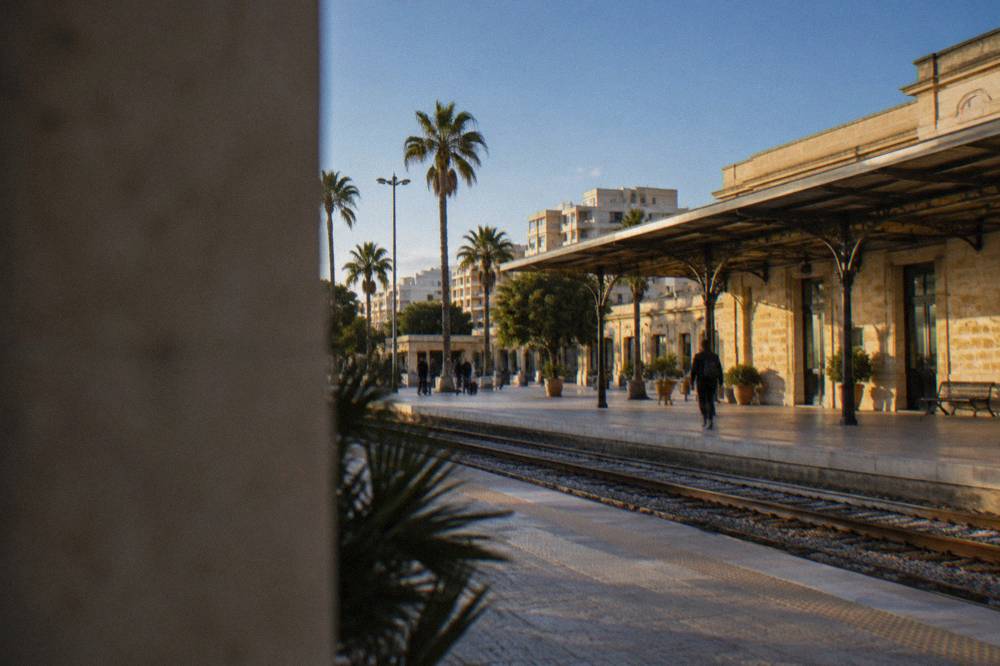
One caution belongs in any Brindisi discussion. The bus fare and the road time above are the airport transfer, not a general price for taxis or private cars, and this site's research carries no taxi or private-transfer fare for the route. Anyone considering a car service should ask the operator for the quote directly and confirm it at booking.
What Is It Like To Arrive At Lecce Station?
Lecce's station sits a short walk from the historic centre, and the arrival is unusually gentle for a city of 94,387 residents (1 January 2026 estimate): the ZTL cameras police the old town's access hours, the SGM bus network runs from the city terminal, and app-based luggage storage near the station lists rates around 2.50 to 3.50 euro per day.
The station-to-old-town distance is the detail that decides the first hour. The baroque centre is compact and mostly pedestrian in feel, and a traveller who arrives by train can be standing in front of a church facade within minutes of stepping off. That is the reason the rail format rewards the effort of the change: the journey ends inside the destination rather than at a bus stop on its edge.
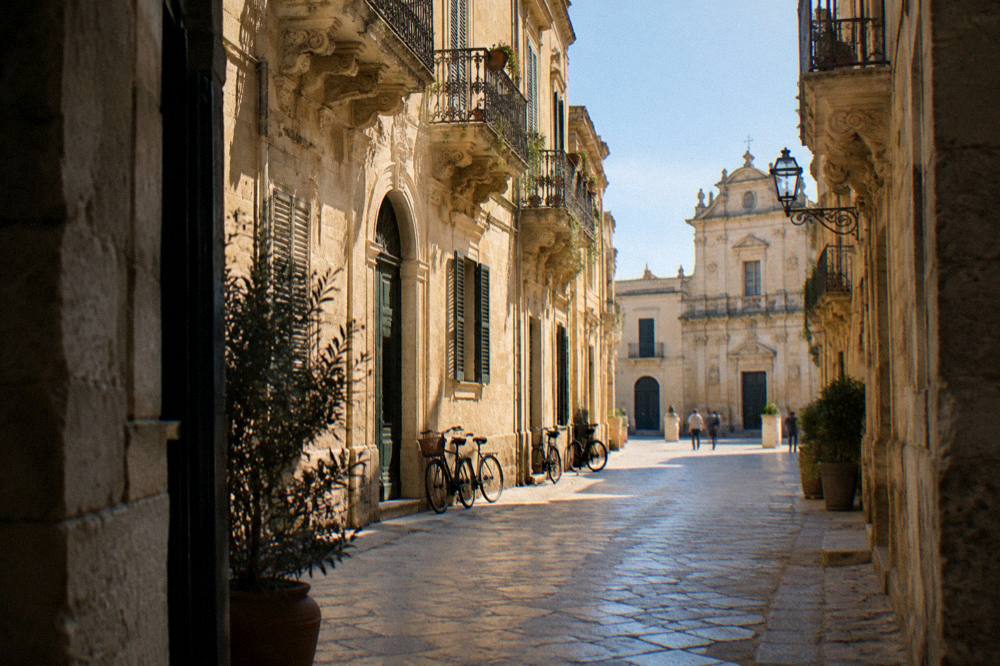
Two practicalities deserve a sentence each. First, the historic centre is a limited traffic zone, camera-policed on weekdays with hours that are reported rather than guaranteed, so anyone driving in from a hire car should ask their accommodation to register the plate; the site's getting around Lecce guide covers the ZTL and the parking options in detail. Second, the SGM city network starts at the terminal, with a 60-minute ticket at about 1.20 euro, 1.50 euro bought on board, and a day ticket at about 3 euro, which is enough to reach the edges of the city without a car.
| Arrival item | Reported figure | Note |
|---|---|---|
| SGM single ticket, 60 min | about 1.20 euro | about 1.50 euro on board |
| SGM day ticket | about 3 euro | city network |
| Luggage storage near station | about 2.50 to 3.50 euro per day | app-based networks |
| Tourist tax | top reported rate 5 euro per night, 5-star high season | by category and season, confirm at booking |
The tourist tax row is the one that surprises people. Lecce collects a per-night visitor levy that varies by accommodation category and season, with a top reported rate of 5 euro at five-star properties in the high season, and the accommodation collects it. It is not a barrier, but it belongs in the budget, and the exact category rate should be confirmed at booking rather than assumed.
When Is The Best Time Of Year To Make The Naples To Lecce Trip?
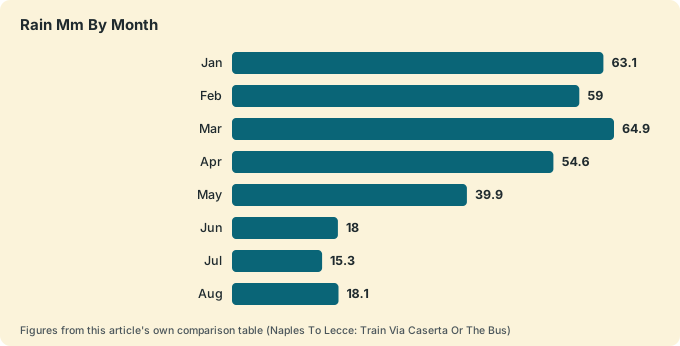
The crossing works year-round, but the season changes Lecce itself: ERA5 reanalysis, 1991-2020, puts mean daily highs at 12.4 C in January against 31.3 C in August, with November the wettest month at 93.7 mm of rain and July the driest at 15.3 mm, so the real choice is between a mild, damp, quiet winter and a hot, dry summer that peaks with the August festivals.
The climate table below is the full monthly picture from the modelled normals, and it is worth reading before choosing a travel month rather than after. The summer is genuinely hot and dry, with the sea at a reported 25 to 27 C at the August peak. The winter is mild rather than warm, with mean lows down to 6.7 C in January, and the autumn carries the rain: October, November and December together hold the three wettest months of the year.
| Month | Mean high C | Mean low C | Rain mm |
|---|---|---|---|
| Jan | 12.4 | 6.7 | 63.1 |
| Feb | 13.0 | 6.8 | 59.0 |
| Mar | 15.4 | 8.3 | 64.9 |
| Apr | 18.6 | 10.7 | 54.6 |
| May | 23.4 | 14.7 | 39.9 |
| Jun | 28.2 | 19.1 | 18.0 |
| Jul | 31.0 | 21.7 | 15.3 |
| Aug | 31.3 | 22.2 | 18.1 |
| Sep | 26.4 | 19.0 | 58.9 |
| Oct | 21.8 | 15.4 | 91.3 |
| Nov | 17.3 | 11.7 | 93.7 |
| Dec | 13.5 | 8.2 | 75.5 |
The calendar of events is the other half of the timing decision. August is the month when Salento's folk festival machinery runs at full tilt: the Notte della Taranta Concertone in Melpignano was held on 22 August 2026 as the 29th edition, and Lecce's own patronal feast for Sant'Oronzo, San Giusto and San Fortunato ran 23 to 26 August 2026. The 2027 dates had not been announced, so an August traveller should check the festival pages before locking plans. The site's best time to visit Lecce guide and Lecce weather guide expand both halves of that decision.
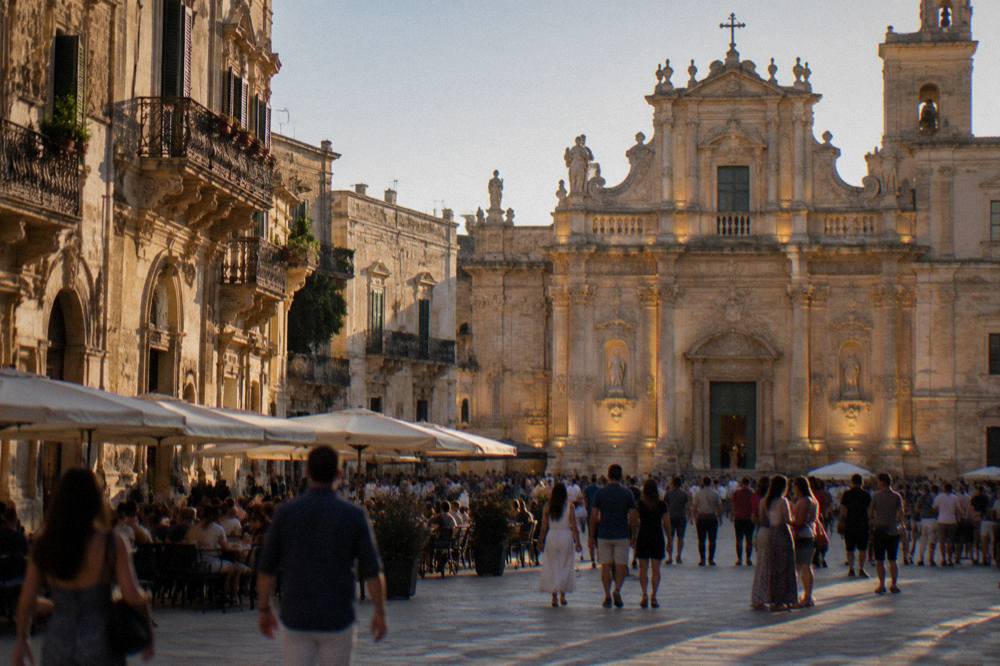
The transport calendar matters as much as the weather one. The summer beach buses, covered below, run only in the June-to-September window, so a traveller who wants car-free beach access from Lecce should plan around that season. A winter arrival trades the beaches and the festivals for low crowds and a city that is fully itself, churches and all, with the winter LeccEcclesiae hours from 9:00 to 18:00.
What Should You Do First In Lecce After Arriving?
Start with the churches, because they are the city's substance: the LeccEcclesiae combined ticket lists 11 euro full, 5 euro reduced for ages 12 to 17 and 24 euro for a family of two adults with 12-to-17-year-olds, valid 15 days and covering the Duomo with its crypt, the Basilica di Santa Croce, San Matteo, Santa Chiara and the Antico Seminario with the MuDAS museum.
The ticket is the practical backbone of a first visit. It bundles the five church sites into one purchase, it stays valid for 15 days, and children under 12 enter free. The full version with the bell tower, listed as the "Up!" option, is priced at 21 euro full, 13 euro reduced and 48 euro family, with bell tower ascents roughly every 20 minutes. Hours are seasonal: 9:00 to 21:00 in the summer months of April to September, 9:00 to 18:00 from October to March, with last entry 15 minutes before closing.
| LeccEcclesiae ticket | Full | Reduced (12 to 17) | Family (2 adults + minors 12 to 17) |
|---|---|---|---|
| Standard (no bell tower) | 11 euro | 5 euro | 24 euro |
| Full ticket with bell tower "Up!" | 21 euro | 13 euro | 48 euro |
Beyond the ticketed circuit, the free layer of the city is wide. Piazza Sant'Oronzo and the Roman Amphitheatre seen from above are open public space, the amphitheatre itself having reopened after restoration with a new accessible entrance, and the Villa Comunale and Porta Napoli cost nothing to walk through. The site's free things to do roundup and the Lecce Baroque guide cover the architecture that makes the city worth the long journey in the first place.
A guided walk on the first afternoon converts the arrival into orientation, and the tour this site features for that job is the visit to the basement of the ancient synagogue, which pairs the baroque surface with the archaeological layer underneath. Check availability on the operator's live listing.
The food layer deserves its own evening. The what to eat in Lecce guide covers the caffe in ghiaccio con latte di mandorla, the iced espresso with almond milk credited to Antonio Quarta of Quarta Caffe in the 1940s to 1950s, and the pasticciotto guide covers the custard pastry whose 1745 invention date is one Galatina shop's own claim, disputed by historians and worth tasting regardless of the paperwork. For sitting-down options, the restaurant guide and the where to stay guide carry the planning forward.
Which Day Trips Open Up Once You Are Based In Lecce?
Lecce is the natural base for the whole of Salento, and the reported connections run deep: FSE trains reach Gallipoli direct in about 1 h 18 to 1 h 43 from about 5 euro, Otranto with a change at Maglie in about 1 h 33 to 2 h or more, and Galatina direct in 38 to 55 minutes from about 3 euro, with Trenitalia reaching Ostuni direct in 39 to 51 minutes from about 7 euro.
The car-free day trip map is one of the quiet arguments for ending the Naples journey in Lecce rather than on the coast. The FSE network spreads south and west from the city station, the Trenitalia line runs north along the Adriatic, and in summer the Salento in Bus shuttles fill the gaps towards the beaches. A traveller can be in a different small city every day for a week without renting anything.
| Destination from Lecce | Mode | Reported time | Reported fare |
|---|---|---|---|
| Ostuni | Trenitalia direct | about 39 to 51 min | about 7 euro |
| Polignano a Mare | Trenitalia direct | about 1 h 09 to 1 h 21 | See current price |
| Alberobello | Trenitalia plus FSE change | about 2 h 30 to 3 h or more | See current price |
| Gallipoli | FSE direct | about 1 h 18 to 1 h 43 | about 5 euro |
| Otranto | FSE, change at Maglie | about 1 h 33 to 2 h or more | about 4 to 5 euro |
| Galatina | FSE direct | about 38 to 55 min | about 3 euro |
| Matera | Itabus, FlixBus or Miccolis coach | about 3 h 30 to 4 h 10 | about 11 to 37 euro |
The drive times tell the same story for anyone with a car. From Piazza Sant'Oronzo, the free-flow routes compute to Otranto at 46.7 km and about 44 minutes, Gallipoli at 41.0 km and about 41 minutes, Porto Cesareo at 28.0 km and about 34 minutes, Torre dell'Orso at 27.9 km and about 32 minutes, Galatina at 25.7 km and about 29 minutes, Santa Maria di Leuca at 83.2 km and about 78 minutes, Ostuni at 78.3 km and about 66 minutes, and the nearest beach at San Cataldo at just 12.9 km and about 14 minutes.
| Destination | Distance from Piazza Sant'Oronzo | Free-flow drive time |
|---|---|---|
| San Cataldo (nearest beach) | 12.9 km | about 14 min |
| Galatina | 25.7 km | about 29 min |
| Porto Cesareo | 28.0 km | about 34 min |
| Torre dell'Orso | 27.9 km | about 32 min |
| Gallipoli | 41.0 km | about 41 min |
| Otranto | 46.7 km | about 44 min |
| Ostuni | 78.3 km | about 66 min |
| Santa Maria di Leuca | 83.2 km | about 78 min |
The beach buses are the seasonal piece. Salento in Bus ran 13 June to 13 September 2026, with the peak service from 1 July to 31 August, on lines including line 101 from Lecce through Torre dell'Orso to Otranto, line 104 to Porto Cesareo and Gallipoli, and lines 107 and 108 towards Santa Maria di Leuca. Fares ran from 1.10 to 5 euro by distance, plus 1 euro bought on board, with children under 10 free. It is a summer-only service, the 2027 dates had not been announced, and the site's Salento in Bus guide and beaches near Lecce guide cover it in full.
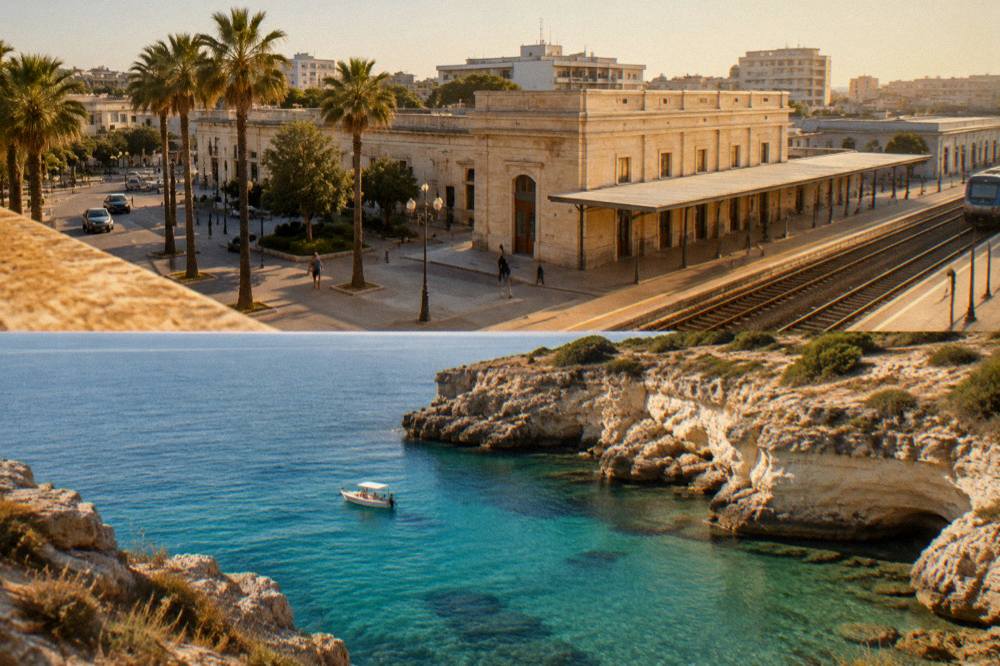
For travellers who would rather not plan each leg, guided day trips cover the same ground. A van tour through Otranto, Castro, Leuca and Gallipoli is one option, and a four-town tour taking in Otranto, Leuca, Gallipoli and Galatina is another; both are listed with their live prices and ratings on the operator's pages.
The street food format deserves a word of explanation rather than a sales line: it folds the old town walk and the tasting table into one loop, which suits a traveller whose first evening in Lecce should double as dinner. The listing carries the current price, the rating and the review count, and those figures render from the live data rather than from this page.
Common Questions About Travelling From Naples To Lecce
Is there a direct train from Naples to Lecce?
Not as far as this site's sources show. The rail journey runs via the inland corridor towards Caserta and down the Adriatic side of Puglia, and it is booked as a multi-leg itinerary, changing at Bari or Brindisi onto the services that terminate at Lecce. Check an official planner for the exact connections and times.
How long does it take to get from Naples to Lecce?
This site's research carries no sourced journey time for Naples to Lecce on either rail or road, and no figure is invented here. The train and the coach both take a substantial part of a day, and the flight plus airport bus combination is the fastest format. Confirm the exact duration on the operator's live listing or an official planner at booking.
Is it better to fly into Brindisi than to take the train?
It depends on what the journey is for. Brindisi airport (BDS) is the commercial gateway for Salento, about 47.6 km and roughly 43 minutes by road from Lecce, with Terravision's airport bus listed at 6.50 euro one way and about 40 minutes. Flying skips the surface crossing but removes the chance to see the country in between.
Where does the Naples to Lecce journey end?
At Lecce station, a short walk from the historic centre. The old town is a camera-policed limited traffic zone on weekdays, the SGM bus network runs from the city terminal with a day ticket at about 3 euro, and app-based luggage storage near the station lists rates around 2.50 to 3.50 euro per day.
Can you visit the Salento coast from Lecce without a car?
Yes, seasonally. In summer the Salento in Bus shuttles ran 13 June to 13 September 2026, with lines 101, 104, 107 and 108 reaching Torre dell'Orso, Otranto, Porto Cesareo, Gallipoli and Leuca at fares from 1.10 to 5 euro. Outside that window the FSE trains still reach Gallipoli, Otranto via Maglie and Galatina year-round, and the 2027 bus dates had not been announced.
What is there to do in Lecce once you arrive?
The LeccEcclesiae ticket covers the Duomo with its crypt, the Basilica di Santa Croce, San Matteo, Santa Chiara and the Antico Seminario with MuDAS, at 11 euro full and valid 15 days. Beyond the churches, the Roman Amphitheatre in Piazza Sant'Oronzo, the Villa Comunale and Porta Napoli are free public space, and the baroque old town itself is the main attraction.
The Naples to Lecce journey is a real crossing, and the city at the end of it repays every leg of the effort. Whether the itinerary runs by rail through Caserta, by coach down the motorway spine, or by air into Brindisi and the airport bus, the arrival is the same: a compact baroque old town built from pietra leccese, with the two coasts of Salento waiting on either side of it.