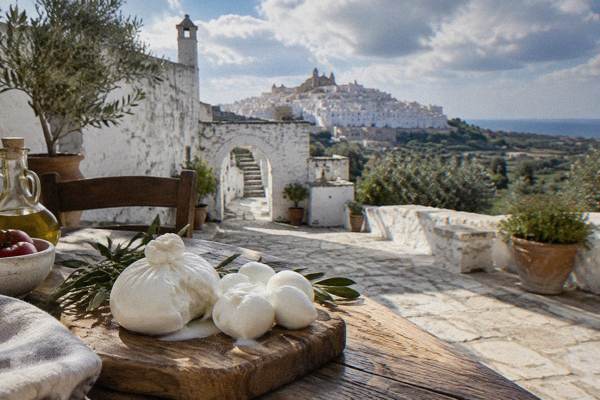
Masserie Near Lecce: Farm Stays Worth The Drive
A masseria is a fortified farmhouse, and the countryside around Lecce in Puglia is full of them. This guide explains the format, the regions where they cluster, and how to plan a stay or a day visit.
Short answer
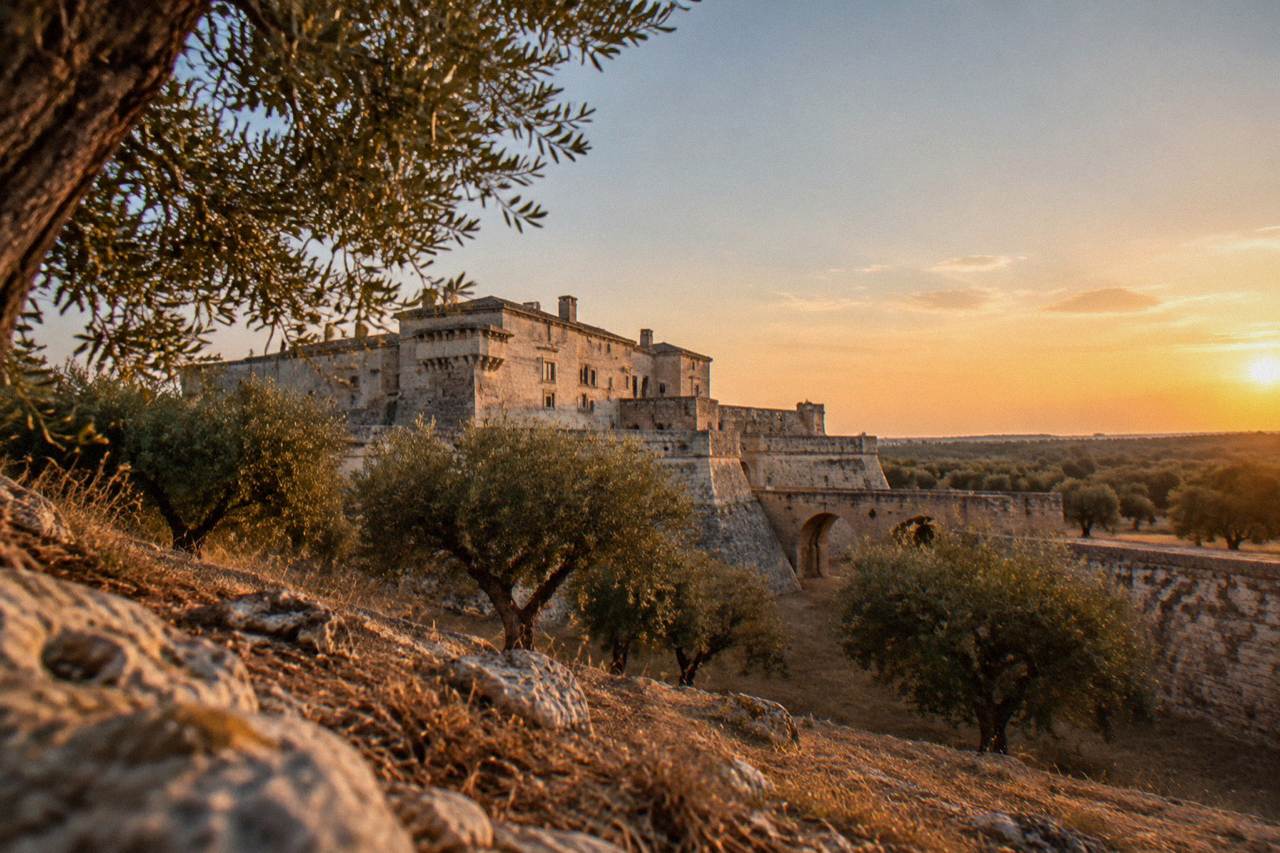
A masseria near Lecce is a fortified Puglian farmhouse, often surrounded by olive groves, that has been converted into a stay, a restaurant or a working farm visit. None is walkable from the old town: plan on a car, a bike tour or a booked excursion, and book direct with the property.
Lecce, the baroque capital of Salento in Puglia, southern Italy, sits a few kilometres inland from its own coast, and the flat limestone plain between the city and the sea is the historic home of the masseria. A masseria is a fortified country farmhouse, built thick-walled and sometimes towered, originally to guard olive oil, grain and livestock against raiders, and today often converted into a rural stay, a restaurant or a working farm that welcomes visitors. Lecce itself is built of pietra leccese, the soft Miocene limestone that hardens on exposure, and the same stone shapes the masserie scattered through the olive groves around it, with the Adriatic about 13 km east at San Cataldo and the Ionian across the peninsula to the west. No individual property near Lecce was sourced for this guide, so no masseria is named and no price, distance or amenity for any single property is printed: what follows is the format, the geography and the logistics, with booking left direct.
What Is A Masseria Near Lecce?
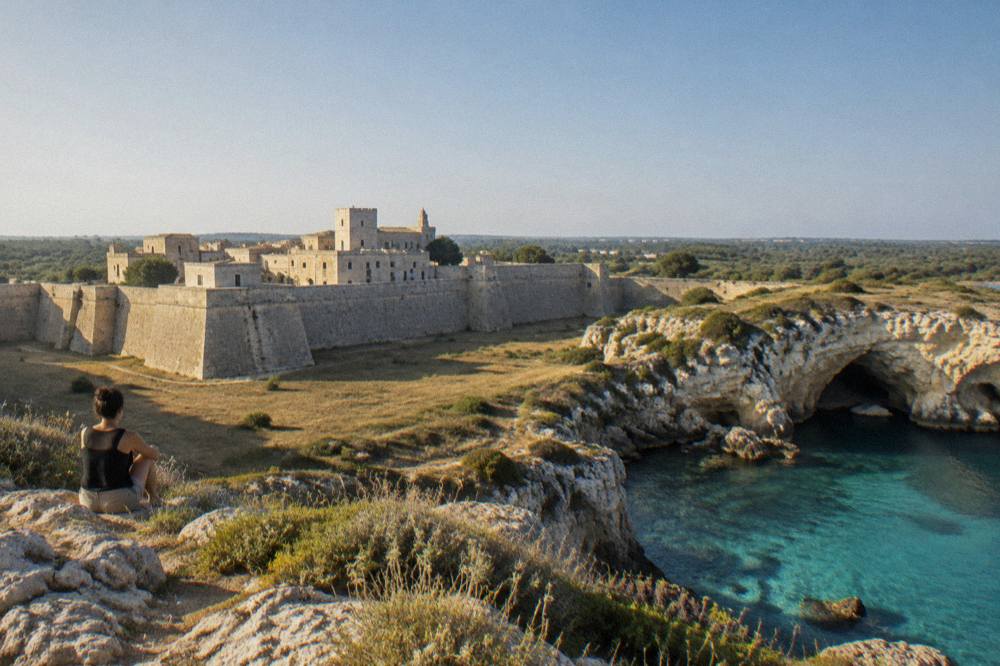
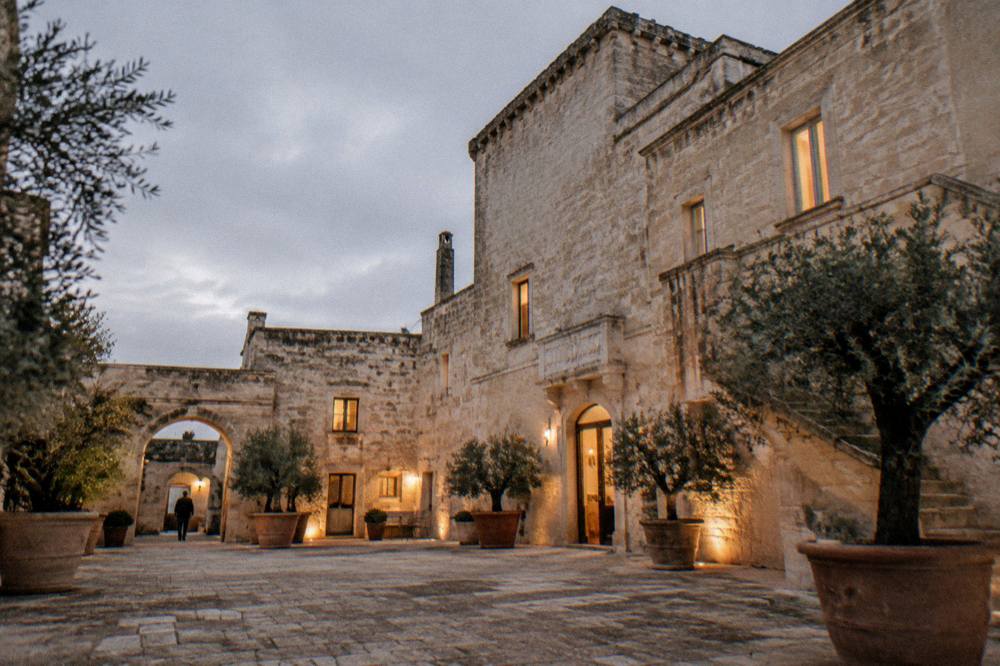
A masseria near Lecce is a fortified farmhouse of the Salento countryside, typically built of pietra leccese with high walls, courtyards and sometimes a watchtower, originally a working agricultural estate and today most often a rural hotel, a farmhouse restaurant or a working farm with tastings and visits. The word comes from the Italian for a farmstead or small estate, and in Puglia it describes a specific building type, not a hotel brand.
The format matters more than any single address. The historic masseria combined the landowner's residence, the labourers' quarters, the oil press, the animal pens and the storage under one defensive perimeter, because the Salento plain was exposed to coastal raiding for centuries. The agricultural logic survives in the landscape: the countryside around Lecce is one continuous olive grove, older trees gnarled and low, and a masseria stay usually means waking inside that grove rather than on a street. Many properties still press their own oil, make their own cheese or keep kitchen gardens that end up on the table.
What that means for a visitor is a trade. A masseria offers quiet, space, food produced metres from the bedroom and a swimming pool in the courtyard, but the old town of Lecce with its baroque churches is a drive away, not a stroll. The Lecce Travel Guide overview of the city explains what you would be driving back for, and the where to stay in Lecce guide covers the city-based alternative. Plenty of travellers split the difference: nights in town, then nights among the olive trees, or a city base with a masseria booked as a day visit.
Where Do Masserie Cluster Around Lecce?
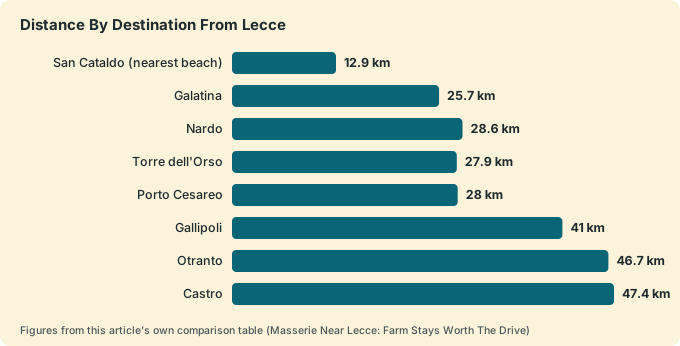
Masserie cluster in three broad rings around Lecce: the coastal plain between the city and the Adriatic beaches of San Cataldo and Torre dell'Orso, the inland olive country towards Galatina and Nardo to the south, and the Ionian side towards Porto Cesareo and Gallipoli to the west. All three lie in the Province of Lecce, and the furthest of the common day-trip anchors, Gallipoli, is about 41 km and 40 minutes by road from Piazza Sant'Oronzo.
The eastern ring is the shortest hop. San Cataldo, Lecce's nearest beach, is 12.9 km from the centre, about 14 minutes in free-flowing traffic, and the farmland inland of it is where the closest masserie sit, close enough that a beach morning and a city evening are both realistic. Further north along the Adriatic, Torre dell'Orso is 27.9 km out and Otranto 46.7 km, and the stretch between them carries some of Salento's most photographed countryside, dry stone walls and olive rows running down towards the sea.
The southern and inland ring runs through Galatina, 25.7 km and about 29 minutes, and Nardo, 28.6 km and about 29 minutes, flat agricultural land where the masseria tradition is at its most working: oil, wine and wheat rather than beach proximity. The western ring points at Porto Cesareo, 28.0 km and about 34 minutes, on the Ionian, and Gallipoli beyond it. The distances below are computed from Piazza Sant'Oronzo under free-flow conditions and rounded; allow more in July and August.
| Destination from Lecce | Distance | Free-flow drive time |
|---|---|---|
| San Cataldo (nearest beach) | 12.9 km | about 14 min |
| Galatina | 25.7 km | about 29 min |
| Nardo | 28.6 km | about 29 min |
| Torre dell'Orso | 27.9 km | about 32 min |
| Porto Cesareo | 28.0 km | about 34 min |
| Gallipoli | 41.0 km | about 41 min |
| Otranto | 46.7 km | about 44 min |
| Castro | 47.4 km | about 48 min |
Ring choice should follow what the trip is for. Beach-first travellers are best placed east or west; food-first travellers lose nothing inland, and Galatina alone justifies the drive, as the Galatina guide on this site sets out. Whichever ring, a car is the working assumption, and the driving in Lecce guide covers the rest.
How Do You Reach A Masseria Without A Car?
Reaching a masseria without a car around Lecce usually means one of three things: a booked tour or excursion that includes a farm stop, a bike or e-bike outing into the countryside, or a train to a market town such as Galatina or Gallipoli combined with a taxi or a property-arranged pickup for the final kilometres. Direct rural buses to individual masserie do not exist as a network: the FSE trains serve the towns, not the farms.
The rail skeleton is decent for the towns. FSE runs direct trains from Lecce to Galatina, about 38 to 55 minutes from about 3 euro, and to Gallipoli, about 1h18 to 1h43 from about 5 euro; Otranto requires a change at Maglie and takes about 1h33 to 2 hours or more. In summer only, the Salento in Bus network ran 13 June to 13 September 2026, with fares from 1.10 to 5 euro, covering lines like 101 (Torre dell'Orso and Otranto) and 104 (Porto Cesareo and Gallipoli), but it is a seasonal beach service, not a farm-shuttle. The practical car-free pattern is a tour that builds the farm in for you, which is one reason the food-and-drink side of this site exists. A burrata-and-masseria tasting excursion does the driving, the booking and the countryside in one move:
Cyclists have a genuine option too: e-bike routes from Lecce through olive groves to coastal villages exist as bookable products, and they pass exactly the landscape the masserie occupy. For everything else, the getting around Lecce guide maps the town buses, the trains and the seasonal shuttles, and the how to get to Lecce guide covers arriving in the region at all, including the airport bus from Brindisi.
| Car-free option to farm country | Route or service | Verified figure |
|---|---|---|
| FSE train to Galatina | direct from Lecce | about 38 to 55 min, from about 3 euro |
| FSE train to Gallipoli | direct from Lecce | about 1h18 to 1h43, from about 5 euro |
| FSE train to Otranto | change at Maglie | about 1h33 to 2h+, from about 4 to 5 euro |
| Salento in Bus (summer only) | lines 101 and 104 from Lecce | ran 13 June to 13 Sept 2026, 1.10 to 5 euro |
| SGM city bus line 32 | City Terminal to San Cataldo | about 20 min, the nearest coast |
One honest caveat: because no individual masseria was sourced for this page, no property's pickup arrangements, shuttle or taxi price can be quoted. Ask at booking whether the farm collects guests from the nearest station, and confirm the fare locally before committing.
What Does A Masseria Stay Or Day Visit Involve?
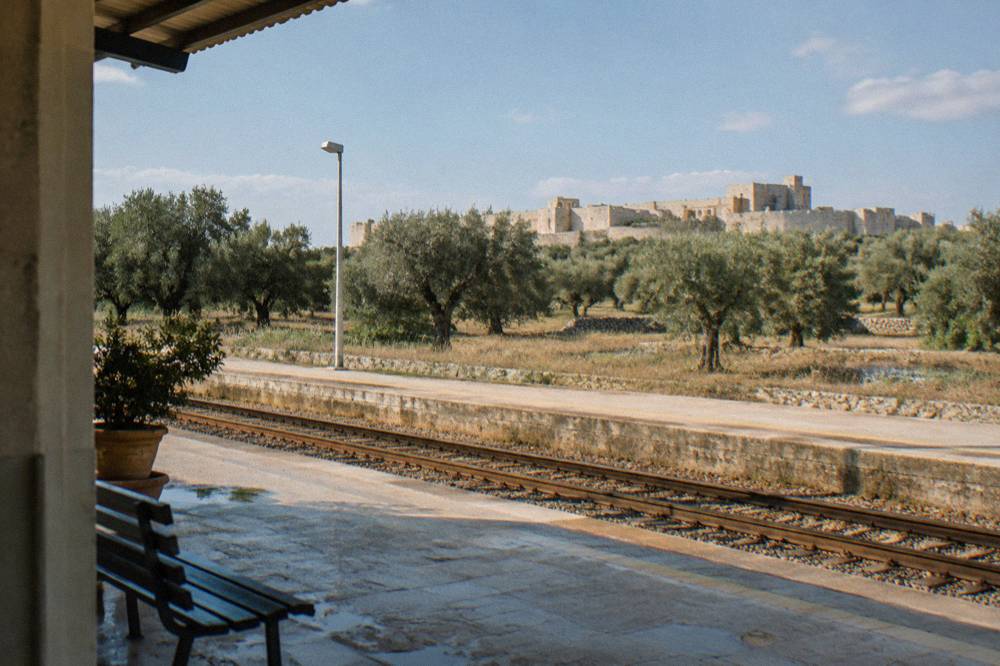
A masseria stay typically means a room or suite in a converted farmhouse, breakfast built from the farm's own oil, bread, preserves and cheese, and often a pool set in the courtyard; a day visit typically means a booked tasting or tour of the oil press, the dairy or the cellars, sometimes with lunch. Around Lecce both formats are common, but nothing is drop-in: farm gates are routinely closed, and visits, meals and stays are arranged in advance by phone, email or booking.
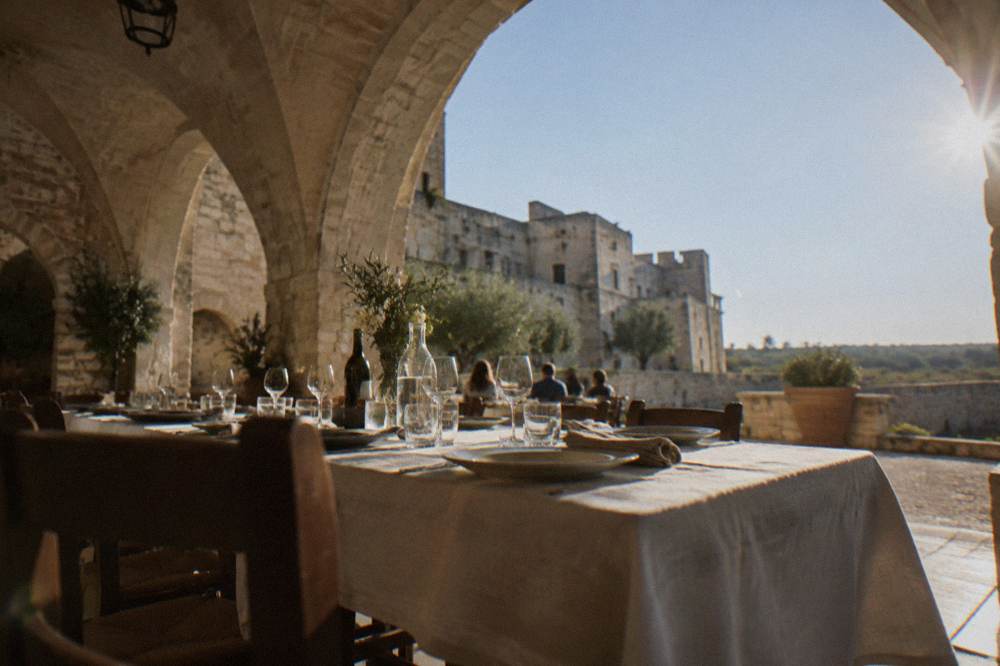
The rhythm suits the region. Lunch at a masseria is a long, structural affair, antipasti of vegetables in oil, bread and tomato, local cheese, then pasta and a main, with the farm's own wine; it is the same table Salento eats from at home, served a few steps from where it was made. The what to eat in Lecce guide catalogues the dishes to expect, and the pairings are stable: burrata and stracchino-style cheeses, orecchiette, rustico leccese, pasticciotto to finish, and Negroamaro-based wine underneath. Salice Salentino DOC, the region's flagship, was established in 1976 and runs on Negroamaro across the provinces of Lecce and Brindisi.
Should You Taste The Table In Town First?
For travellers who want the flavours before committing a day to the countryside, the old town carries the same larder. The best restaurants in Lecce guide lists where the city kitchen does it well, and a guided tasting compresses the same education into one evening. If a farm day is already booked, read on: the countryside rewards it.
When Is The Best Season For A Masseria Stay Near Lecce?
For swimming and full outdoor service, late June through August: the ERA5 reanalysis 1991-2020 shows mean highs of 28.2 C in June, 31.0 C in July and 31.3 C in August, and the sea runs about 22.5 C in June rising to 25 to 27 C in August. For cooler walking, olive harvest colour and thinner crowds, October at a mean high of 21.8 C, or April and May at 18.6 to 23.4 C.
Summer is hot, full and priced accordingly, and the beaches that pair with a masseria stay are at their busiest, but everything is open and the evenings are long. Spring and autumn are gentler: April and May bring 54.6 mm and 39.9 mm of rain respectively, October 91.3 mm, and the November figure of 93.7 mm is the year's wettest month, which makes late autumn the one window to treat with real caution for a countryside base. Winter stays exist and are quiet; the Lecce in winter guide covers what the whole area is like then, and the best time to visit Lecce guide weighs the same calendar for the city.
| Season | Mean high / low (ERA5 1991-2020) | Rain | What it means for a masseria |
|---|---|---|---|
| Spring (Mar-May) | 15.4 to 23.4 C / 8.3 to 14.7 C | 39.9 to 64.9 mm | walking and farm visits, pools often not yet warm |
| Summer (Jun-Aug) | 28.2 to 31.3 C / 19.1 to 22.2 C | 15.3 to 18.1 mm | full service, pool season, peak crowds and rates |
| Autumn (Sep-Nov) | 26.4 to 17.3 C / 19.0 to 11.7 C | 58.9 to 93.7 mm | olive harvest colour, November is the wettest month |
| Winter (Dec-Feb) | 12.4 to 13.5 C / 6.7 to 8.2 C | 59.0 to 75.5 mm | quiet fireside stays, shortest days, some closures |
Events can anchor the choice too. The Festa dei Santi Patroni filled Lecce from 23 to 26 August 2026, the Notte della Taranta Concertone played Melpignano on 22 August 2026 in its 29th edition, and the Fiera dei Pupi, the papier-mache Christmas fair, traditionally runs to about 24 December. All of these pair naturally with a rural base, and the Notte della Taranta guide explains the festival logistics in detail.
How Does Booking A Masseria Stay Work, And What Costs Should You Expect?
Booking a masseria near Lecce works like any other lodging: direct with the property or through a booking platform, with stays, dinners and tastings reserved in advance. The fixed extra cost you can count on is the imposta di soggiorno, the tourist tax collected by the accommodation per person per night, reported at a top rate of 5 euro for 5-star high season from 1 April 2026, with short lets reported at 2.50 or 1.50 euro; nightly rates were not sourced, so confirm both at booking.
The tax is small but real, and it is per person per night, capped in the usual way by category and season; the accommodation collects it, so nothing needs arranging in advance beyond asking what it is. Everything else is ordinary booking hygiene. Ask three questions before paying a deposit: the check-in window, because farm gates are not staffed around the clock; whether dinner needs a reservation on a specific night, because farmhouse kitchens often cook to a headcount; and the cancellation terms, which vary more in the countryside than in a city hotel.
| Booking question | Why it matters at a masseria | What to confirm |
|---|---|---|
| Check-in window | rural gates, limited reception hours | your arrival time, before paying |
| Dinner reservation | kitchens cook to a headcount | which nights, at booking |
| Tourist tax | per person per night, collected by the property | amount at booking |
| Pool and restaurant season | some facilities close off-season | open dates for your stay |
| Final kilometres | stations do not serve farm gates | pickup, taxi or car hire |
American drivers should also read the is it difficult for Americans to drive in Italy answer page before renting; the Salento plain is flat, quiet and forgiving by Italian standards, but the ZTL cameras in Lecce itself are not, as the next section explains.
What Should You Know About Driving From A Masseria Into Lecce?
Driving from a masseria into Lecce is easy on the way in and risky on the last hundred metres: the historic centre is a camera-policed ZTL, reported as active weekdays from about 13:00 to 16:30 and from 20:00 to 10:00, and around the clock on Sundays and holidays, with fines reported at 83 to 332 euro. The workable pattern is to park outside the zone and walk in, or to ask the accommodation whether it can register a guest's plate.
Porta Napoli is reported as always closed to unauthorised traffic, and the hours are reported rather than guaranteed, so the standing advice is simple: check the current ordinances before driving in, and treat the ZTL boundary as a hard edge rather than a suggestion. The Lecce ZTL and parking guide maps the cameras and the options in full, and it matters doubly for masseria guests, who typically arrive by car every single evening.
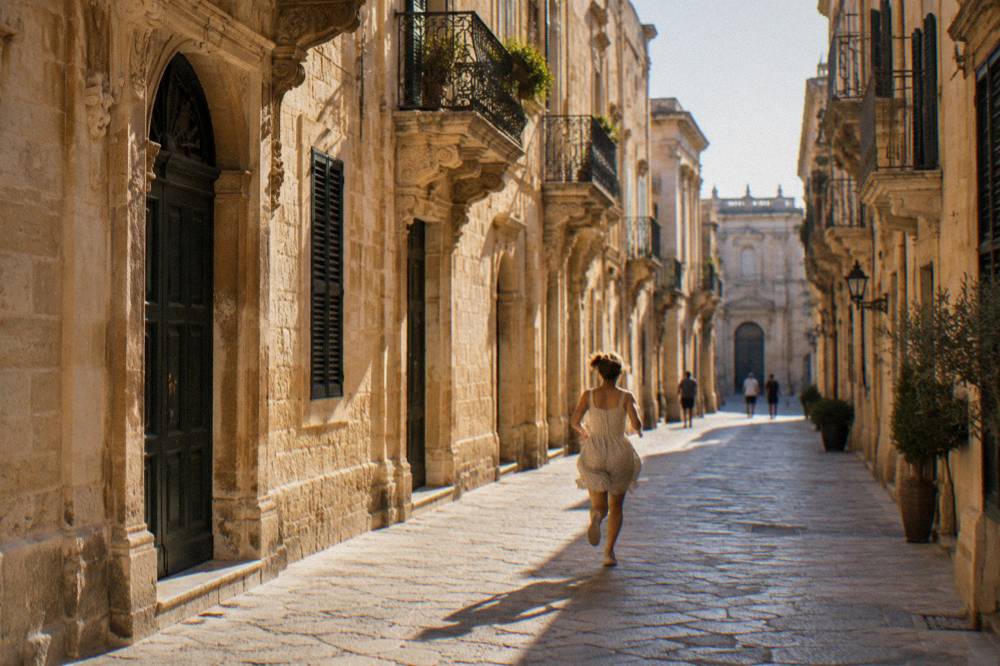
The reward for getting this right is that a masseria base costs you almost nothing in access. Lecce's core sights, the Duomo, Basilica di Santa Croce, the amphitheatre in Piazza Sant'Oronzo, are all inside a compact walkable centre once the car is parked, and the Lecce churches ticket guide explains the LeccEcclesiae combined ticket, 11 euro standard, that covers five of them for 15 days. Beach days run the other way: the beaches near Lecce guide and the wider Salento beaches guide cover the coast both sides of the peninsula, all of it within an hour of the inland farm country.
Can You Combine Masserie With Cooking Classes And Wine Tastings?
Yes, and around Lecce it is one of the most developed corners of the offer: bookable cooking classes run in courtyards and family homes in and around the city, wine tastings pour Negroamaro and Primitivo from the surrounding provinces, and pasta classes teach orecchiette by hand, so a masseria-themed trip can be built entirely from guided food experiences without ever needing your own farm booking.
The kitchen skills travel well. A pasta class in the old town, or in a family home just outside it, teaches the same shapes a masseria kitchen serves, and doing it before a farm lunch makes the lunch read differently. The related tour on this page, the Wine and Food Tasting Experience in Lecce old town, puts the region's wines and dishes on one table inside the city walls; Check availability if that fits the itinerary better than an evening in the countryside.
Wine is the other half. The Salento glass is Negroamaro first and Primitivo di Manduria second, the latter centred on Manduria in Taranto province, about 90 minutes' drive north-west, and the tastings bookable from Lecce pour both alongside the local oils and cheeses. The Salento wine guide on this site sets out the denominations, and the pasticciotto guide covers the dessert that ends nearly every farmhouse meal, a custard tart whose 1745 invention date is one Galatina pastry shop's own claim rather than settled history.
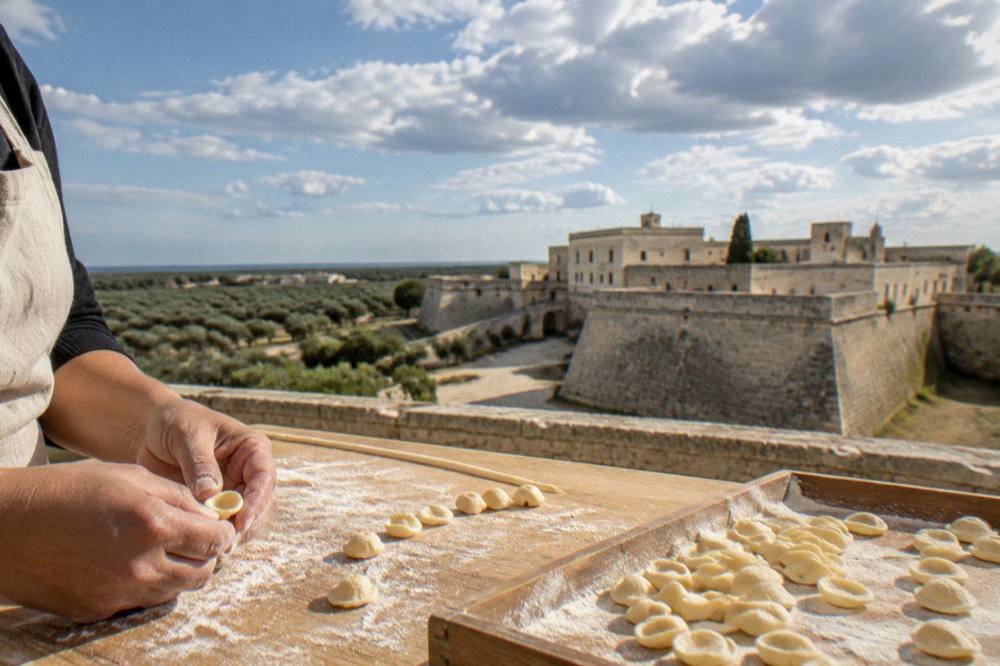
These three between them cover the taste of the masseria table, in town and out of it:
What Does A Masseria-Based Salento Itinerary Look Like?
A masseria-based itinerary around Lecce runs naturally over five to seven days: two days for Lecce's old town and its churches, one day east to Otranto and its 1163 to 1165 mosaic floor, one day west or south to Gallipoli's island old town and the Ionian beaches, one day for Galatina and the inland baroque, and one flex day for a boat trip from Leuca or a long farmhouse lunch, with no leg of the loop exceeding about 80 minutes of free-flow driving.
The order matters less than the anchor points. Otranto, 46.7 km out, pairs the cathedral mosaic, laid by the priest Pantaleone between 1163 and 1165, with the Castello Aragonese and the coast; the Otranto guide covers it, and independent visitors enter the cathedral free, while groups and guided visitors pay 2 euro from 1 March 2026. Gallipoli's old town sits on a limestone island linked to the mainland by a bridge, and the Gallipoli guide covers it. Galatina, 25.7 km, holds the frescoed Basilica di Santa Caterina d'Alessandria, free to enter on split morning and afternoon hours.
| Itinerary day | Anchor | Distance from Lecce | Free-flow drive | The reason to go |
|---|---|---|---|---|
| City day one | Lecce old town | 0 km | 0 min | Duomo, Santa Croce, amphitheatre |
| City day two | Lecce museums and craft | 0 km | 0 min | Castello Carlo V tour, papier-mache shops |
| East coast day | Otranto | 46.7 km | about 44 min | 1163-1165 mosaic, Castello Aragonese |
| Ionian day | Gallipoli | 41.0 km | about 41 min | island old town, beaches |
| Inland day | Galatina and Nardo | 25.7 and 28.6 km | about 29 min each | Santa Caterina frescoes, inland towns |
| Far south day | Santa Maria di Leuca | 83.2 km | about 78 min | basilica, cave coastline, boat trips |
The full framework, with day-by-day detail and car-free variants, is in the Salento itinerary guide, and the wider regional loop sits in the Puglia itinerary guide. A masseria in any of the three rings slots into this skeleton without redrawing it.
Common Questions About Masserie Near Lecce
What is a masseria near Lecce?
A fortified farmhouse of the Salento countryside, built of pietra leccese with defensive walls and sometimes a tower, originally an agricultural estate and today most often a rural stay, a farmhouse restaurant or a working farm with visits and tastings.
Can you visit a masseria without staying overnight?
Often yes, but rarely without booking. Farmhouse lunches, oil and cheese tastings and cellar tours run on reservation, and bookable excursions from Lecce include farm and dairy stops with the transport arranged. Confirm direct what a property offers as a day visit.
Do you need a car to stay at a masseria near Lecce?
A car is the normal assumption, because rural gates sit off the rail lines. Car-free alternatives are a booked excursion with a farm stop, an e-bike route into the countryside, or an FSE train to Galatina or Gallipoli combined with a taxi or a property-arranged pickup for the final kilometres.
How far are masserie from Lecce?
The countryside begins within about 13 km of the centre, at the San Cataldo coast, and the common anchors around it run from Galatina at 25.7 km to Otranto at 46.7 km, all inside about 45 minutes of free-flow driving from Piazza Sant'Oronzo.
What does a masseria stay cost near Lecce?
Nightly rates for masserie and hotels around Lecce were not sourced for this guide, so no figure is printed. The fixed extra is the tourist tax, per person per night, reported at a top rate of 5 euro for 5-star high season from 1 April 2026; confirm both the room rate and the tax at booking.
When is the best time to stay at a masseria near Lecce?
Late June to August for pools, full service and a sea of 25 to 27 C; April, May and October for walking and harvest colour at mean highs of 18.6 to 26.4 C; November is the wettest month at 93.7 mm in the ERA5 reanalysis 1991-2020, so plan around it.
The Short Version
A masseria stay is the countryside half of a Lecce trip: the same stone, the same table, the same baroque towns, but slept in among olive groves a short drive from the walls, with no property, price or amenity printable here because none was sourced, and booking left direct with each farm.
Pick a ring, east for beaches, west for the Ionian, inland for the working farms; book direct and early, especially for dinners; drive in to Lecce with the ZTL cameras in mind and park outside the zone; and if the countryside half of the trip cannot happen, the old town's tastings and classes carry the same flavours inside the walls. Whatever the split, the things to do in Lecce round-up is the map for the city half, and the olive plain will still be there the next time.