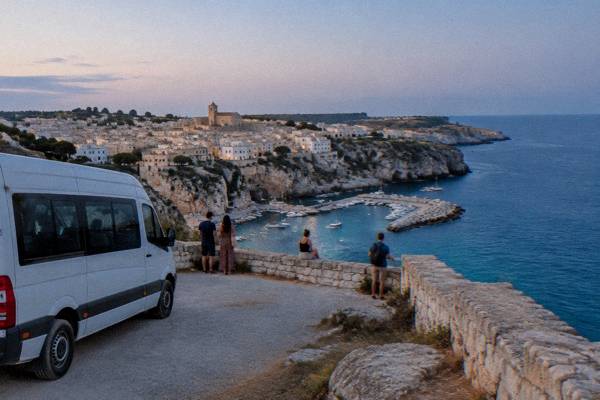
Acaya: The Walled Village
Acaya is a tiny fortified village in the countryside east of Lecce, in Puglia, a short drive from the baroque capital of Salento and the Adriatic coast. This guide covers what the village is, how it fits into a Lecce itinerary and what else is within easy reach.
Short answer
Acaya is a small walled village in the Salento countryside east of Lecce, reached by car from the city, with no airport in Lecce itself and Brindisi as the gateway. Print nothing about its hours or tickets here: confirm details locally.
Acaya sits in the flat Salento countryside east of Lecce, in Puglia, southern Italy, a short drive from the baroque capital of the peninsula and the Adriatic beaches beyond it. It is a village built behind walls, one of the few settlements in Salento laid out on a planned, fortified footprint rather than grown organically over centuries, and that alone makes it a curiosity in a region of sprawling farm towns and masserie. Lecce, the regional reference point for any trip here, has no commercial airport of its own; Brindisi is the gateway, about 43 minutes by road from the city centre. This page explains what Acaya is, how to reach it, how long it deserves and how to fold it into a day built around Lecce, without printing an hour or a ticket price that no official source supplied.
Because the verified facts for Acaya itself are thin, this guide is deliberately honest about the boundary. What the village is, broadly, is safe to describe. Opening hours, ticket prices and a sight-by-sight list are not in the verified sources, so they do not appear here; the reader should confirm locally. What the sources do cover well is everything around Acaya: the city of Lecce, the drive times across Salento, the trains, the beaches and the climate. That surrounding material is what makes a half-day in the countryside legible.
What Is Acaya, And Why Does It Sit Behind Walls Near Lecce?
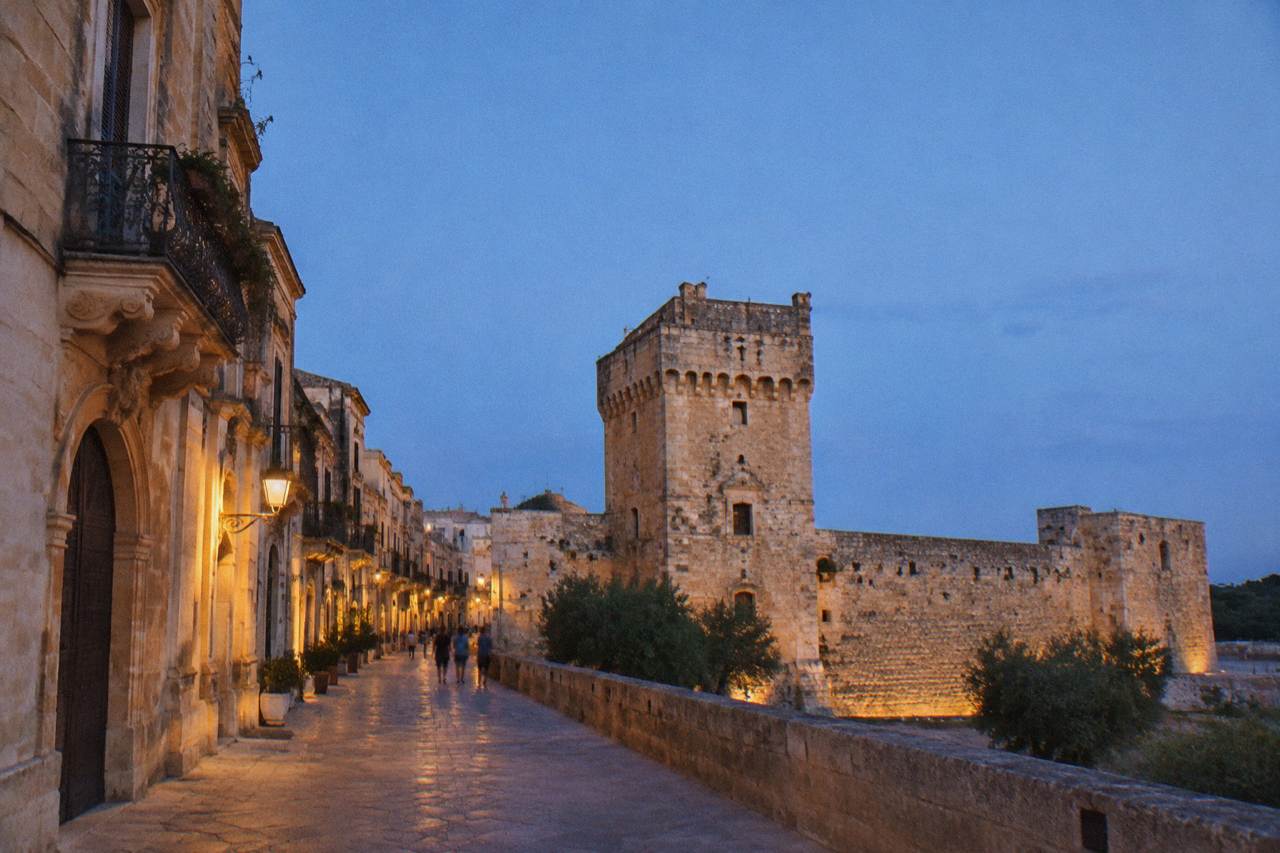
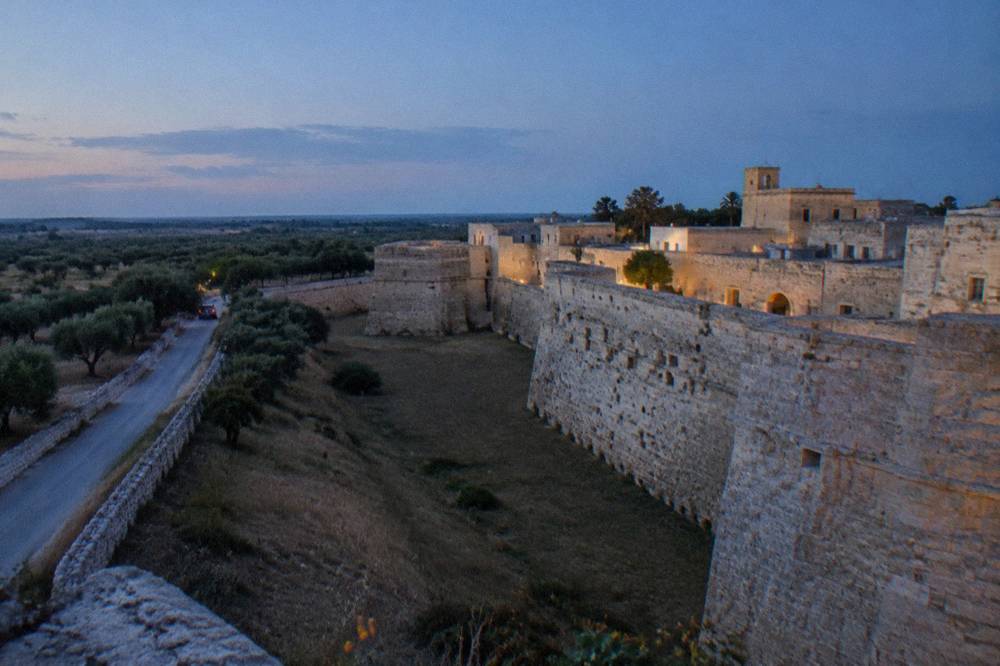
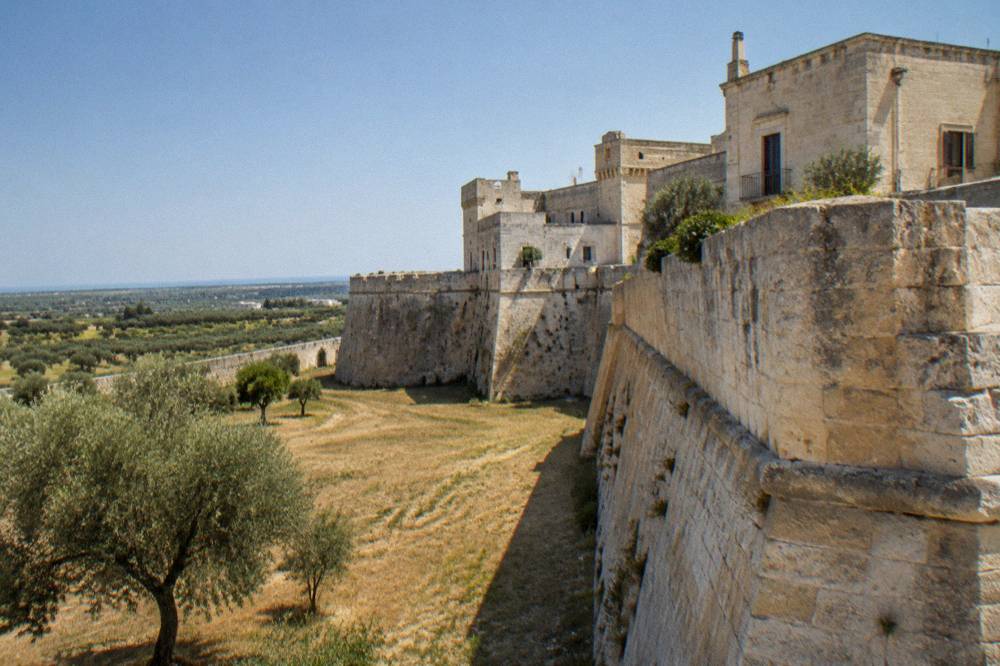
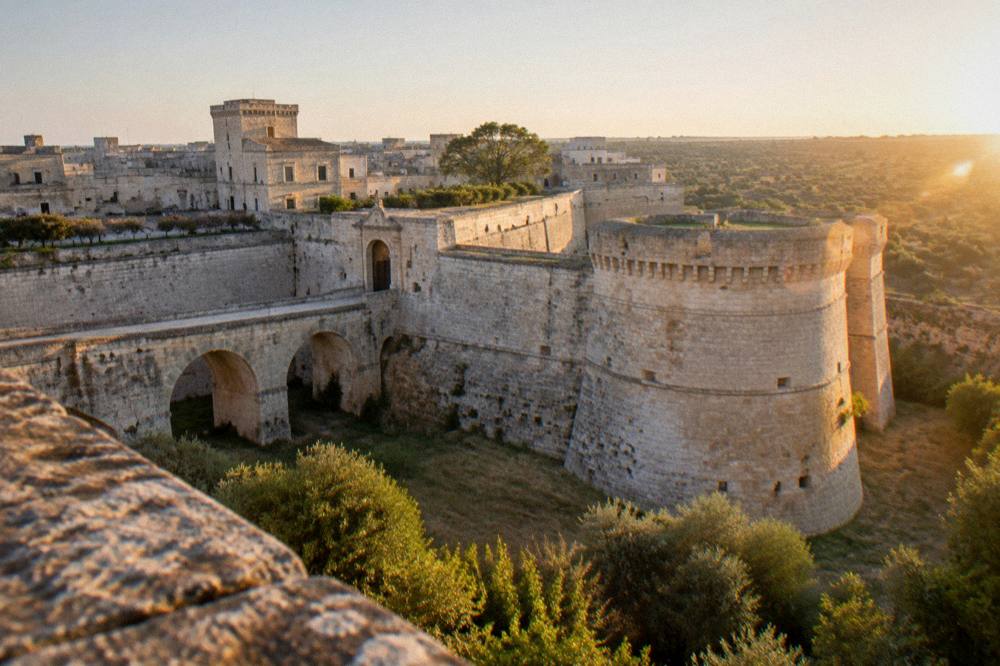
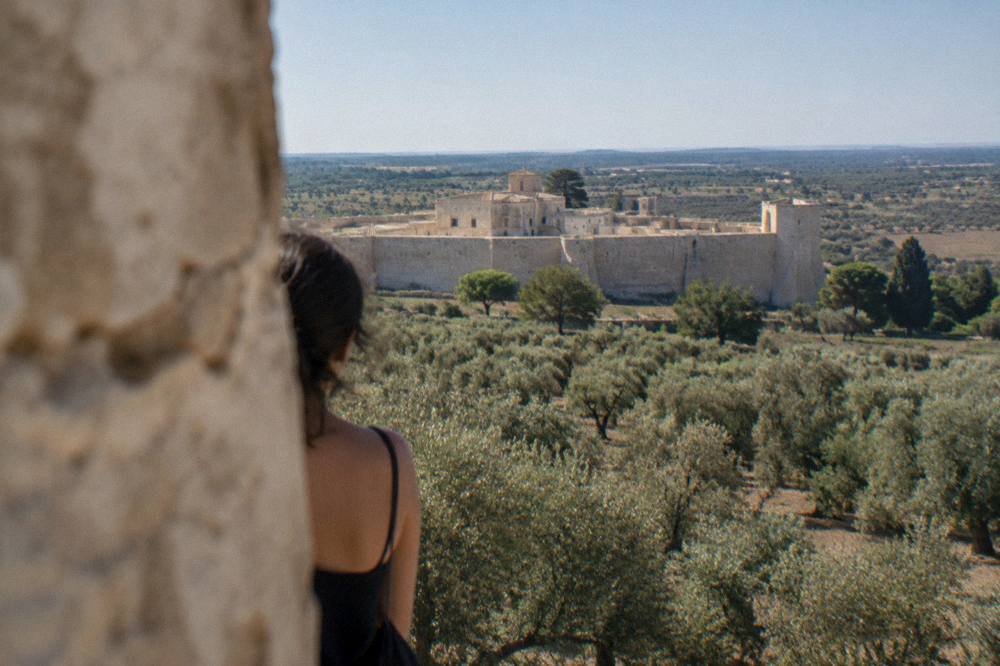
Acaya is a small fortified village in the Salento countryside east of Lecce, in Puglia, built to a planned layout behind defensive walls with a towered perimeter, and it survives as one of the region's clearest examples of a Renaissance-era fortified settlement rather than a medieval town that grew by accident. It belongs to the wider Lecce countryside, not to the coast.
Salento is not short of dramatic towns, but nearly all of them grew the ordinary way: a mess of lanes around a church, a castle, a market square. Acaya is different because its plan was imposed. The village is described, in general terms used across regional tourism material, as a "walled village" with a regular grid inside the walls, a central piazza and defensive towers at the perimeter. That description is the extent of what should be treated as settled. Who designed it, in exactly which years, and how much of the wall is original versus restored are the kind of details that vary between sources, and no official pack supplied them, so they are not printed here.
What the village offers a visitor is atmosphere and scale rather than attractions in the museum sense. The walls are the sight. You walk the perimeter, you stand in the piazza, you look at the same flat olive country that surrounds Lecce in every direction, and then, in most itineraries, you move on. That is not a criticism. Salento day trips work best as chains of small stops, and Acaya's compactness is exactly what makes it chainable with the bigger towns.
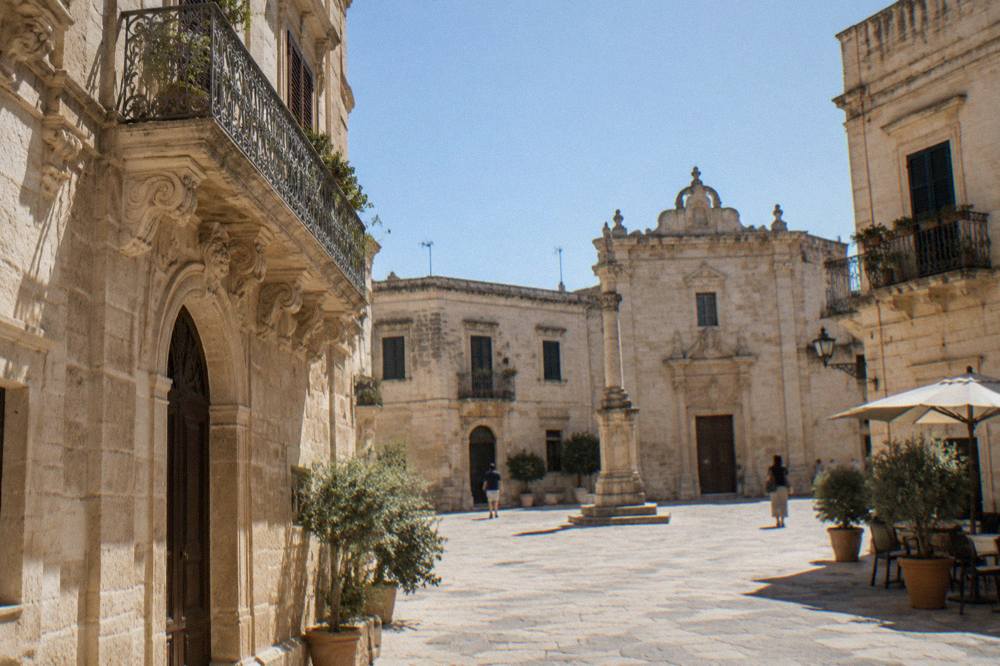
For context on the building culture the whole region shares, read about Lecce stone and the baroque city: the honey-coloured pietra leccese that built Lecce's facades is the same soft Miocene limestone that built the farm walls and village houses of the countryside around Acaya. Soft when quarried, hardening with exposure, it is the single material that ties the region together visually.
A last orientation point. Lecce is often called the Florence of the South for its baroque architecture, but the nickname's origin is contested and this site names no coiner. And Lecce is not a UNESCO World Heritage Site: "Salento and the Barocco Leccese" sits on Italy's Tentative List only. Acaya has no such designation either. Come for the walls, not for a plaque.
How Do You Get To Acaya From Lecce?
Acaya is reached from Lecce by road east out of the city, in the direction of the Adriatic coast, with no direct airport connection anywhere in the chain: Brindisi (BDS) is the nearest commercial airport, 47.6 km and about 43 minutes by road from Piazza Sant'Oronzo, and from Lecce the village is a countryside drive on Salento's flat provincial roads. Confirm directions and parking locally on the day.
The verified drive times from Piazza Sant'Oronzo, computed for free-flow traffic, give the scale of Salento and show where Acaya sits relative to everything else. Acaya's own exact figure is not in the verified set, but its neighbours are, and the pattern is clear: everything east and south of Lecce is close.
| Destination from Piazza Sant'Oronzo | Distance | Drive time |
|---|---|---|
| San Cataldo (nearest beach) | 12.9 km | about 14 min |
| Torre dell'Orso | 27.9 km | about 32 min |
| Porto Cesareo | 28.0 km | about 34 min |
| Otranto | 46.7 km | about 44 min |
| Gallipoli | 41.0 km | about 41 min |
| Castro | 47.4 km | about 48 min |
| Santa Maria di Leuca | 83.2 km | about 78 min |
Acaya lies east of Lecce on the way towards the coast, in the same general corridor as Torre dell'Orso and the Adriatic beaches, which makes the natural plan a loop: Lecce in the morning, Acaya at midday, the coast in the afternoon. If you are staying in the historic centre of Lecce, factor in the ZTL: the historic centre is camera-policed, with reported restrictions on weekdays through the middle of the day and overnight, and Porta Napoli always closed. Ask your accommodation to register your plate, and use the Park Liberty car park near the centre, which has 466 spaces, if you are keeping the car in the city.
Public transport to Acaya is not covered by the verified facts, so print nothing: the honest answer is to check the local operator or ask at your accommodation. What is verified is the summer-only Salento in Bus network, which ran 13 June to 13 September in 2026 with lines 101 (Lecce to Torre dell'Orso and Otranto), 104 (Lecce to Porto Cesareo and Gallipoli) and 107/108 (towards Leuca), with fares from 1.10 to 5 euro and children under 10 free. The 2027 dates had not been announced. Whether any of those lines serves Acaya itself is not stated in the sources: confirm locally.
For the city leg, the SGM network covers Lecce itself, with a 60-minute ticket at about 1.20 euro from a machine or 1.50 euro on board, and a day ticket at about 3 euro. The station area also has app-based luggage storage at roughly 2.50 to 3.50 euro per day if you are checking out before a countryside afternoon.
What Can You Actually See In Acaya On A Day Trip From Lecce?
The honest answer is that the walled plan is the attraction: the perimeter walls, the towers, the central square and the regular street grid inside, all of it built from the same pietra leccese limestone that built Lecce. No verified opening hours or ticket prices exist for Acaya's sights in this site's sources, so nothing is printed here: check locally, and treat the village as a walking stop of an hour or two rather than a museum destination.
That restraint matters. Plenty of third-party pages will happily list Acaya hours, prices and interior rules; none of that could be traced to an official source here, and a day-trip page that guesses those details sends a traveller to a closed gate. What can be said with confidence is structural: the village is small, walled, walkable in a single circuit, and sits in open countryside. You park outside, you walk in, you walk the walls.
The walk rewards a little preparation. Two habits from the Lecce baroque walk translate directly: look up at the limestone detailing, because the same carvers' vocabulary of cherubs, wreaths and scrolls that covers Lecce's facades shows up in humbler form on countryside doorways, and look down at the paving, since the chianche stone slabs underfoot in the old towns are the same material again.
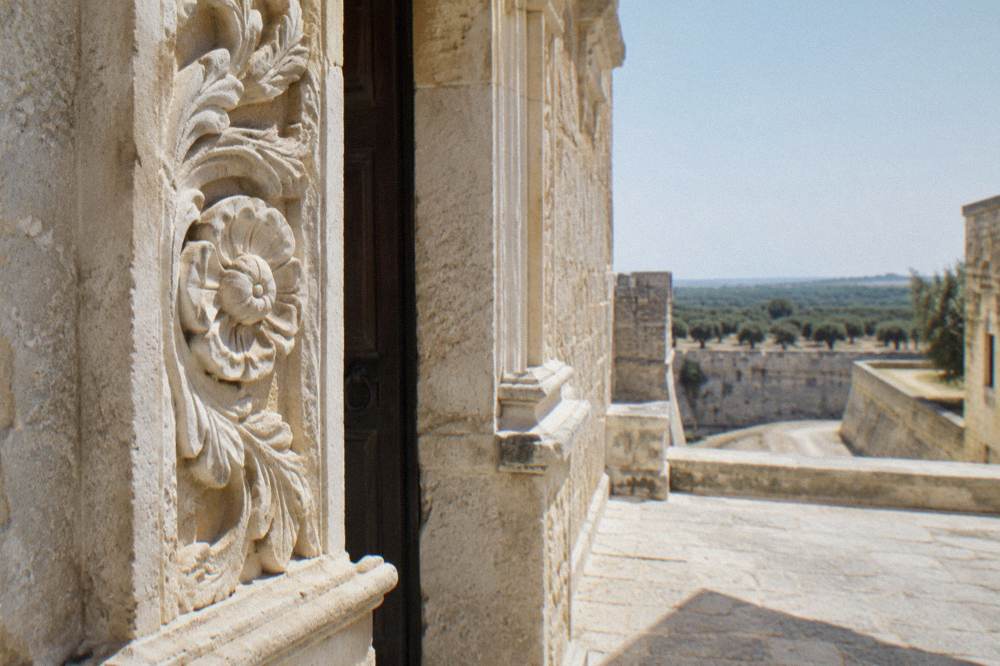
Around the village, the Salento plain stretches away in olive groves and dry-stone walls. The masserie, the fortified farmhouses that dot this countryside, are a story of their own; names, prices and amenities are not verified, so this page prints none of them, but the landscape itself is free to look at. If the craft tradition behind the region's religious statuary interests you, the papier-mache artisans of Lecce, the cartapesta workshops, are the city-side counterpart of the countryside's building crafts, and a hands-on class is one of the few ways to touch the tradition directly.
| Stop | What it is | What you need to know |
|---|---|---|
| The walls and towers | The village perimeter | Free to view from outside and along the streets; no verified interior tour details |
| The central piazza | The planned heart of the grid | Open public space |
| The street grid | Regular Renaissance layout inside the walls | Walkable in a short circuit |
| Surrounding olive country | Groves and dry-stone walls | Visible from the village approaches |
Plan the timing loosely. Acaya pairs naturally with a morning in Lecce, and the city has enough ticketed depth to fill it: the LeccEcclesiae combined church ticket covers the Duomo with its crypt, the Basilica di Santa Croce, San Matteo, Santa Chiara and the Antico Seminario with the MuDAS museum, at 11 euro standard, 5 euro reduced for ages 12 to 17, free under 12, valid 15 days, or 21 euro with the bell tower. Museo Faggiano, the archaeology-under-a-house museum, is 5 euro. Castello Carlo V is interior-by-guided-tour only at 10 euro full, courtyard free. Those numbers are the verified city facts, and they are why a first morning belongs to Lecce before the drive out.
How Does Acaya Compare With The Better-Known Day Trips From Lecce?
Acaya is the quiet, structural counterpoint to Salento's headline towns: it has walls and a plan where Otranto has a cathedral mosaic from 1163 to 1165 by the priest Pantaleone, Gallipoli has an old town on a limestone island joined by a bridge, and Galatina has the free-entry Basilica of Santa Caterina d'Alessandria. Each is within an hour of Lecce by car, and each rewards a different kind of traveller.
The comparison is not really a competition. Acaya asks for an hour of your attention and gives you stillness. The big towns ask for half a day and give you art, sea and crowds. Most itineraries should do both: one headline town, one small stop, per day.
| Town | Drive from Lecce | The verified headline |
|---|---|---|
| Otranto | about 44 min | Cathedral mosaic 1163 to 1165; cathedral free for independent visitors, 2 euro for groups with a guide since 1 March 2026 |
| Gallipoli | about 41 min | Old town on a limestone island linked by a bridge; castle ticket price not published, confirm locally |
| Galatina | about 29 min | Basilica of Santa Caterina d'Alessandria, free entry, split morning and afternoon hours |
| Castro | about 48 min | Grotta Zinzulusa cave, guided visits year-round, 7 euro full, 4 euro reduced |
| Acaya | short countryside drive east | The walled plan itself; hours and tickets not published, confirm locally |
Read the fuller pages on Otranto, Gallipoli and Galatina for those towns in depth. What matters here is the logic of pairing. Acaya plus Otranto works because the drive east passes through this corridor anyway. Acaya plus Galatina works for a shorter day with a pasticciotto stop, since Galatina is where Pasticceria Ascalone claims the 1745 invention of the pasticciotto, a claim the shop itself makes and historians dispute, and where the basilica's frescoes cost nothing to see. A pairing with the coast, Torre dell'Orso or beyond it the famous Grotta della Poesia, needs a caveat repeated from the beaches research: at Grotta della Poesia bathing and diving are banned since summer 2026, and non-residents of Melendugno paid a 5 euro ticket in the 2026 season; view from the paths only, and confirm the current rules before you go.
What Is The Best Time Of Year To Visit Acaya And The Lecce Countryside?
The ERA5 reanalysis for Lecce, 1991-2020, puts the mean daily high at 31.0 C in July and 31.3 C in August against 12.4 C in January, with rainfall bottoming out at 15.3 mm in July and peaking at 93.7 mm in November, so late spring and early autumn give the most comfortable walking weather for a village with no shade-heavy museum to retreat into.
Those are modelled climate normals for the grid cell near Lecce, not a weather-station record, and they describe Lecce, which shares its flat inland plain with Acaya. The table gives the full picture:
| Month | Mean high C | Mean low C | Rain mm |
|---|---|---|---|
| Jan | 12.4 | 6.7 | 63.1 |
| Feb | 13.0 | 6.8 | 59.0 |
| Mar | 15.4 | 8.3 | 64.9 |
| Apr | 18.6 | 10.7 | 54.6 |
| May | 23.4 | 14.7 | 39.9 |
| Jun | 28.2 | 19.1 | 18.0 |
| Jul | 31.0 | 21.7 | 15.3 |
| Aug | 31.3 | 22.2 | 18.1 |
| Sep | 26.4 | 19.0 | 58.9 |
| Oct | 21.8 | 15.4 | 91.3 |
| Nov | 17.3 | 11.7 | 93.7 |
| Dec | 13.5 | 8.2 | 75.5 |
Two practical readings follow. In July and August the midday hours are for the coast, not for standing in a stone piazza: build Acaya into the morning of a hot-summer day and head to San Cataldo, the nearest beach to Lecce, or further out, afterwards. From late October through November the rain totals climb, and an unhelmeted village walk is better scheduled flexibly around showers.
If you want the region's calendar instead of its climate, the fixed points are these. The Notte della Taranta Concertone in Melpignano was held on Saturday 22 August 2026, its 29th edition; the 2027 date had not been announced. Lecce's Festa dei Santi Patroni, honouring Oronzo, Giusto and Fortunato, ran 23 to 26 August in 2026 with processions and illuminations. And the Fiera dei Pupi, the papier-mache Christmas fair at the ex-Convento dei Teatini in Lecce, follows an early-to-late December pattern; the 2026 dates were not yet published. Any of these turns a countryside day into something bigger, because Melpignano and the festal streets of Lecce are both short drives from Acaya's walls. More of these guides are collected on Lecce Travel Guide.
What Should You Eat Around Acaya, On A Lecce Day Trip?
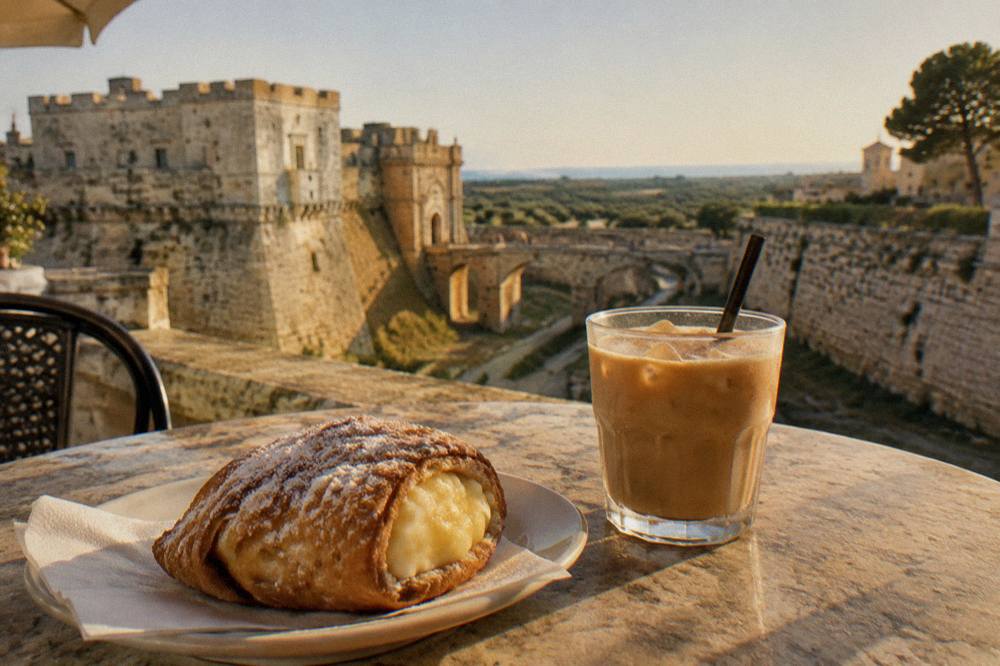
The Salento table travels with you: pasticciotto from the pastry shops of Lecce and Galatina, the savoury rustico leccese of puff pastry, bechamel, mozzarella and tomato, iced espresso with almond milk, the caffe in ghiaccio con latte di mandorla credited to Antonio Quarta of Quarta Caffe, and Negroamaro-based Salice Salentino wine from a DOC established in 1976 covering Lecce and Brindisi provinces.
No restaurant, bakery or price for Acaya itself is verified, and this site prints no venue details it cannot source, so the honest advice is to eat in Lecce before the drive or in one of the coastal towns after it. What is worth knowing is the vocabulary of what you will find, because the Salento canon is short, excellent and everywhere.
| Item | What it is | What the sources say |
|---|---|---|
| Pasticciotto | Shortcrust custard tart | The 1745 invention date is Pasticceria Ascalone's own claim, in Galatina, disputed by historians; Natale in Lecce lists a pasticciotto at 2.20 euro |
| Rustico leccese | Savoury puff pastry with bechamel, mozzarella, tomato | Origins uncertain, likely an aristocratic or bar invention; no verified early date exists |
| Caffe in ghiaccio con latte di mandorla | Iced espresso with almond milk | Credited to Antonio Quarta, Quarta Caffe, 1940s to 1950s; entered Italy's PAT list around 2026 |
| Salice Salentino DOC | Negroamaro-based reds and roses | DOC established 1976, Lecce and Brindisi provinces |
| Frisa and puccia | Hard bread rusks and flatbread | Traditional Salento staples, details not verified |
In Lecce itself, Caffe Alvino on Piazza Sant'Oronzo has roots to about 1880 and Pasticceria Natale has been family-run since 1978; those two names are the verified long-runners, and the fuller story is on the food and cafés coverage. A countryside day that starts with a coffee in the piazza and ends with a Negroamaro on the coast is not a bad template, and several of the city's guided tastings cover that arc without you having to plan it; a guided walk of Lecce with food tastings along the way is the version that fits a morning-before-Acaya schedule, and you can Check availability on the operator's live listing.
Where Should Acaya Sit In A Salento Itinerary?
Acaya works best as the midday link in a chain: Lecce in the morning for the churches and the baroque centre, the walled village as a short stop on the drive east, then the Adriatic coast at Torre dell'Orso, San Foca or Otranto for the afternoon, a loop that keeps every leg under about 45 minutes of driving by the verified OSRM figures from Piazza Sant'Oronzo.
That loop logic is the real content of this page. Salento is small: Otranto is about 44 minutes, Gallipoli about 41, Galatina about 29, and even Leuca at the tip is about 78. A village of Acaya's size never justifies its own day, but as a hinge between the city and the sea it earns its place, and it breaks up a itinerary that would otherwise be two churches and a beach.
For a two-base week, the pattern generalises. Days one and two in Lecce, covered in depth on the main things to do page, with the LeccEcclesiae ticket, the amphitheatre (5 euro full, 2 euro reduced, closed Mondays in winter) and Museo Faggiano. Then a coastal day east through the Acaya corridor, then a southern day towards Leuca or Porto Cesareo on the Ionian side. If you have longer and want the famous towns north of Salento, Ostuni is about 66 minutes by car from Lecce, Alberobello about 91, Polignano a Mare about 88, or by train Ostuni is direct in about 39 to 51 minutes from about 7 euro, Polignano direct in about 1h09 to 1h21, and Alberobello needs a change and roughly 2h30 to 3h or more. Matera, in Basilicata, not Puglia, is about 2 hours 40 by car or 3h30 to 4h10 by bus.
Before the beaches leg, one number worth carrying: lido prices in 2026, for an umbrella and two beds per day, ran about 15 to 25 euro at San Cataldo in June rising to 33 to 35 euro in August, and about 25 to 35 euro rising to 50 to 60 euro around Torre dell'Orso and San Foca, per the consumer-survey figures from the regional press. Free beach access exists everywhere the shoreline is open. Sea temperature, per seatemperature.org data for Salento, runs about 22.5 C in June, 25 to 27 C at the August peak, 20 to 22 C in October and about 14 C in February.
If the morning in the city needs structure, the related pick below is the rickshaw-format guided tour of Lecce's highlights, a format that covers the centre without the walking distance, leaving legs fresh for an afternoon village circuit; the operator's live listing carries the current price and dates.
Is Acaya Worth The Drive From Lecce For A First-Time Visitor?
For a first-time visitor on a short stay, Acaya is a worthwhile stop only when it is already on your route east; it should not displace Lecce's churches, Otranto's mosaic or Gallipoli's island old town, because the village offers a walk and a plan rather than collections or sea. For a second or third visit to Salento, or for travellers who specifically want the region's military-planning history, it moves up the list.
That answer follows from the arithmetic of the region rather than from any judgement about the village. Lecce's ticketed core alone, the LeccEcclesiae circuit plus Castello Carlo V plus Museo Faggiano, is a full day. The headline coastal towns are each half-days. A first trip that spends two of its precious half-days on a small walled village is structuring itself wrong, while a return trip with a hire car and a free Tuesday has every reason to go.
Practicalities for either case. The emergency number in Italy is 112. The currency is the euro, the country is in the Schengen area and the language is Italian. Lecce's ZTL is camera-policed, so if the loop starts from a centre accommodation, confirm plate registration at check-in. And the standing rule of this page: Acaya's own hours, tickets and interior access should be confirmed locally or at the time of booking, because no official figure for them exists in this site's sources.
For the evening after the drive back, the city's night-time character is part of the draw of basing in Lecce rather than the coast: the baroque facades are lit, the passeggiata fills the centre, and the day closes where it began, a few kilometres from the walls of Acaya but a world away in texture.
Common Questions About Acaya And Lecce
What is Acaya near Lecce?
Acaya is a small walled village in the flat Salento countryside east of Lecce, in Puglia, southern Italy, built to a planned fortified layout with walls and towers. It belongs to the corridor between Lecce and the Adriatic coast.
How far is Acaya from Lecce?
Acaya sits a short countryside drive east of Lecce; an exact verified distance for the village itself is not in this site's sources, so confirm directions locally. For scale, San Cataldo, the nearest beach, is 12.9 km and about 14 minutes by road from Piazza Sant'Oronzo.
Do you need tickets to visit Acaya?
No verified ticket or opening-hour information for Acaya's sights exists in this site's sources, so none is printed. Treat the village as a free, open walking stop and confirm any interior access locally on the day.
Can you visit Acaya by public transport from Lecce?
Public transport details for Acaya specifically are not verified here. The summer-only Salento in Bus network ran 13 June to 13 September in 2026 on coastal lines out of Lecce, with fares from 1.10 to 5 euro, but the 2027 dates had not been announced and service to the village itself should be confirmed locally.
What else can you combine with Acaya on a day trip?
Otranto, about 44 minutes by car from Lecce, with its 1163 to 1165 cathedral mosaic, and the Adriatic beaches around Torre dell'Orso, about 32 minutes, both lie in the same eastern corridor and pair naturally with a stop at the walled village.
When is the best time of year to see Acaya?
The ERA5 reanalysis for Lecce, 1991-2020, puts July and August mean highs at about 31 C and November rainfall at 93.7 mm, so late spring and early autumn offer the most comfortable conditions for walking an open, unshaded village.