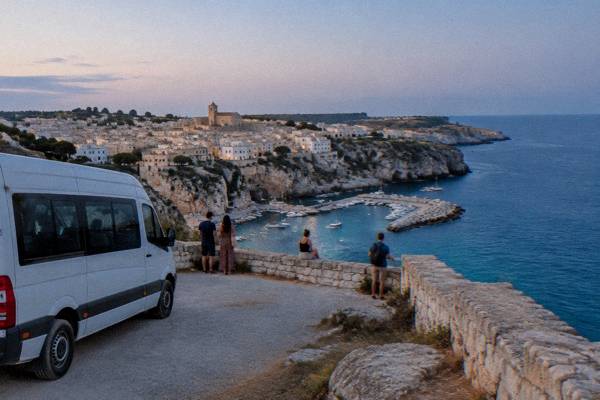
Santa Cesarea Terme: Moorish Villas And Sulphur Pools
Santa Cesarea Terme is a small spa town on the Adriatic coast of Salento, reached from Lecce as a half-day or full-day excursion, and known for its sulphurous thermal waters and ornate Moorish-style architecture.
Short answer
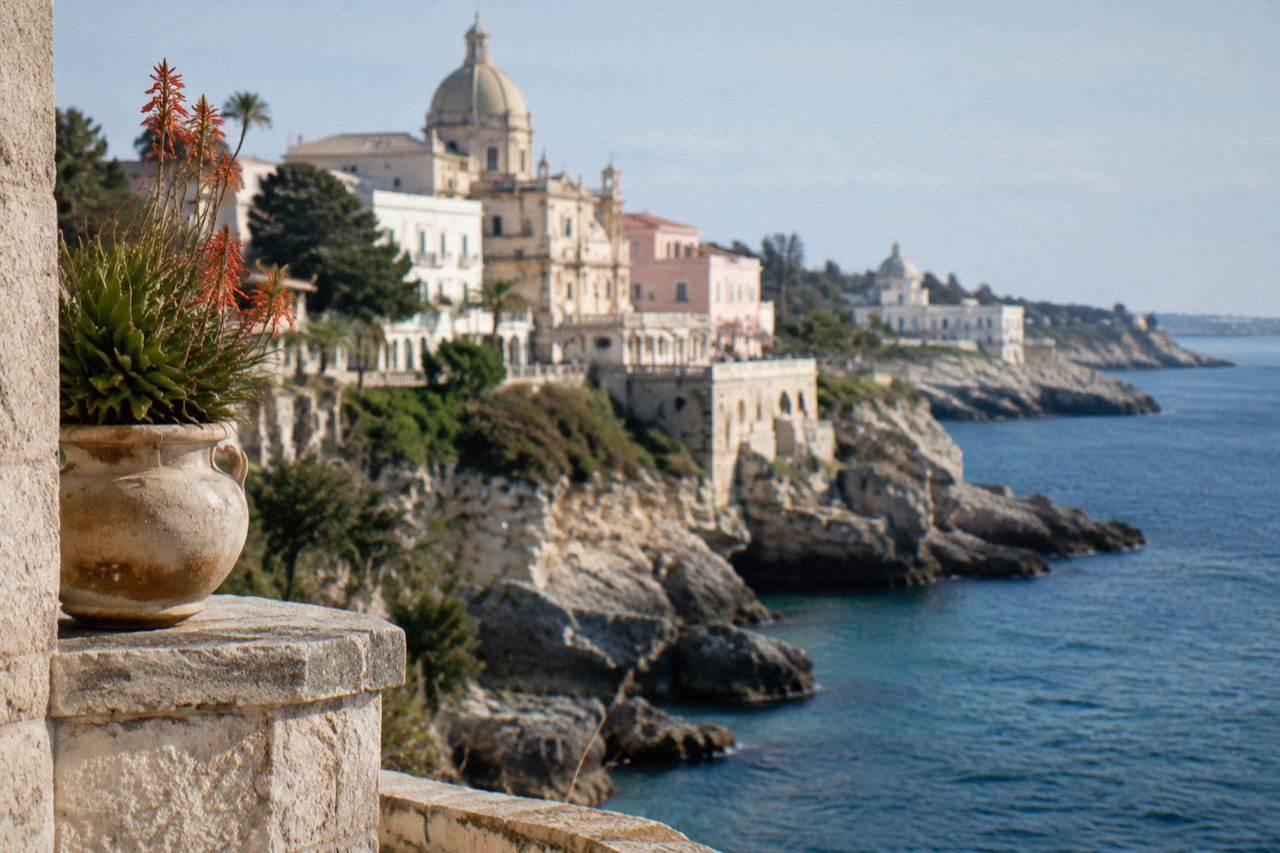
Santa Cesarea Terme is a coastal spa town in Salento, Puglia, southeast of Lecce, known for thermal waters and Moorish-style villas. Opening hours and prices for the thermal establishments are not published in official sources, so confirm locally before travelling; the town pairs naturally with Castro, Otranto and Santa Maria di Leuca.
Santa Cesarea Terme sits on the rocky Adriatic shore of Salento, the peninsula that Lecce anchors as its baroque capital in Puglia, southern Italy. The town is a thermal resort: sulphurous and bromine-rich waters rise from caves at the foot of the cliffs, and the seafront is lined with ornate villas built in a Moorish style that exists nowhere else on this coast. It makes an unhurried day trip from Lecce, usually combined with Castro, Otranto or the road down to Santa Maria di Leuca. The editorial desk at Lecce Travel Guide has assembled what the sources actually say about the town, and, just as usefully, what they do not: opening hours and prices for the thermal establishments are not published in official listings, so this guide flags every point that needs local confirmation rather than inventing a figure.
What Is Santa Cesarea Terme And Why Go There From Lecce?
Santa Cesarea Terme is a small spa town on the Adriatic coast of Salento, in the province of Lecce, known for two things: thermal waters that emerge from sea-level caves and are used for bathing treatments, and a seafront of Moorish-style villas built in the town's years as a thermal resort. It is a resort of a distinctly old-fashioned kind, quieter than Otranto or Gallipoli, and it works well as the slow middle stop on a loop from Lecce through the southeastern Salento coast.
The thermal tradition is the town's reason for existing. The waters at Santa Cesarea Terme are described in local tourism material as sulphurous, salty and bromine-rich, emerging at the Gattulla, Sulfurea, Fetid and Solfatara caves along the shoreline below the town. The establishments that use them have operated as spa facilities, and the town's economy has been tied to thermal cures for generations. Because no official current price list or timetable for the thermal baths appears in the sources used by this site, nothing is quoted here: check directly with the establishment or the local tourist office before planning a treatment.
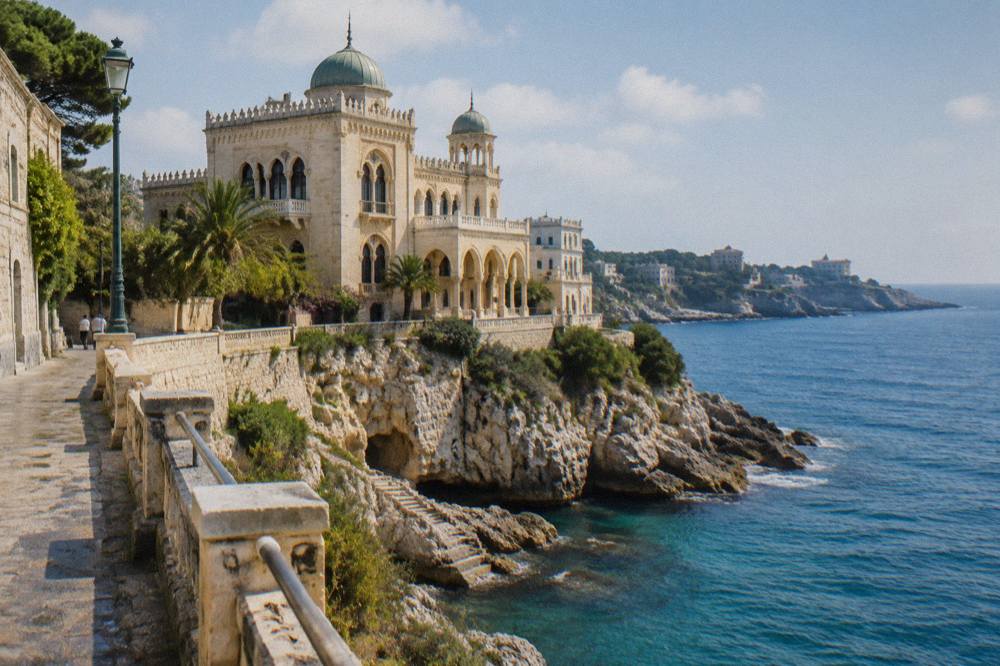
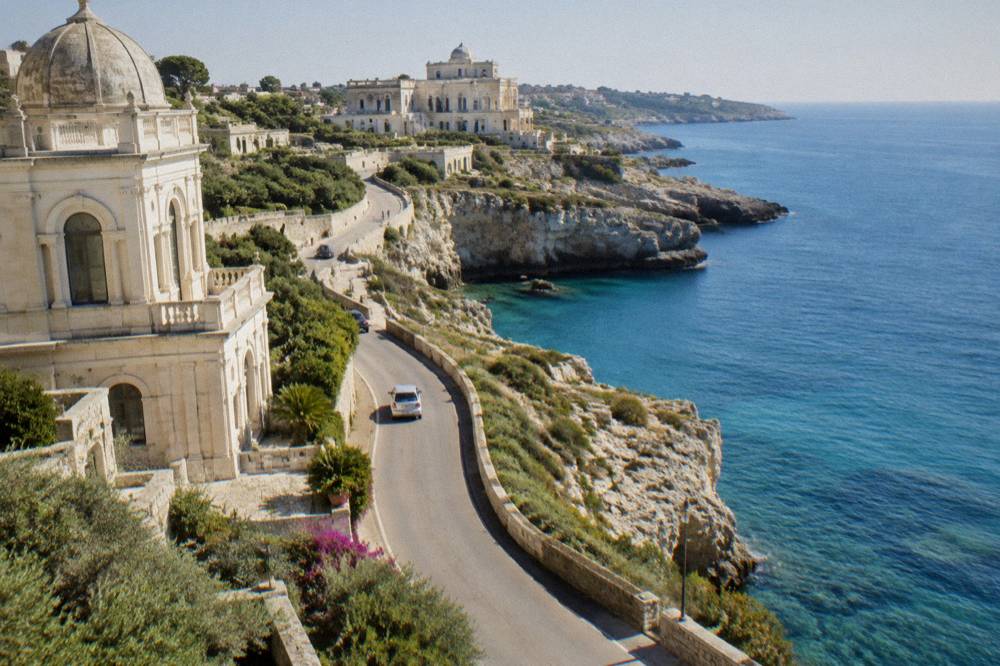
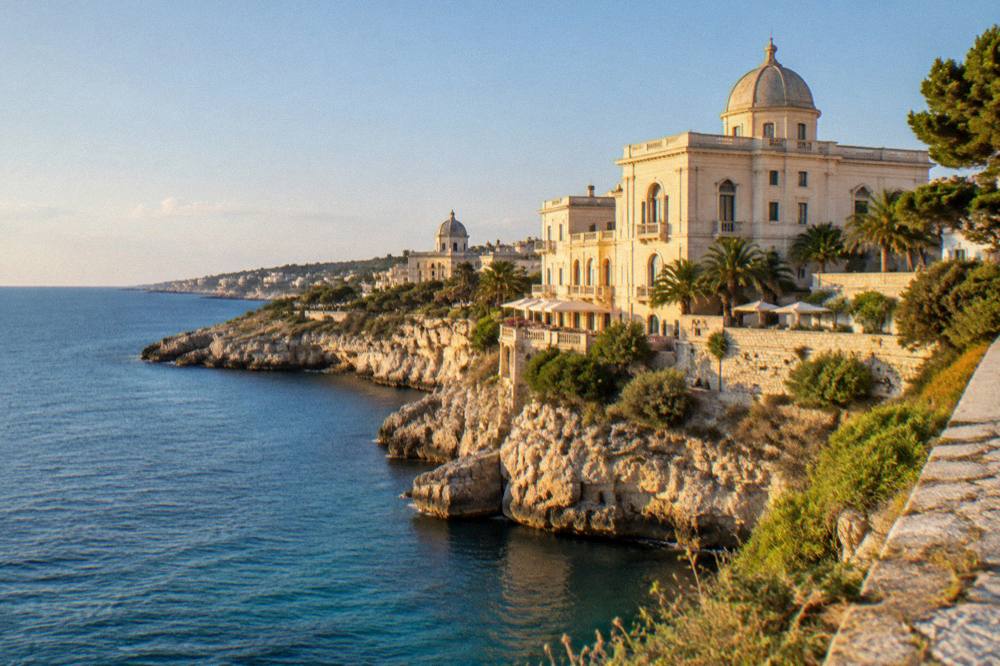
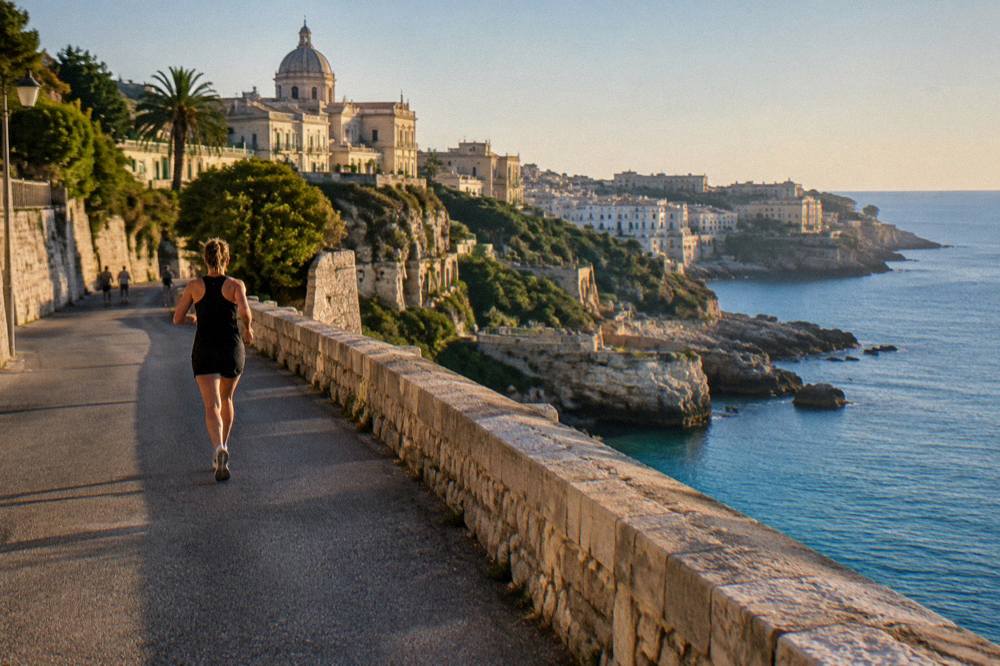
The architecture is the second draw. Villas such as Villa Sticchi and Villa Raffaella are the most photographed buildings, with domes, arches and crenellated façades inspired by Moorish and Liberty styles. They are private or civic buildings best appreciated from the seafront promenade and the coastal road rather than from inside, which makes the town rewarding even if the thermal baths are closed or fully booked.
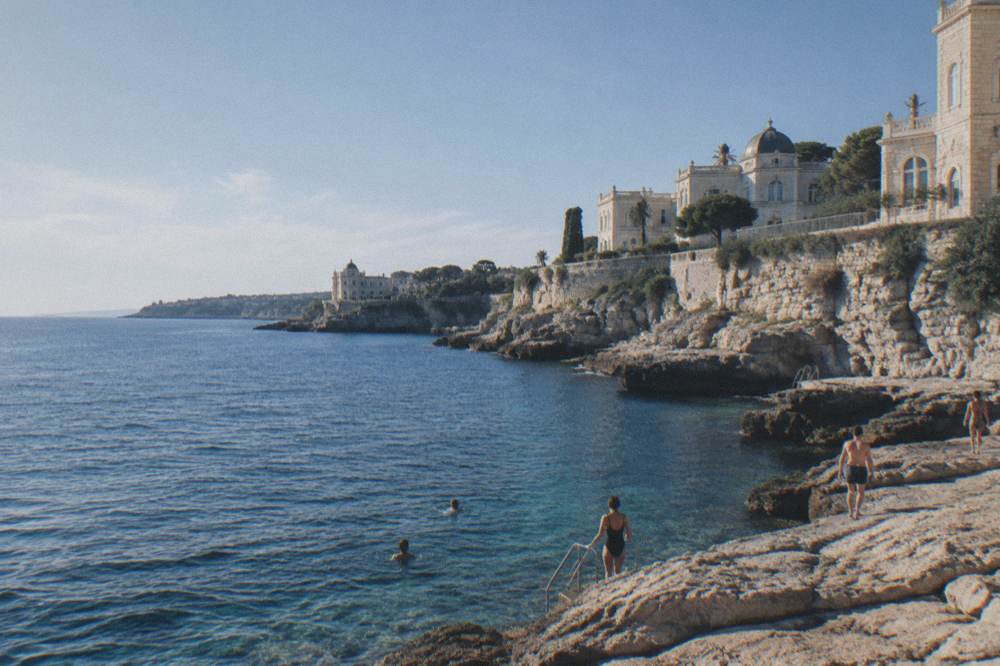
What the town does not offer is a sandy beach. This stretch of the Adriatic is cliff and rock, with bathing platforms and rocky coves rather than free sand. Travellers who want shallow sand should look to the Ionian side of the peninsula, covered in the Salento beaches guide and the beaches near Lecce overview; the Adriatic around Santa Cesarea Terme is for cliff scenery, sea caves and boat trips.
How Do You Get From Lecce To Santa Cesarea Terme?
The practical answer is by car, following the Adriatic coast road south through Castro toward Santa Maria di Leuca, with Santa Cesarea Terme sitting on that coastal stretch between the two. No verified Lecce to Santa Cesarea Terme drive time appears in the sources this site uses, so none is printed; the verified brackets are Castro at about 48 minutes and Leuca at about 78 minutes from Lecce. Those two anchors let you plan the day with confidence about the legs either side of the town.
The verified reference points are the neighbouring legs: Castro is 47.4 km and about 48 minutes of free-flow driving from Piazza Sant'Oronzo, and Santa Maria di Leuca is 83.2 km and about 78 minutes. Santa Cesarea Terme sits roughly midway along the coast between Castro and Leuca, so a drive from Lecce of about an hour is a reasonable planning assumption, and checking a live route before departure is the sensible habit on Salento roads, which narrow and slow south of Otranto. In summer the coastal road carries beach traffic in both directions, and parking in the town is limited by the cliff topology; arriving before midday is the usual local advice for any Salento coastal town.
Public transport options are seasonal and thin. The Salento in Bus summer network, run by Cotrap and partners, operated from 13 June to 13 September 2026 with lines reaching Leuca, Otranto and the coast, with fares from 1.10 to 5 euro bought via the Cotrap app or website and a 1 euro surcharge on board, and children under 10 travelling free. The 2027 dates had not been announced. Outside that window, scheduled rural buses on this stretch are sparse, and the sources do not give a timetable for a Lecce to Santa Cesarea Terme route: confirm locally, or travel by car, or join an organised day tour that includes the stop.
| Verified leg from Lecce (Piazza Sant'Oronzo) | Distance | Free-flow drive time |
|---|---|---|
| Castro (nearest verified coastal reference) | 47.4 km | about 48 min |
| Otranto | 46.7 km | about 44 min |
| Gallipoli | 41.0 km | about 41 min |
| Porto Cesareo | 28.0 km | about 34 min |
| Santa Maria di Leuca | 83.2 km | about 78 min |
For travellers assembling the day around a tour rather than a hire car, the coast south of Otranto is covered by several organised options from Lecce, and the boat-based ones show the cliffs of Santa Cesarea Terme from the water, which is the angle the town's architecture was designed for.
A hire car remains the flexible choice, and the car rental and driving in Lecce notes on the neighbouring Castro page apply to the whole coast: the same road, the same summer traffic patterns, and the same advice about not driving into historic centres without checking local restrictions. Lecce's own ZTL is camera-policed, but that concern ends at the ring road; the issue on the coast is parking, not permits.
What Can You Actually See And Do In Santa Cesarea Terme?
The realistic core of a visit is a walk along the seafront promenade past the Moorish-style villas, a look at the thermal cave area at the foot of the cliffs, a swim or a pause on the rocks, and a seafood lunch facing the Adriatic; the thermal baths themselves need a confirmed booking and published hours, which the official sources do not currently provide. That is a half-day town, and the strongest itineraries bolt it onto Castro's Grotta Zinzulusa or the road down to Leuca.
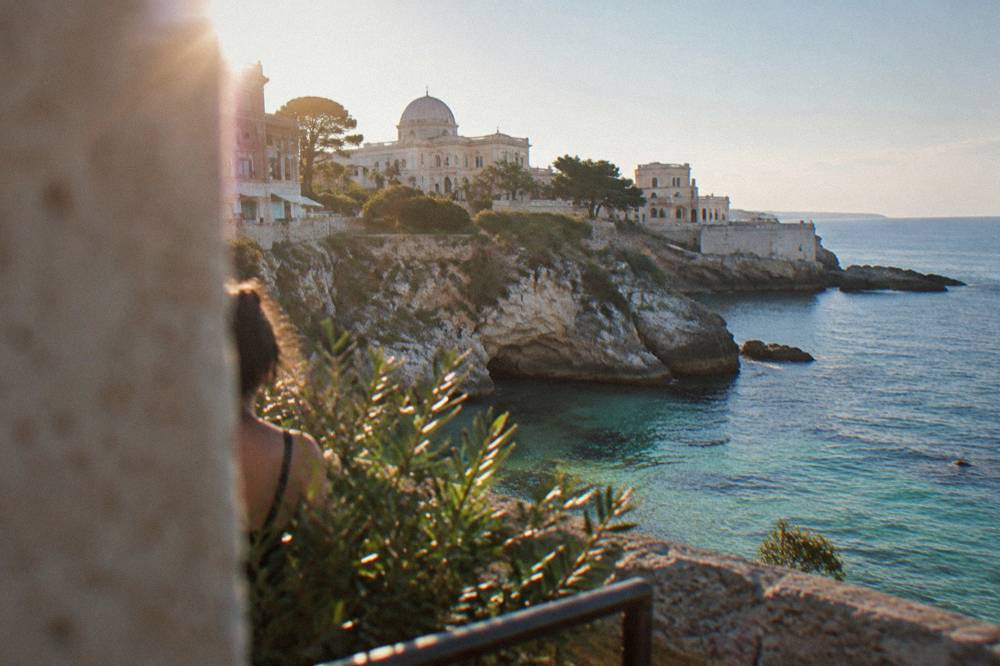
The promenade is where the architecture lives. Villa Sticchi, with its crenellated terrace line and striped domes, and Villa Raffaella, which has served civic purposes, bookend a seafront that reads like a small open-air catalogue of Moorish revival building. The buildings are best photographed in the middle of the day when the sun is high and the limestone and pale plaster glow, and from the water on a boat trip, from which the whole cliff face of villas is visible in one view.
The thermal caves are the historic heart. The Gattulla and Sulfurea caves, among others at the base of the cliff, are the sources of the mineral waters, and the thermal establishments were built above and around them. Access arrangements, treatment prices and opening seasons are not published in the sources this site draws on, so the honest instruction is to contact the establishment or the town's information point directly. Travellers with mobility constraints should note that the town is built on a slope from the upper road down to the seafront.
Beyond the villas and the waters, the town is a base for the surrounding coast rather than a multi-attraction destination. Within a short drive the options are the Grotta Zinzulusa at Castro, the bauxite quarry lake inland from Otranto, and the long run south to Leuca where the Adriatic and Ionian meet. The Otranto day trip guide and the Santa Maria di Leuca guide cover those legs in detail.
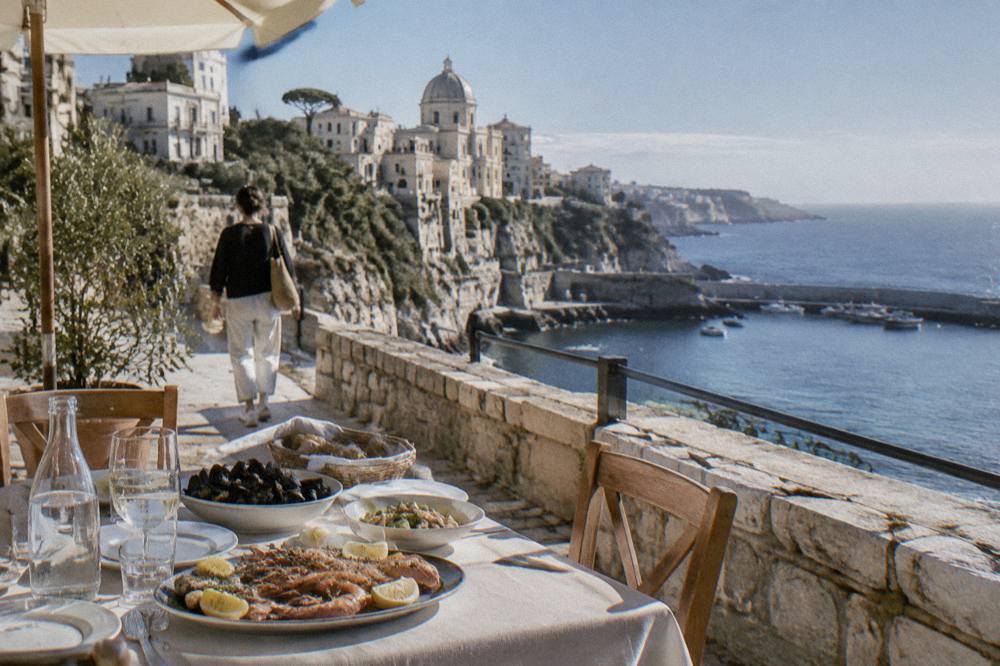
Eating in town follows the coast: the Salento seafood repertoire of raw fish, grilled catch and the local vegetables of the peninsula. This site publishes no restaurant rankings or venue details for Santa Cesarea Terme, because none are verified in its sources; the best restaurants in Lecce hub and the what to eat in Lecce material cover the regional dishes, from pasticciotto to ciceri e tria, that appear on menus the length of Salento.
Which Nearby Towns And Sights Pair Best With Santa Cesarea Terme?
The strongest pairings are Castro, five minutes up the coast for the Grotta Zinzulusa sea cave, and Santa Maria di Leuca at the peninsula's tip for the basilica, the lighthouse and the cave-lined cliffs; Otranto to the north adds a cathedral with a mosaic floor laid between 1163 and 1165 and a full historic centre, making a three-stop loop the classic shape of the day. Each pairing is within the verified drive-time bracket from Lecce printed in the table above.
Castro is the closest and easiest add-on. The Grotta Zinzulusa, the limestone cave that opens directly onto the Adriatic, runs guided visits year-round, from 9:30 to 18:00 or 19:00 in July and August and shorter winter hours from October to March, with tickets at 7 euro full and 4 euro reduced for children under 11, per the cave's own site. The town above the cave is a small borgo on a clifftop, and the Castro guide covers it separately.
Otranto, about 44 minutes from Lecce by car, is the biggest draw on this coast: the cathedral's mosaic floor, laid between 1163 and 1165 by the priest Pantaleone, the Castello Aragonese with seasonal tickets of roughly 6 euro in low season to 12 euro in high season, and the old town inside its walls. Independent visitors enter the cathedral free, while groups and visitors with a licensed guide pay 2 euro per person under a rule in force since 1 March 2026, per the Diocese of Otranto's own notice. The inland bauxite quarry near Otranto is a known stop, but access rules are not published in this site's sources: confirm locally.
| Nearby stop | What it is | Verified figures |
|---|---|---|
| Grotta Zinzulusa, Castro | Sea cave, guided visits year-round | 7 EUR full, 4 EUR under 11 (official site) |
| Otranto Cathedral | Romanesque cathedral, 1163-1165 mosaic | Free for independent visitors; 2 EUR for groups and guided visitors since 1 March 2026 |
| Otranto Castello Aragonese | Aragonese castle, seasonal exhibitions | about 6 EUR low season to 12 EUR high season |
| Baia dei Turchi, Otranto | Protected pinewood beach | SP366 parking about 4 to 8 EUR a day, 10 to 15 min walk |
| Santa Maria di Leuca | Basilica and lighthouse at the tip | Basilica free; daily split hours |
Leuca itself is the natural southern terminus. The Basilica De Finibus Terrae keeps daily split hours, morning and late afternoon, with free entry, and the lighthouse stands beside it; the interior of the lighthouse is not open to the public. The cliffs between Santa Cesarea Terme and Leuca hold the cave systems that the local boat trips visit, which is where the related tour for this page comes in: a boat ride out of Leuca with an aperitif and swimming stops covers the same coastline the villas look out on.
Can You Swim Near Santa Cesarea Terme?
Swimming on this stretch is rocky-coast swimming: coves, platforms and deep clear water rather than sand, with the nearest verified sandy-beach alternatives being the dunes at Pescoluse on the Ionian side and the beach towns north toward Otranto; sea temperatures run about 22.5 C in June, 25 to 27 C at the August peak and 20 to 22 C in October. The water is warm enough for a comfortable swim from June through September and marginal by late October.
The town's own bathing is from rocks and platforms below the promenade. Lido services here are not covered by the 2026 price surveys this site holds, which covered the major named beach towns; the verified survey figures, from the Udicon and Adoc consumer surveys reported by Corriere Salentino, are for an umbrella and two sunbeds per day and give a sense of Salento pricing generally.
| Beach area (2026 survey) | Umbrella + 2 beds, June | Umbrella + 2 beds, August |
|---|---|---|
| San Cataldo (nearest to Lecce) | 15 to 25 EUR | 33 to 35 EUR |
| Torre dell'Orso and San Foca | 25 to 35 EUR | 50 to 60 EUR |
| Otranto | 20 to 30 EUR | 30 to 50 EUR |
| Porto Cesareo and Gallipoli (Ionian side) | higher, survey average up to about 40-70 EUR at peak |
Prices change year to year, the surveys themselves note an upward drift, and Santa Cesarea Terme's own lidos are not in the survey: expect rocky-coast bathing clubs to be smaller and confirm the rate on arrival.
One rule matters further north on the same coast: Grotta della Poesia at Roca Vecchia, near Torre dell'Orso, has banned bathing and diving since summer 2026, and non-residents of Melendugno paid a 5 euro ticket in the 2026 season to enter the archaeological area and view the pool from the paths. Anyone stringing together an Adriatic beach day should read the Grotta della Poesia guide before assuming a swim there. The full regional picture, including the Ionian sand at Pescoluse and the shallow water at Porto Cesareo, is in the Salento beaches coverage.
Should You Visit Independently Or On An Organised Tour From Lecce?
Independent travel by car gives full control of the Castro, Santa Cesarea Terme and Leuca loop and is the only way to linger at the thermal baths; an organised day tour removes the driving and the summer parking problem and reliably includes the coast's headline stops, which is why both approaches are common on this route. The decision usually comes down to whether the thermal establishment, with its booking and confirmation requirements, is the point of the day or a footnote.
The independent case is straightforward. The roads are manageable, the loop is signposted, and the drive-time table above brackets every leg. The friction points are summer parking in the small coast towns, the sparseness of off-season public transport, and the fact that the thermal baths cannot be assumed open without confirmation. A car also opens the inland alternatives on the way back, from Specchia to the baroque towns of the interior.
The tour case is equally real. The van and minibus day tours from Lecce that include Otranto, Castro, Leuca and Gallipoli handle the driving on a road where the passing places are few, and the boat trips out of Leuca reach the caves below Santa Cesarea Terme that land travel cannot. The trio of options rendered above covers the three most useful shapes: a boat afternoon, a full-day multi-town tour and a bike day closer to Lecce itself.
A third shape is the split day. Spend the morning in Lecce among the churches covered by the LeccEcclesiae combined ticket, then drive out to the coast for the late afternoon and the light on the villas, when the day-trippers have thinned. The Lecce in one day material sequences the city half; this page sequences the coast half.
When Is The Best Time Of Year For A Santa Cesarea Terme Day Trip?
Late May to late June and September offer the combination the sources support: sea temperatures of about 22.5 C in June and 24 to 25 C in September, rainfall at its summer minimum of 15 to 18 mm per month from June to August, and thinner traffic than the July and August peak, when the mean daily high reaches about 31 C and the coast is at its busiest. The thermal establishments traditionally run their main season in the warmer months, but as their calendars are not published in official sources, confirm the dates directly.
The climate figures below are ERA5 reanalysis, 1991-2020, for the grid cell near Lecce: modelled normals, not a station record, and the coastal strip runs slightly milder than the inland city cell. Rainfall is the winter constraint: November carries the highest monthly total in the table at 93.7 mm, with October and December also wet, and a cliff-walk day in those months can be interrupted.
| Month | Mean high C | Mean low C | Rain mm |
|---|---|---|---|
| May | 23.4 | 14.7 | 39.9 |
| June | 28.2 | 19.1 | 18.0 |
| July | 31.0 | 21.7 | 15.3 |
| August | 31.3 | 22.2 | 18.1 |
| September | 26.4 | 19.0 | 58.9 |
| October | 21.8 | 15.4 | 91.3 |
Spring has a second argument: the wildflowers on the coastal scrub and the walking on the clifftop paths before the heat. Winter travel is possible, the sea is dramatic and the towns are quiet, but the mean high drops to 12.4 C in January, the thermal-water experience becomes the main reason to come rather than a bonus, and the Salento in Bus network does not run outside its summer window. The Lecce in winter coverage has the off-season city alternative.
For festival planners, the timing anchors in this part of Salento are the Notte della Taranta concert in Melpignano, held on 22 August 2026 in its 29th edition with the 2027 date not announced, and the Festa di San Rocco at Torrepaduli from 14 to 17 August 2026. Both sit in the peak coastal fortnight, when the whole southeastern peninsula is at its liveliest and its most crowded.
What Should You Budget For The Day From Lecce?
The verified fixed costs are small: the Grotta Zinzulusa cave at 7 euro full or 4 euro reduced, roughly 6 to 12 euro for the Otranto castle depending on season, and Salento in Bus coastal fares of 1.10 to 5 euro if you travel in its summer window; the thermal baths at Santa Cesarea Terme have no published price list in official sources, and hotel rates are not quoted anywhere on this site, so the honest budget is built from the verified pieces plus local confirmation.
Food and coffee are the flexible lines. A pasticciotto at a listed Lecce pastry shop runs about 2.20 euro per the shop's own menu, and the iced coffee with almond milk that the region claims as its own is a bar-counter item priced locally. On the coast, seafood meals vary with the catch and the terrace. What this site will not do is print a nightly hotel rate, a taxi fare or a meal price it has not verified; the how expensive is Lecce material explains the approach and the tourist tax, which is collected by accommodation at rates set by category and season, topping out at 5 euro per night for five-star high season stays from 1 April 2026, with confirmation at booking.
Common Questions About Santa Cesarea Terme
How far is Santa Cesarea Terme from Lecce?
No verified Lecce to Santa Cesarea Terme drive time is published in this site's sources. The verified brackets are Castro at 47.4 km and about 48 minutes from Piazza Sant'Oronzo, and Santa Maria di Leuca at 83.2 km and about 78 minutes; the town lies between them on the coast road, so check a live route before departure.
Are the thermal baths at Santa Cesarea Terme open to visitors?
The thermal establishments are the town's core attraction, but current opening hours, seasons and prices are not published in the official sources this site uses. Contact the establishment or the local tourist office directly before planning a treatment.
Can you swim at Santa Cesarea Terme?
Swimming is from rocks, coves and bathing platforms rather than sand, on a cliff coastline. Sea temperatures run about 22.5 C in June, 25 to 27 C at the August peak and 20 to 22 C in October, per seatemperature.org data for the region.
What is the closest verified sea cave to Santa Cesarea Terme?
Grotta Zinzulusa at Castro, a short drive up the coast, runs guided visits year-round at 7 euro full and 4 euro reduced for children under 11, per the cave's official site.
Is there a bus from Lecce to Santa Cesarea Terme?
The summer Salento in Bus network ran coastal lines to Leuca, Otranto and the surrounding coast from 13 June to 13 September 2026, with fares from 1.10 to 5 euro; 2027 dates had not been announced. No year-round Lecce to Santa Cesarea Terme timetable appears in this site's sources, so confirm locally outside summer.
What else should be on the same day trip?
The classic loop is Castro for the Grotta Zinzulusa, Santa Cesarea Terme for the villas and thermal waters, and Santa Maria di Leuca for the basilica, the lighthouse and a boat trip to the caves, with Otranto as a bigger northern alternative.
Santa Cesarea Terme rewards travellers who accept it on its own terms: a slow thermal town with a theatrical seafront, strung along the most dramatic road in Salento, best paired with a cave at Castro and a boat out of Leuca, and best booked around a phone call or an email to the baths before the car leaves Lecce.