Is Amalfi Coast Or Puglia Better?
An honest comparison of the Amalfi Coast and Puglia from a Lecce-focused desk: costs, beaches, baroque architecture, transport and who each region suits.
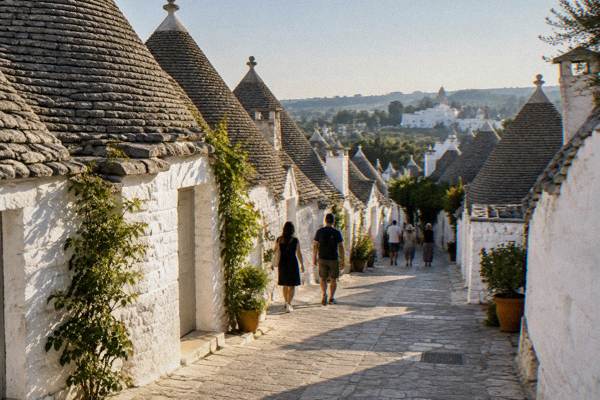
The question "Is Amalfi Coast Or Puglia Better?" is really a question about what kind of trip you want, and the answer splits cleanly along lines of pace, price and geography. This guide writes from Lecce, the baroque capital of Salento in Puglia, the region that fills Italy's heel, and the desk behind it has verified data only for Lecce and its Salento surroundings: what follows compares on what is sourced, and says so plainly where it does not reach. Puglia is a large region with two coastlines, an Adriatic one cliffier and rockier, and an Ionian one sandy and shallow, plus inland towns of pale limestone like Lecce itself. The Amalfi Coast is a short, famously steep stretch of Campanian shoreline south of Naples, a different region with a different character, and no verified data covers its prices, queues or ratings, so no invented figure appears here.
Where Are Puglia And The Amalfi Coast, And What Kind Of Trip Is Each?
Puglia is the whole heel of Italy, a region of some 4 million residents across two coasts, anchored inland by Lecce, a baroque city of about 94,387 residents that sits roughly 13 km from its nearest beach, San Cataldo. The Amalfi Coast lies hundreds of kilometres to the west in Campania, and this desk's verified data covers only the Puglian side of the comparison, so that is the side described in detail here.
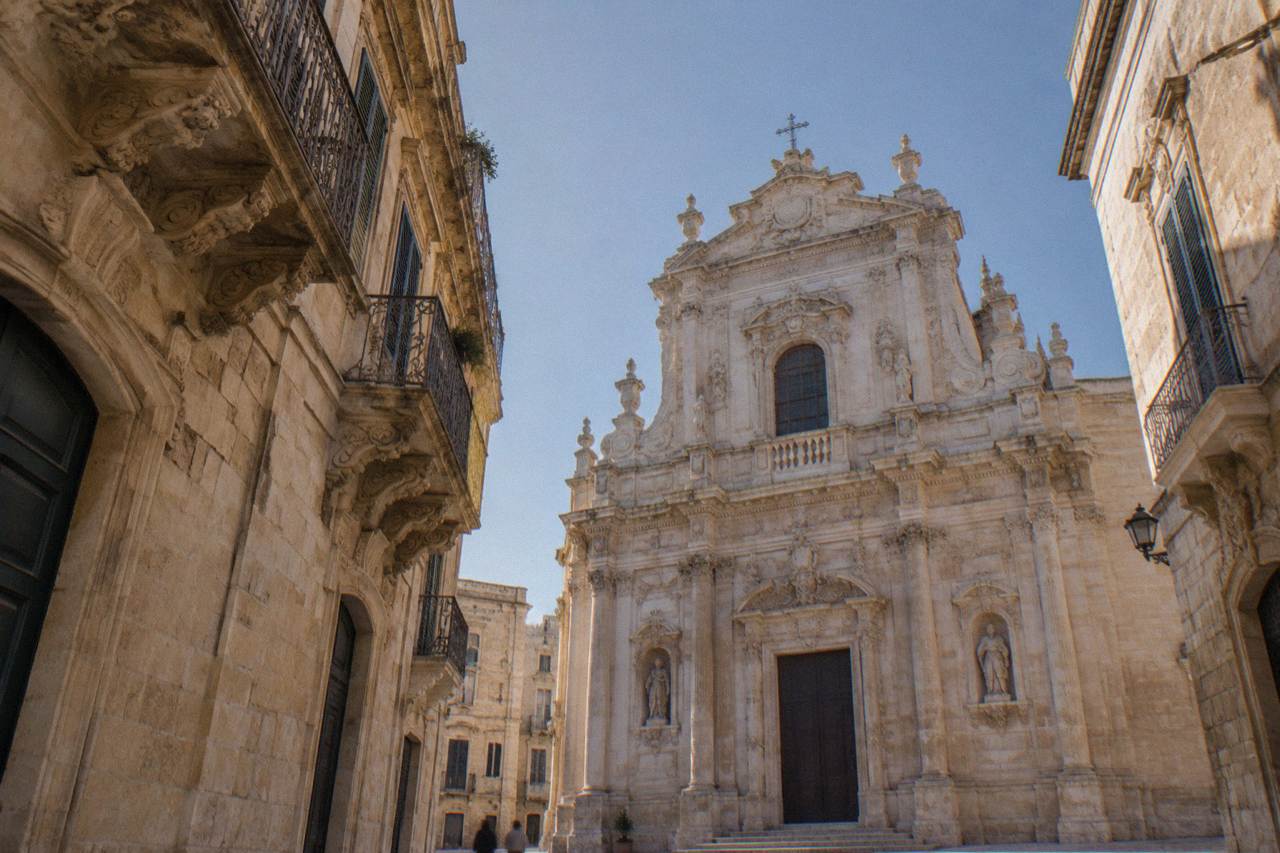
Lecce gives the region its cultural weight. Often called the Florence of the South, a nickname whose origin is contested and is never credited here to a single coiner, the city is built from pietra leccese, a Miocene limestone that is soft when quarried and hardens with exposure, which is what allowed the dense carving of the Lecce Baroque facades around Piazza Sant'Oronzo and the Duomo. The province around it holds 761,927 residents, and the Università del Salento enrols about 20,774 students, which keeps the city lively outside the beach season.
Geographically the two destinations are not substitutes. Puglia is a peninsula you base yourself in and radiate out from, with Lecce a practical hub: Otranto is about 44 minutes away by road, Gallipoli about 41, Santa Maria di Leuca about 78. The Amalfi Coast is a linear drive between cliff towns where the road itself is the attraction. Readers weighing a base town can also compare two days in Lecce with the region-wide question of which Puglia town works as a base.
Is Amalfi Coast Or Puglia Better?
For a trip built around baroque architecture, low-key beaches, food and value for money, Puglia is the stronger choice, and Lecce is its inland cultural capital; for a short, dramatic, single-road coastal spectacle compressed into a few days, the Amalfi Coast serves that specific ambition better, but no figure about the Amalfi side is verified in this desk's sources, so the comparison below stands on Puglian data alone.
Start with what is measurable from Lecce. The LeccEcclesiae combined church ticket lists 11 euro standard, valid 15 days, covering the Duomo and crypt, Basilica di Santa Croce, San Matteo, Santa Chiara and the Antico Seminario with its sacred art museum, with under-12s free. Museo Faggiano charges 5 euro. Castello Carlo V is visitable by guided tour only, at 10 euro full. These are modest sightseeing costs, and the region's eating culture, from pasticciotto to the caffe in ghiaccio con latte di mandorla, an iced espresso with almond milk credited to Antonio Quarta of Quarta Caffè in the 1940s and 1950s, keeps daily spending low by southern Italian standards. A fuller rundown of local costs sits in the desk's guide to how expensive Lecce is.
Puglia's weakness is distance and pace. Sights are spread across a peninsula, so the trip rewards slower travel: a car, the FSE trains to Gallipoli and Otranto, or the summer Salento in Bus network, which ran 13 June to 13 September in 2026. For anyone already leaning Puglia, the desk's answer to is Lecce worth visiting covers the city's own case in depth.
What Does A Puglia Trip Cost Compared With The Amalfi Coast?
The 2026 figures on the Puglian side include LeccEcclesiae at 11 euro, the Castello Carlo V tour at 10 euro, Grotta Zinzulusa at 7 euro, and Ionian and Adriatic lido days ranging roughly 15 to 70 euro for an umbrella and two sunbeds depending on month and coast; no equivalent Amalfi price is verified in this desk's sources, so no comparison figure for Campania appears here.
The lido survey worth quoting is the 2026 Udicon and Adoc research reported by Corriere Salentino: at San Cataldo, Lecce's nearest beach, an umbrella with two sunbeds cost 15 to 25 euro in June and 33 to 35 euro in August; at Torre dell'Orso and San Foca, 25 to 35 euro in June rising to 50 to 60 euro in August; at Otranto, 20 to 50 euro across the season, with Ionian lidos generally higher. Prices change by year, and free public beach access exists year-round where open.
| Sight or service | Price (2026) | Source basis |
|---|---|---|
| LeccEcclesiae combined church ticket | 11 euro standard, 15-day validity | chieselecce.it listing |
| LeccEcclesiae with bell tower | 21 euro full | chieselecce.it listing |
| Castello Carlo V guided tour | 10 euro full, 6 reduced | castle's own page |
| Museo Faggiano | 5 euro full | museum tariff page |
| Roman Amphitheatre | 5 euro full, 2 reduced | regional museums listing |
| Grotta Zinzulusa, Castro | 7 euro full, 4 reduced | cave's own site |
Accommodation rates by season are not in the verified pack for either region, so the desk prints none. The tourist tax exists in Lecce and is collected by the accommodation; only the top reported rate, 5 euro per night for five-star high season from 1 April 2026, may be stated, with a note to confirm at booking. On the general question of crowds, the desk's separate answer on whether Lecce is very touristy reports what the sources say without a crowd figure.
Which Region Suits You For Beaches, Architecture And Food?
Puglia suits a traveller who wants both a serious architectural city and wide sandy beaches in one trip: Lecce delivers the baroque, and the Ionian coast delivers the sand, with Pescoluse, called the Maldives of Salento, holding a Blue Flag in 2026, while the Adriatic side from Otranto to Castro is rockier and cliffier; the Amalfi Coast is a coastal-cliff destination with its own architecture, but none of its specifics are verified here.
The beach geography is the part worth understanding before booking. The Adriatic side of Salento, reached from Lecce towards Otranto and Castro, is the cliffy, rockier coast, with sea caves such as Grotta Zinzulusa visitable year-round on guided visits. The Ionian side, towards Porto Cesareo, Gallipoli and Pescoluse, is the sandy, shallower one, with dunes and long stretches of fine white sand. One caution for 2026 visitors: at Grotta della Poesia near Roca Vecchia, bathing and diving are banned since summer 2026, and non-residents of Melendugno paid a 5 euro ticket in the 2026 season, with viewing from paths only.
Food is Puglia's quiet trump card. Pasticciotto, the custard-filled shortcrust pastry, is claimed by Pasticceria Ascalone in Galatina, a claim the shop itself makes and historians dispute, so it is reported here only as a claim. Salice Salentino, the Negroamaro-based DOC established in 1976 spanning Lecce and Brindisi provinces, anchors the region's wine identity alongside Primitivo di Manduria. Caffe Alvino on Piazza Sant'Oronzo has roots to about 1880, and Pasticceria Natale has been family-run since 1978, both institutions rather than invented recommendations.
For swimmers, the sea itself cooperates: sea temperatures around Puglia run about 22.5 C in June, 25 to 27 C at the August peak, and 20 to 22 C in October, per seatemperature.org figures reported by Grok. A practical primer on the coast's reach sits in the desk's answer to whether Lecce is near the coast.
How Many Days Do You Need For Puglia Versus The Amalfi Coast?
For Puglia, plan on at least two to three days in Lecce itself plus three or four more for Otranto, Gallipoli, Leuca and the beaches, a trip the desk's itinerary pages lay out day by day; the Amalfi Coast is typically a shorter-drive destination, but no verified day count for it exists in this desk's sources, so only the Puglian pacing is stated with figures.
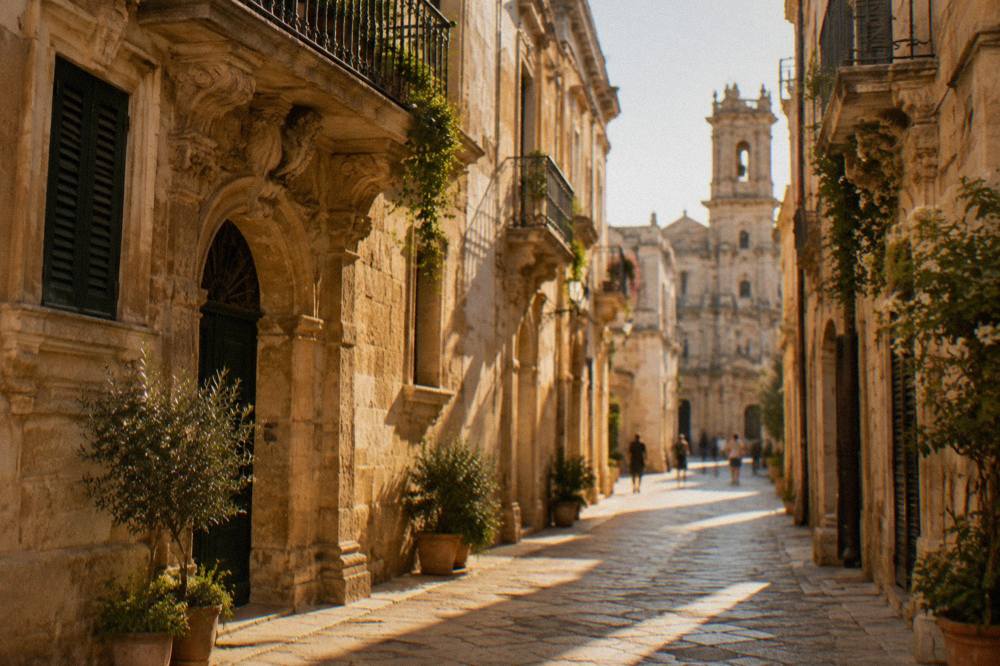
Lecce rewards a slow core. The Duomo square, Santa Croce, the Roman Amphitheatre in Piazza Sant'Oronzo, Museo Faggiano's layered underground and the Castello tour fill two days without strain, and the LeccEcclesiae ticket's 15-day validity means churches can be returned to rather than rushed. The desk's own answer on how many days you need in Lecce breaks this down, and the broader Salento itinerary extends the same logic across the peninsula.
Distances from Piazza Sant'Oronzo, computed free-flow by routing engine, tell the day-trip story:
| Destination from Lecce | Distance | Drive time |
|---|---|---|
| San Cataldo beach | 12.9 km | about 14 min |
| Galatina | 25.7 km | about 29 min |
| Porto Cesareo | 28.0 km | about 34 min |
| Torre dell'Orso | 27.9 km | about 32 min |
| Gallipoli | 41.0 km | about 41 min |
| Otranto | 46.7 km | about 44 min |
| Castro | 47.4 km | about 48 min |
| Santa Maria di Leuca | 83.2 km | about 78 min |
Without a car, the FSE railways still tie the region together: direct trains reach Gallipoli in about 1h18 to 1h43 and Galatina in about 38 to 55 minutes, with Otranto requiring a change at Maglie. The desk's answer on day trips from Lecce without a car covers the detail. Travellers comparing a cross-region Italian plan may also want the desk's take on Sicily or Puglia.
The Gallipoli day trip above is the desk's featured pick for this comparison because it bundles what Puglia does distinctly: a coastal town on its own limestone island, the baroque interior of Galatina's Santa Caterina d'Alessandria, free to enter on split morning and afternoon hours, a beach stop and a winery in a single loop from Lecce. If the Amalfi Coast's pull is compression, the Puglian counter-argument is exactly this kind of varied, low-friction day.
Common Questions About Amalfi Coast Or Puglia
Is Amalfi Coast Or Puglia Better?
For architecture, food, value and beach-and-city variety, Puglia is the stronger pick, with Lecce as its baroque capital. For a short, dramatic single-road coastal spectacle, the Amalfi Coast fits that narrower goal, though this desk has verified no Amalfi-side figures.
Is Puglia cheaper than the Amalfi Coast?
No verified Amalfi price exists in this desk's sources, so no figure is printed for it. On the Puglian side, 2026 lido days ran 15 to 70 euro by coast and month, the LeccEcclesiae church ticket is 11 euro and Museo Faggiano is 5 euro.
Can you visit the Amalfi Coast and Puglia on one trip?
Yes, but they are far apart: Lecce to Rome by direct train takes about 5h58 to 6h16, and the Amalfi Coast lies south of Naples beyond that again. Treat them as two regions, not neighbours.
Does Lecce have beaches?
Not in the city itself. San Cataldo, the nearest beach, is 12.9 km away, about a 14-minute drive, reachable on SGM bus line 32 in about 20 minutes.
Is Puglia too spread out for a short trip?
It can be. Otranto is about 44 minutes from Lecce by road and Santa Maria di Leuca about 78, so a base in Lecce plus two or three loop days covers the Salento without daily relocation.
The honest closing note from Lecce Travel Guide: the desk writes from verified Lecce and Salento data, so the Puglian half of this comparison carries the figures and the Amalfi half carries the caveat. Weigh what is sourced, confirm the rest at booking, and the right region for your trip becomes obvious quickly.