Is Lecce A Wealthy City?
Is Lecce a wealthy city? A sourced look at the economy of Lecce in Puglia, from university salaries and tourism to pietra leccese and the cost of a visit.
Lecce, the baroque capital of Salento in Puglia, southern Italy, is a comfortable, mid-sized provincial capital rather than a wealthy one in the northern European sense. The city had 94,387 residents on 1 January 2026, sits at the administrative centre of a province of 761,927, and carries a university of about 20,774 enrolled students, figures reported by citypopulation.de and the Università del Salento. It is a few kilometres inland, built in honey-coloured pietra leccese limestone, and it is often called the Florence of the South for the density of its carved baroque frontages. Whether that translates into money in residents' pockets is a different question, and one this page answers from what the sources say rather than from impressions.
Is Lecce A Wealthy City?
Lecce is a moderately prosperous provincial capital, not a rich city by national standards. It has a stable base of public administration, a university of about 20,774 students, a growing tourism economy, and the agricultural and wine trades of the Salento plain behind it. The stone old town shows generations of accumulated wealth in its palazzi and churches, while the wider city lives on salaries, pensions and seasonal trade like most of southern Italy.
Start with the numbers that are actually sourced. The city's population of 94,387 makes it the second-largest city of Puglia's Salento area and the seat of the province, which matters economically because provincial and regional offices, courts and hospital services concentrate well-paid public employment here. The university adds a second pillar: about 20,774 enrolled students, per the Università del Salento's own figures, support a rental market, bars, bookshops and a services economy that runs through the academic year.
| Figure | Value | What it says about the city |
|---|---|---|
| City population | 94,387 (1 Jan 2026) | Mid-sized provincial capital |
| Province population | 761,927 | Lecce administers a large rural hinterland |
| University students | About 20,774 | A steady services and rental economy |
| Region | Puglia (Apulia) | Southern Italy, euro area |
| Nearest beach | San Cataldo, 12.9 km | Inland city, coastal economy nearby |
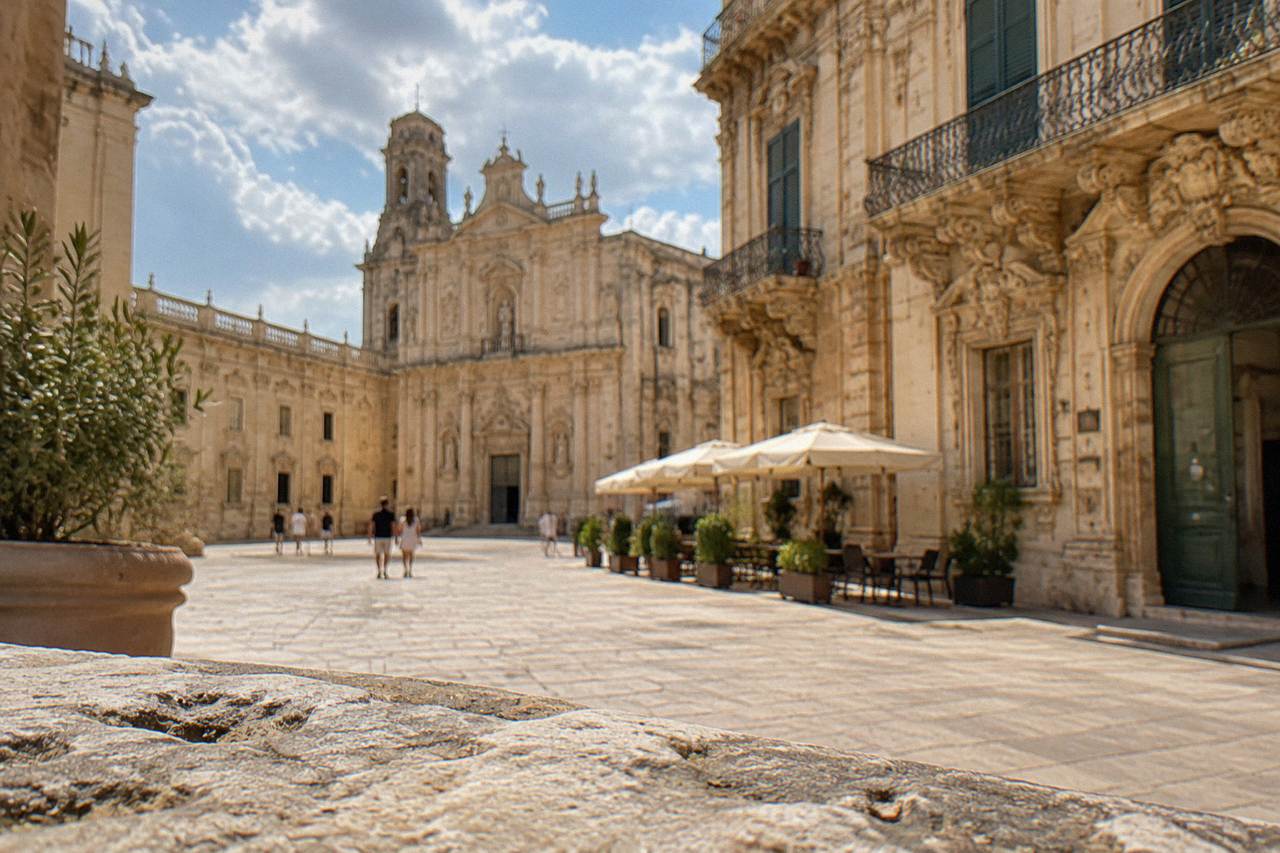
What the table cannot show is texture. The old town is built of pietra leccese, a Miocene limestone that is soft when quarried and hardens with exposure, which is precisely why so much decorative carving survived and why so much of it was affordable to build in the first place. Wealth, in Lecce, has historically been displayed in stone rather than in industry.
What Is Lecce's Economy Built On?
Lecce's economy rests on four legs: public administration as the provincial capital, the Università del Salento with about 20,774 students, a tourism season that has lengthened well beyond August, and the agriculture and wine trades of the Salento plain. None of these makes the city rich on its own. Together they make it stable, which in southern Italy is the more realistic benchmark.
The administrative leg is the quiet one. A provincial capital holds offices, a court, a prefecture (the Palazzo dei Celestini is the seat), health services and schools, and those salaries circulate all year. The university leg runs on a similar rhythm, filling the centro storico from autumn to spring and thinning out in summer.
The tourism leg is the one that has changed fastest. Lecce's baroque churches, its museums and its role as the obvious base for Salento day trips have turned the old town into a year-round destination, with a high season that now stretches across late spring, summer and the Christmas period, when the Fiera dei Pupi fair fills the ex-Convento dei Teatini. Salento in Bus, the summer shuttle network, ran 13 June to 13 September in 2026, which tells you exactly how long the coastal season now runs.
The agricultural leg is the oldest. The Salento plain produces olive oil and wine, including the Negroamaro-based Salice Salentino DOC, established in 1976 across parts of the Lecce and Brindisi provinces. Galatina, 25.7 km away by road, is the town that claims the pasticciotto, and the pastry trade of the province is a real economy in itself, even if the 1745 invention date is the Ascalone shop's own claim rather than settled history.
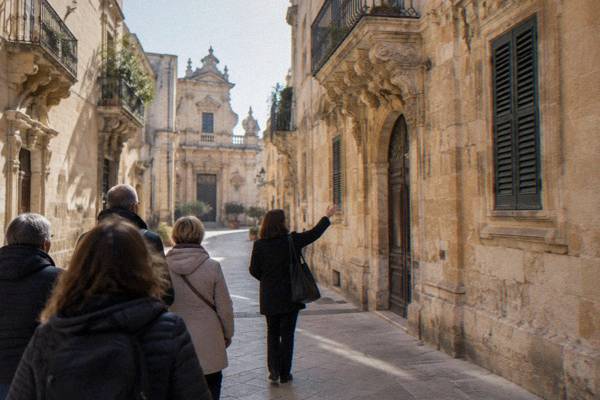
For visitors who want the economic story explained on the ground, guided walks of the old town are the most direct route.
How Expensive Is Lecce For A Visitor?
Lecce is inexpensive by the standards of Italy's famous northern and central destinations, though not free. The LeccEcclesiae combined church ticket is 11 euro standard and 21 euro with the bell tower, the Castello Carlo V guided tour is 10 euro, and the city's museums run from 5 to 5.50 euro. The tourist tax exists, with a top reported rate of 5 euro per night, and visitors should confirm the exact amount at booking.
The ticket prices are the clearest signal. A visitor can walk Piazza Sant'Oronzo, see the Roman Amphitheatre from above for free, and enter the Duomo, the Basilica di Santa Croce, San Matteo, Santa Chiara and the Antico Seminario for 11 euro on the standard LeccEcclesiae ticket, valid 15 days, with under-12s free. Museo Faggiano, the house-turned-museum where layers of Messapian, Roman and medieval occupation sit under one roof, is 5 euro.
| Sight | Full ticket | Notes |
|---|---|---|
| LeccEcclesiae standard | 11 euro | Duomo, Santa Croce, San Matteo, Santa Chiara, MuDAS; valid 15 days |
| LeccEcclesiae with bell tower | 21 euro | Adds the "Up!" ascent |
| Castello Carlo V guided tour | 10 euro | Interior by guided tour; courtyard free |
| Museo Faggiano | 5 euro | Open daily 9:30 to 20:00 |
| MUST museum | 5.50 euro | Closed Mondays in winter |
| Roman Amphitheatre interior | 5 euro | Winter Tue to Sun 10:00 to 17:00 |
Food prices follow the same pattern. The Santo Pasticciotto at Pasticceria Natale, a family shop running since 1978, lists at 2.20 euro, and Caffè Alvino in Piazza Sant'Oronzo, with roots to about 1880, serves the caffè in ghiaccio con latte di mandorla that Antonio Quarta of Quarta Caffè is credited with creating in the 1940s and 1950s. A day of sightseeing and eating in Lecce costs what a single museum ticket costs in a northern capital.
If a guided introduction to the city is on your list, the Check availability link beside the Baroque Architecture and Underground Rooms walk shows the operator's live listing.
Where Does The Money Show In Lecce's Old Town?
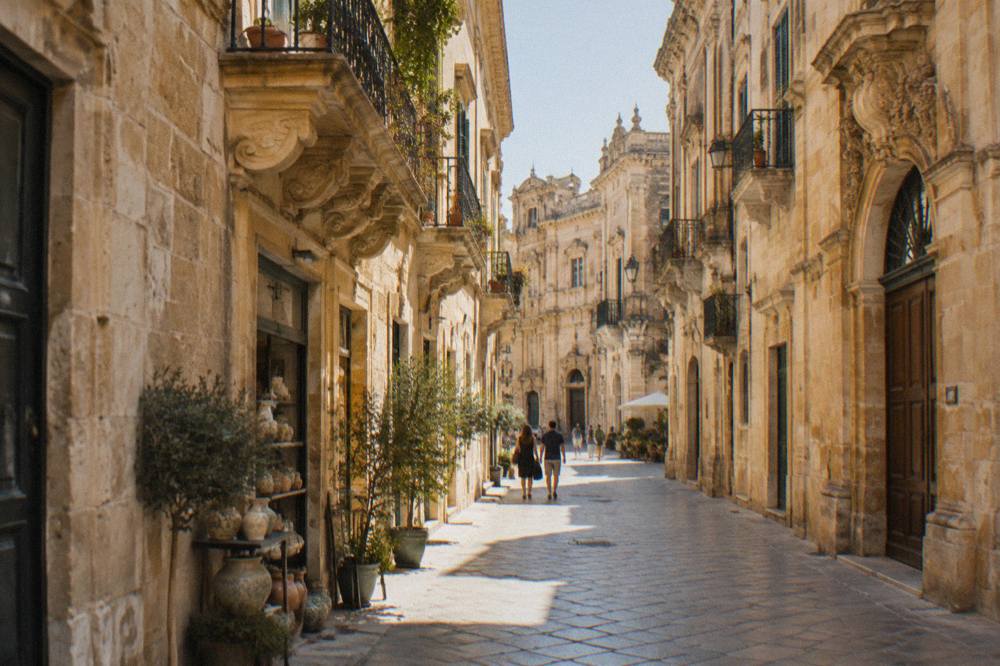
The wealth of Lecce is displayed in its stone. The Lecce Baroque frontages of the Basilica di Santa Croce, the Palazzo dei Celestini and the Duomo were carved from pietra leccese, a soft local limestone that made elaborate ornament affordable, and the palazzi of the centro storico were built by clerical and aristocratic families whose money came from land and office rather than trade.
That is the honest answer to why Lecce looks richer than its economy might suggest. The carving boom of the baroque period was funded by the church and by landed families, and the raw material was local, cheap and easy to work. The result is a city that reads as opulent to a visitor while functioning day to day as a provincial capital of modest incomes. The wider set of guides lives on Lecce Travel Guide.
The underground rooms tell the same story from below. Houses in the old town sit on cellars, cisterns and older structures, and several guided visits, including the synagogue basement walk, descend into that layer. The papier-mâché craft, the cartapesta tradition of the city's workshops, exists in part because stone was for facades and cheap materials were for the figures that filled the churches, another sign of a city that spent carefully.
A walk that puts the facades and the underground rooms together is the fastest way to see where the money went.
How Does Seasonality Shape Lecce's Year?
Lecce's economy swings hard with the calendar. July and August bring mean daily highs of about 31 C with only 15 to 18 mm of rain per month, per the ERA5 reanalysis for 1991 to 2020, and that is when the coast fills and the Salento in Bus shuttles run. November is the wettest month at 93.7 mm, and October through March is when the city belongs to students and residents again.
The climate table below, from the ERA5 reanalysis grid for Lecce, 1991 to 2020, shows the pattern a planner or a business owner in the city works around. Note these are modelled normals for a grid cell, not a weather station record, and only temperature and precipitation are given.
| Month | Mean high C | Mean low C | Rain mm |
|---|---|---|---|
| January | 12.4 | 6.7 | 63.1 |
| April | 18.6 | 10.7 | 54.6 |
| July | 31.0 | 21.7 | 15.3 |
| August | 31.3 | 22.2 | 18.1 |
| October | 21.8 | 15.4 | 91.3 |
| November | 17.3 | 11.7 | 93.7 |
The seasonal economy explains the city's rhythms. The Festa dei Santi Patroni ran 23 to 26 August in 2026, the Notte della Taranta Concertone at Melpignano on 22 August 2026, and the whole Salento coast runs on that same calendar. The 2027 dates had not been announced for these events, so anyone planning around them should check closer to the time. Outside those weeks, the university keeps the city's bars and rentals alive, which is a stability many tourist towns in the south do not have.
Does Lecce Feel Rich Or Poor On The Ground?
On the ground Lecce feels like a solid, low-friction southern Italian city: safe, well kept in the centre, inexpensive to eat in, and busy without being overwhelmed. The safety picture reported for the city is one of low violent crime with petty theft as the main concern, and the infrastructure, from the Park Liberty car park of 466 spaces to the SGM bus network, is that of a functioning provincial capital rather than a boomtown.
The honest framing is comparative and limited. This guide's sources cover Lecce and a handful of Salento towns, not the wealth rankings of Italian cities, so no league table is offered here. What can be said is that Lecce has what stable provincial capitals have: a year-round population, a university, an administrative class, a tourist season that now runs from spring to the Christmas fair, and prices that visitors from northern Europe read as modest.
For a fuller picture of the city's draw, the pages on whether Lecce is worth visiting, what Lecce is famous for and how many days you need in Lecce cover the visitor side, while where Lecce sits in Italy covers the geography. The baroque economy of the old town is the part of the city's wealth a visitor actually touches, and the tours below are the practical way to see it.
Common Questions About Wealth In Lecce
These are the short answers to the questions that come up most often about Lecce's economy, prices and standard of living, drawn from the same sourced figures as the rest of this page and kept free of invented rankings or statistics.
Is Lecce A Wealthy City?
No, not in the sense of a rich northern European or northern Italian city. It is a moderately prosperous provincial capital of 94,387 residents with a university, public administration and tourism, and an old town built from generations of clerical and landed wealth.
Is Lecce expensive to visit?
Relatively inexpensive for Italy. Church tickets run 11 euro standard for the LeccEcclesiae group, the Castello Carlo V tour is 10 euro, and a pasticciotto lists at 2.20 euro at a historic pastry shop. A tourist tax exists, with a top reported rate of 5 euro per night, and visitors should confirm the amount at booking.
What drives Lecce's economy?
Public administration as the provincial capital, the Università del Salento with about 20,774 students, a long tourism season, and the olive oil and wine trades of the Salento plain, including the Negroamaro-based Salice Salentino DOC established in 1976.
Is Lecce a safe city?
Reported as generally safe, with low violent crime and petty theft such as pickpocketing as the main concern for visitors. The single European emergency number 112 applies.
Why does Lecce look so grand if it is not rich?
Because its baroque centre was carved from pietra leccese, a local limestone that is soft when quarried, which made elaborate ornament cheap to produce. The wealth on display in the facades came from the church and landowning families of earlier centuries, not from a modern industrial base.
Does Lecce have rich and poor areas like other southern cities?
Every southern Italian city has variation between its historic centre, its postwar suburbs and its rural hinterland, and no verified district-by-district wealth data for Lecce exists in this site's sources, so none is stated. Visitors should judge the city on what they see and confirm specifics locally.
For anyone weighing Lecce as a base, the honest summary from the sources is this: a stable, mid-sized, southern Italian provincial capital whose visible wealth is historic stone and whose modern money comes from the university, the season and the surrounding agricultural plain. That combination keeps prices gentle and the city pleasant, which is worth more to a visitor than any ranking.