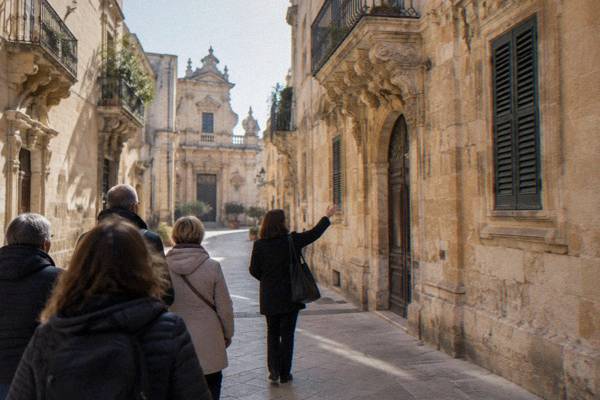
Which Part Of Italy Is Warmest In Winter?
Which part of Italy is warmest in winter? The answer points south, to Sicily, Calabria and Puglia. Here is what winter actually feels like in Lecce, the baroque capital of Salento, with ERA5 climate normals, winter opening hours and what to pack.
The question of which part of Italy is warmest in winter has one honest answer: the far south, the heel and the toe of the boot, meaning Puglia, Calabria and Sicily. Lecce, the baroque capital of Salento in Puglia, southern Italy, sits a few kilometres inland from the Adriatic and lives that southern winter for real. It is a honey-coloured city of pietra leccese limestone, a university town of about 94,387 residents with roughly 20,774 students at the Università del Salento, and in winter it keeps its churches, museums and pastry shops running while the beach economy of the coast dozes. The city is not a beach town: San Cataldo, the nearest stretch of coast, is about 13 km away. This page reports what the climate data and the operators' own pages say about a Lecce winter, because that is the part this guide can actually source.
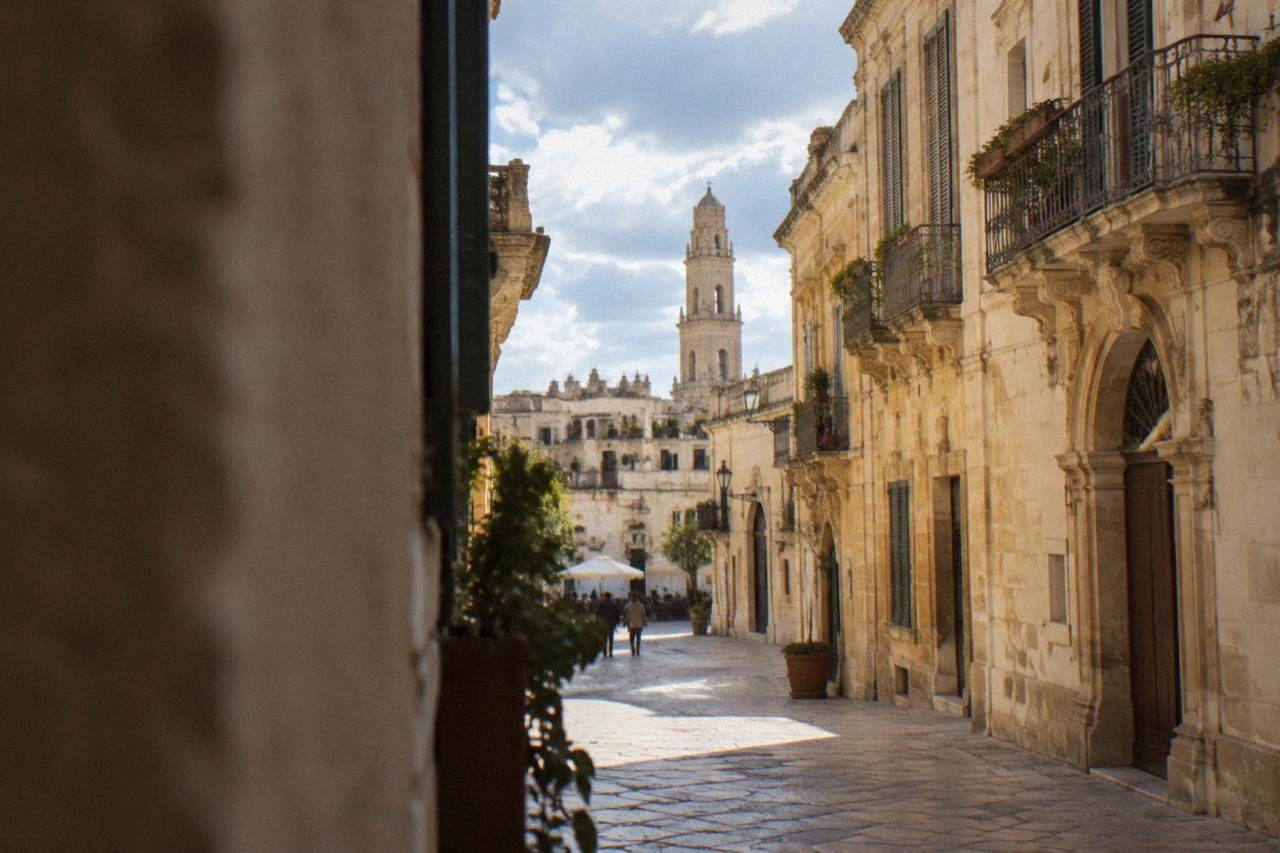
Which Part Of Italy Is Warmest In Winter?
The warmest winter weather in Italy belongs to the deep south: Sicily, Calabria and the Salento peninsula of Puglia share the mildest winter climate in the country. Lecce, the baroque capital of Puglia at the heel of Italy, records a mean daily high of 12.4 C in January and 13.0 C in February under the ERA5 reanalysis, 1991-2020, which describes mild, damp days rather than anything you would call beach weather anywhere on the Italian mainland between December and February.
Italy is long. The Alpine north and the southern islands are different countries climatically, and the question is really asking where winter is least unpleasant. The answer runs along the same line every time: the further south and the further toward the sea, the mder the winter. The Mediterranean does the work, holding heat through the dark months and keeping coastal nights from falling far.
Lecce is well placed for that pattern without being on the coast. It is a few kilometres inland from the Adriatic, with the Ionian on the other side of the peninsula, and the sea around Puglia still carries about 14 C of surface temperature in February, per seatemperature.org data reported for the region. That maritime buffer is what keeps the city's mean January low at 6.7 C instead of something genuinely cold.
One correction worth making early: "warmest" in an Italian winter does not mean warm. It means daytime highs that sit in the low teens, rain that comes in serious November and December dumps, and evenings that want a proper coat. Anyone booking a Lecce winter trip hoping for shorts weather will be disappointed. Anyone hoping for a city where the churches are open, the pasticcerie are full and the streets are walkable without gloves for much of the day will not be.
How Cold Does Lecce Actually Get In Winter?
Lecce's winter, by the ERA5 reanalysis 1991-2020, runs from a December mean high of 13.5 C down to 12.4 C in January and back to 13.0 C in February, with mean lows of 8.2, 6.7 and 6.8 C across the same three months. Rain is the real winter story: November carries 93.7 mm, the highest monthly total of the year, and the year as a whole totals about 652 mm. Sea temperature off Puglia sits around 14 C in February.
These are modelled normals for a grid cell near Lecce at about 48 m elevation, not a weather-station record, and they are the right way to describe a climate honestly. The table below pulls the four months that matter for a winter-shoulder visit, and it is worth reading the rain column as carefully as the temperature columns, because November and December are when the water arrives.
| Month | Mean high C | Mean low C | Rain mm |
|---|---|---|---|
| November | 17.3 | 11.7 | 93.7 |
| December | 13.5 | 8.2 | 75.5 |
| January | 12.4 | 6.7 | 63.1 |
| February | 13.0 | 6.8 | 59.0 |
Two patterns jump out. The first is that November is the wettest month of the Lecce year at 93.7 mm, and February is already drying out toward the 15.3 mm that July, the driest month, records. The second is that the temperature floor barely moves: the mean high never drops below 12.4 C, and the mean low never drops below 6.7 C, in any month. Frost is not part of this picture.
That said, damp cold on limestone feels different from the same number in a drier climate. The old town's stone holds the chill, and a January evening walk between the Duomo and Piazza Sant'Oronzo wants a real jacket. Daytime, between about 10:00 and 16:00, is when the city is at its most comfortable, and that is exactly when the sights are open anyway.
A winter visit also changes what a day in Lecce costs to run, because the low-season advantages are real. The city's sightseeing is concentrated and walkable, the paid sights are priced in single digits or low double digits, and the cold months remove the pressure to book everything ahead. The three experiences below are the ones the roster shows as well suited to a short winter stay: a guided walk of the historic center, an underground-and-food walk, and a papier-mache craft class, which is exactly the kind of indoor workshop a January afternoon rewards.
What Is Open In Lecce In Winter?
Nearly everything in Lecce stays open through winter, and the low-season hours are published by the operators themselves. LeccEcclesiae's combined church ticket runs 9:00 to 18:00 from October to March at 11 EUR standard, Castello Carlo V gives guided tours Tuesday to Sunday at 10 EUR, Museo Faggiano opens daily 9:30 to 20:00 at 5 EUR, and the Roman Amphitheatre keeps winter hours of 10:00 to 17:00, Tuesday to Sunday, at 5 EUR full and 2 EUR reduced.
The LeccEcclesiae ticket deserves a sentence of explanation, because it is the single best structure a winter visitor can buy. Chieselecce.it, the ticket's own site, lists it as covering the Duomo with its crypt, the Basilica di Santa Croce, the Chiesa di San Matteo, the Chiesa di Santa Chiara and the Antico Seminario with the Museo d'Arte Sacra, valid for 15 days, with under-12s free and Diocese residents free on ID. The standard ticket is 11 EUR full and 5 EUR reduced for ages 12 to 17; the version with the bell tower, branded "Up!", is 21 EUR full. The wider set of guides lives on Lecce Travel Guide.
| Sight | Winter hours | Ticket |
|---|---|---|
| LeccEcclesiae combined church ticket | Daily 9:00 to 18:00, Oct to Mar | 11 EUR full, 5 EUR reduced (12 to 17) |
| Castello Carlo V | Tue to Sun, guided tours | 10 EUR full, 6 EUR reduced |
| Museo Faggiano | Daily 9:30 to 20:00 | 5 EUR full, 3 EUR for ages 8 to 16 |
| Roman Amphitheatre | Tue to Sun 10:00 to 17:00, Oct to Mar | 5 EUR full, 2 EUR reduced |
| MUST, Museo Storico della Citta | Tue to Thu 9:00 to 19:00, Fri to Sun 9:00 to 20:00 | 5.50 EUR full, 3.50 EUR reduced |
| Palazzo Vernazza | Daily 15:30 to 21:00 | 10 EUR full, 8 EUR reduced |
| Museo del Teatro Romano | Mon to Sat 9:30 to 13:00, afternoons on request | about 3 EUR |
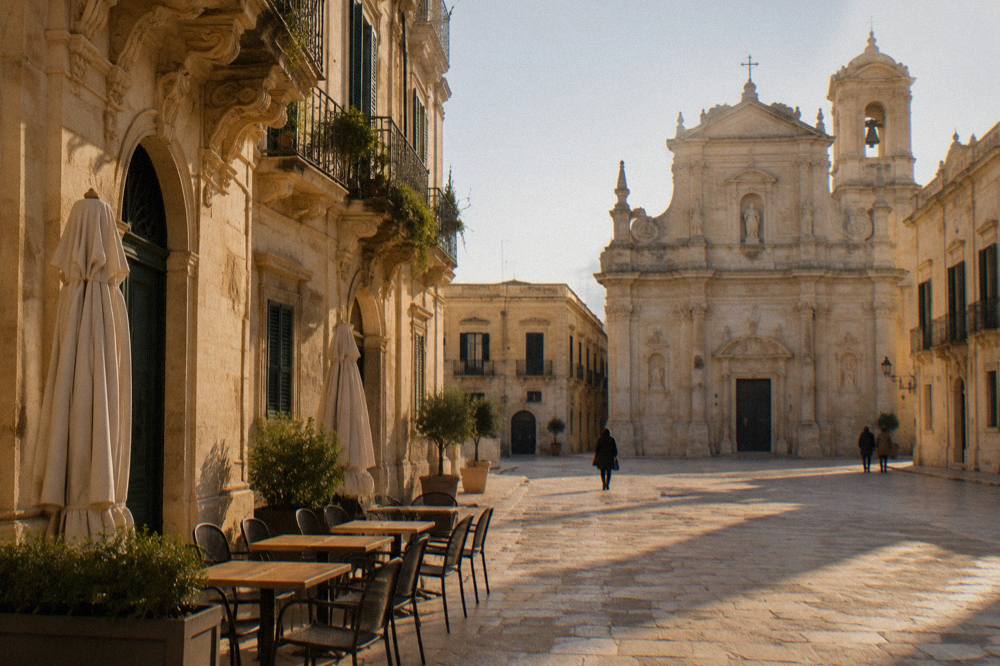
Two winter-specific cautions come with that table. Castello Carlo V is a guided-tour visit, not a free wander: the castle's own page states the interior is tour-only at 10 EUR full, with only the courtyard area free. And church visiting pauses during services, with shoulders and knees covered, per chieselecce.it's own rules, so a Sunday visit needs a little planning around Mass times.
The amphitheatre is the freshest story in the city. It reopened with a new accessible entrance and ramp following a restoration project the regional museums directorate puts at 1,500,000 EUR, and it is visible free from Piazza Sant'Oronzo even for anyone who does not take the paid descent. Winter hours, 10:00 to 17:00 from October to March with Monday closed, suit the season well.
A winter walking tour is the natural companion to all of this, and the roster's own budget introduction is a good fit: Discovering Lecce, a guided walking tour of the historic center, with Check availability on the operator's live listing. A guide solves the one problem winter visitors cannot solve alone, which is knowing which doors are open on a Tuesday in January.
Lecce Or The Coast: Where Should A Winter Trip Stay?
Lecce works as a winter base because it is a city first and a seaside resort second: the Adriatic is about 13 km away at San Cataldo, so the old town's churches, museums, cafes and craft workshops do not close for the season the way a beach town does. Brindisi airport, the region's gateway since Lecce has no commercial airport of its own, is about 47.6 km and 43 minutes by road, and trains reach Bari Centrale in about 1h19 to 1h24 at the fastest.
This guide covers Lecce itself, and sources what it says about Lecce.
That last sentence is doing real work. A page about the warmest part of Italy invites comparisons with Sicily and Calabria, and those comparisons are usually invented. This site's research verified Lecce's climate, Lecce's sights, Lecce's transport and drive times to named towns, and a handful of Salento sights like Otranto, Gallipoli, Galatina and Castro. It verified nothing about the character or the winter appeal of Sicily, Calabria, Bari or the Amalfi Coast, so nothing here ranks one against another. What can be said is that Lecce's own winter case is strong and specific.
The practical case for winter in Lecce, in plain terms:
- The climate is the mildest of the Italian mainland winter, without coastal wind. The ERA5 reanalysis, 1991-2020, puts Lecce's January mean high at 12.4 C and its February mean at 13.0 C, with rain falling off sharply after November's 93.7 mm peak.
- The sightseeing is indoor-heavy, which suits the season. Five baroque churches on one 11 EUR ticket, a castle on a guided tour, an archaeology museum under a palazzo, and a papier-mâché tradition that still runs working workshops in the historic center.
- The food is built for the weather. Pasticciotto, the custard shortcrust pastry that a Galatina shop claims since 1745, though historians dispute the date, is a winter pastry as much as a summer one, and Caffe Alvino on Piazza Sant'Oronzo traces its roots to about 1880.
- The transport does not close. Lecce is the rail hub of the Salento: Trenitalia runs north toward Bari and Brindisi year-round, and the FSE regional lines serve Gallipoli and, with a change at Maglie, Otranto. The summer-only Salento in Bus coastal shuttles are the one thing that stops.
For anyone weighing the season itself, the site's guide to Lecce in winter goes deeper on what to do with short days, and the best month to visit Puglia compares the whole calendar year. Travellers torn between the two biggest cities of the region can also read which is nicer, Bari or Lecce, a question this site answers on sourced grounds only.
For a fuller winter itinerary, the complete guide to things to do in Lecce is the site's root page and covers the sights in every season, and how many days you need in Lecce helps size the trip.
What Should You Pack For A Lecce Winter?
Pack for a mild, damp Mediterranean winter, not a cold one: layers that handle a 12 C afternoon and a 7 C evening, a serious rain layer for November and December in particular, and shoes that survive wet limestone. The mean low never drops below 6.7 C in any month of the year, but the rain totals of 93.7 mm in November and 75.5 mm in December mean waterproofing matters more than thickness.
The honest packing list is short. A warm coat for evenings, because the stone old town holds the damp. A compact umbrella or a proper rain shell, because the November rain is real rain, not drizzle. Comfortable shoes with grip, because wet pietra leccese paving is slick. Sunglasses, because February afternoons are bright. Nothing else is needed, and gloves are a judgment call rather than a necessity.
The day shape matters more than the wardrobe. Winter daylight in southern Italy runs shorter than the summer beach day, so the workable rhythm is a late-morning start when the churches open at 9:00, a long lunch, which is its own attraction in Puglia, and then the 15:30 to 18:00 window for a second sight, a museum or a workshop. Palazzo Vernazza's hours, daily 15:30 to 21:00, are practically designed for that afternoon slot.
The craft workshops are the winter wildcard worth planning around. Lecce's papier-mâché tradition, cartapesta, grew out of the same soft limestone that built the baroque facades, and working classes still run in the historic center. A class is the exact right winter activity: indoor, hands-on, and unbothered by a rainy afternoon. The roster carries a dedicated papier-mâché class in Lecce, alongside the walking tours already mentioned, and winter dates are when availability is easiest.
Between the churches, the museums, the cafes and the workshops, a winter week in Lecce fills without any help from the coast. The three picks below are the same trio that fits the season best: a historic-center walk, an underground walk with food, and the papier-mâché class.
Common Questions About Winter Warmth In Italy
Which Part Of Italy Is Warmest In Winter?
The far south: Sicily, Calabria and Puglia hold the mildest winter climate in Italy. Lecce, in Puglia, records a January mean high of 12.4 C and a February mean of 13.0 C under the ERA5 reanalysis, 1991-2020, with sea temperature off the region at about 14 C in February.
Is Lecce warm in winter?
Mild, not warm. Daytime highs average in the low teens from December through February, with lows around 7 to 8 C. November is the wettest month at 93.7 mm of rain. A winter day is comfortable for walking with a coat, not for sitting outdoors.
Does anything close in Lecce in winter?
The main sights stay open. LeccEcclesiae's churches run winter hours of 9:00 to 18:00 from October to March, Castello Carlo V tours Tuesday to Sunday, and Museo Faggiano opens daily. The summer-only Salento in Bus coastal shuttles, which ran 13 June to 13 September in 2026, do not run in winter.
Is November a bad month to visit Lecce?
It is the wettest month of the year at 93.7 mm of rain, but it is also mild, with a mean high of 17.3 C, and it is well outside the summer crowd. Anyone visiting in November should pack for rain and keep indoor plans, the churches, the museums and the workshops, as the backbone of each day.
Is Puglia warmer than northern Italy in winter?
Yes, and by a wide margin. Italy's climate gradient runs from Alpine winters in the north to Mediterranean winters in the south, and Puglia sits at the mild end. Lecce's January mean low of 6.7 C is a figure that much of northern Italy does not come close to in an average winter.
Can you swim near Lecce in winter?
Not comfortably. Sea temperature off Puglia runs about 14 C in February and 20 to 22 C in October, per seatemperature.org data reported for the region, and the beach economy of the coast is seasonal. San Cataldo, the nearest beach to Lecce at about 13 km, is a summer destination.
A last practical note: the tourist tax is collected by the accommodation, with the top reported rate at 5 EUR per night for 5-star high season after the 1 April 2026 update, so confirm the exact band at booking. With a coat, a rain layer and a ticket for the churches, a Lecce winter is not a compromise season at all. It is the same baroque city at its calmest, at the mild southern edge of the Italian winter, and the low-season hours are built to receive visitors.