What Is The Most Beautiful Part Of Puglia?
The sourced case for Salento around Lecce: baroque limestone, two coasts within an hour's drive, verified drive and train times, and what the ERA5 climate numbers say about visiting Puglia's heel.
Lecce, the baroque capital of Salento in Puglia, southern Italy, is the city this guide knows best, and the question of where the region's beauty actually sits is one it keeps meeting. The sourced answer points south, to the Salento peninsula at the heel of the Italian boot, where a honey-coloured old town built from pietra leccese limestone lies a few kilometres inland between two seas. The Adriatic sits to the east, the Ionian to the west, and both coasts are under an hour away by road. San Cataldo, the nearest beach, is 12.9 km from the city. The nickname the town carries, often called the Florence of the South, hints at why the answer leans the way it does.
What Is The Most Beautiful Part Of Puglia?
On the sourced evidence, the strongest single answer is Salento, the southern peninsula of Puglia, anchored by Lecce itself. Lecce is the baroque capital of the region, a honey-coloured old town in pietra leccese limestone about 13 km from the nearest beach at San Cataldo, with the Adriatic at Otranto about 44 minutes away by road and the Ionian at Gallipoli about 41. No official ranking of Puglia's beauty exists, and this guide's sources cover Lecce and its Salento neighbours rather than every corner of the region.
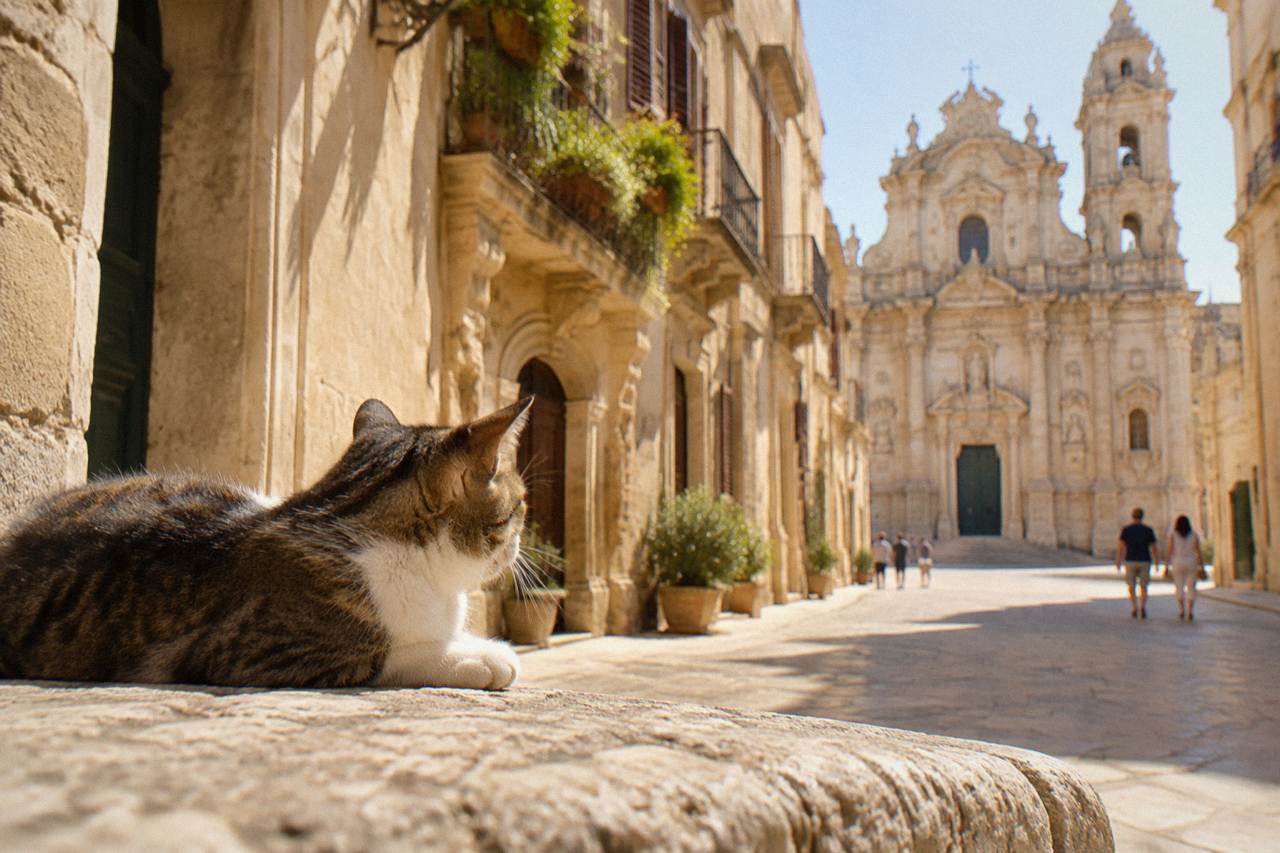
The case rests on three legs, and each one is sourced. The first is architecture. Lecce's historic centre is carved from pietra leccese, a Miocene limestone that stays soft while it is workable and hardens once exposed, which is what allowed the barocco leccese style to spread across facades, balconies, columns and altars. The LeccEcclesiae combined ticket ties the landmarks together: the Duomo with its crypt, the Basilica di Santa Croce, Chiesa di San Matteo, Chiesa di Santa Chiara and the Antico Seminario with the MuDAS art museum, at €11 for the standard ticket, valid for 15 days, with children under 12 free.
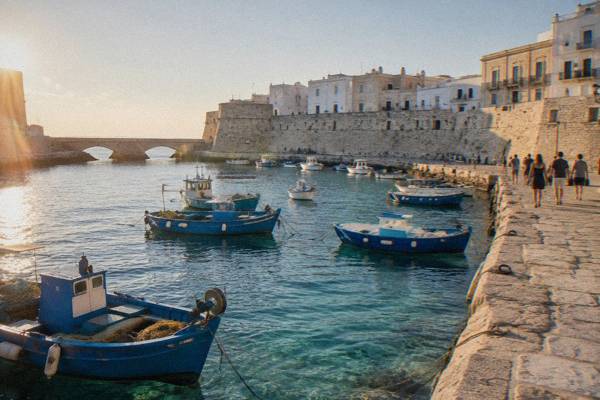
The second leg is position. The city is not on the sea, a fact that catches some first-time visitors out, but it sits close to two of them, with the Adriatic down the east side of the peninsula and the Ionian down the west. The third leg is the string of small towns that follow the coasts south: Otranto with its cathedral mosaic dated 1163 to 1165, Gallipoli's old town on a limestone island, Galatina, Castro, and Santa Maria di Leuca at the tip.
Lecce is not inscribed on the UNESCO World Heritage List; "Salento and the Barocco Leccese" has sat on Italy's Tentative List since 2006. The question of the prettiest town in Puglia and the planning question of how many days you need in Lecce each get their own pages, and both start from the same sourced base.
Why Is Lecce Called The Florence Of The South?
Lecce is often called the Florence of the South for its dense baroque architecture carved from pietra leccese, a Miocene limestone that is soft when quarried and hardens with exposure. Who first said it is contested between two names, so the sources credit neither. The city counted 94,387 residents on 1 January 2026, the province 761,927, and the Università del Salento about 20,774 enrolled students.
The stone explains the nickname better than any marketing could. Because pietra leccese yields to the chisel while fresh from the quarry, local masons could cut leaves, fruit, cherubs and beasts straight into building fronts, and the baroque style that resulted, the barocco leccese, wraps the historic centre in that ornament. The comparison to Florence is about density: the carving is packed street after street, not isolated to one monument.
The city's own numbers give a sense of scale. Lecce counted 94,387 residents on 1 January 2026 and the province 761,927, while the Università del Salento enrols about 20,774 students, which is why the old town feels lived-in rather than staged. Piazza Sant'Oronzo holds the Roman amphitheatre, visible free from the square itself. The interior is a separate ticket, €5 full and €2 reduced, on winter hours of Tuesday to Sunday 10:00 to 17:00 with Monday closed, and the site reopened with a new accessible entrance after a €1,500,000 PNRR restoration.
Nearby, Castello Carlo V admits the interior by guided tour only, at €10 full and €6 reduced, with the courtyard area free and Mondays closed. Museo Faggiano, the archaeological house turned museum, opens every day from 9:30 to 20:00 and charges €5, with children up to 8 free and ages 8 to 16 at €3. The Lecce Travel Guide desk keeps the sight-by-sight tariff list, including the full set of things to do in Lecce, on the root page.
What Can You See Along Salento's Two Coasts From Lecce?
From Lecce, the Adriatic side of Salento runs from San Cataldo, 12.9 km and about 14 minutes by road, past Torre dell'Orso at about 32 minutes to Otranto at about 44 and Castro at about 48. The Ionian side holds Porto Cesareo at about 34 minutes and Gallipoli at about 41, with Santa Maria di Leuca at the tip about 78 minutes away. All drive times are free-flow figures from Piazza Sant'Oronzo.
The Adriatic side is the nearer one. San Cataldo, 12.9 km out, sits on SGM city bus line 32 from the City Terminal, about 20 minutes, on a low sandy coast backed by pine forest. Torre dell'Orso lies 27.9 km away, about 32 minutes by road, and in the summer season Salento in Bus line 101 covers the run from Lecce in about 60 minutes. Otranto, 46.7 km and about 44 minutes, is the anchor: its cathedral floor carries the mosaic laid by the priest Pantaleone between 1163 and 1165, and the Diocese of Otranto's notice says independent visitors still enter free while groups and visitors with a licensed guide pay €2 since 1 March 2026. The Castello Aragonese opposite runs seasonal tickets, about €6 in the low season up to about €12 at the height of summer. Grotta della Poesia at Roca Vecchia banned bathing and diving in summer 2026: non-residents of Melendugno paid a €5 ticket in the 2026 season, and the pool is viewed from the paths.
| Salento destination | Coast | Distance from Piazza Sant'Oronzo | Free-flow drive time |
|---|---|---|---|
| San Cataldo | Adriatic | 12.9 km | about 14 min |
| Torre dell'Orso | Adriatic | 27.9 km | about 32 min |
| Otranto | Adriatic | 46.7 km | about 44 min |
| Castro | Adriatic | 47.4 km | about 48 min |
| Porto Cesareo | Ionian | 28.0 km | about 34 min |
| Gallipoli | Ionian | 41.0 km | about 41 min |
| Santa Maria di Leuca | Southern tip | 83.2 km | about 78 min |
| Galatina | Inland | 25.7 km | about 29 min |
The Ionian side answers with flat sand and shallow water. Porto Cesareo is 28.0 km out, about 34 minutes by road, with summer Salento in Bus line 104 running the corridor from Lecce. Gallipoli, 41.0 km, keeps its old town on a limestone island linked to the mainland by a bridge, and a direct FSE regional train runs from Lecce. Castro, 47.4 km and about 48 minutes, holds Grotta Zinzulusa, with guided visits year-round at €7 full and €4 reduced. At the tip, Santa Maria di Leuca's basilica, the De Finibus Terrae sanctuary, is free to enter on split morning and afternoon hours.
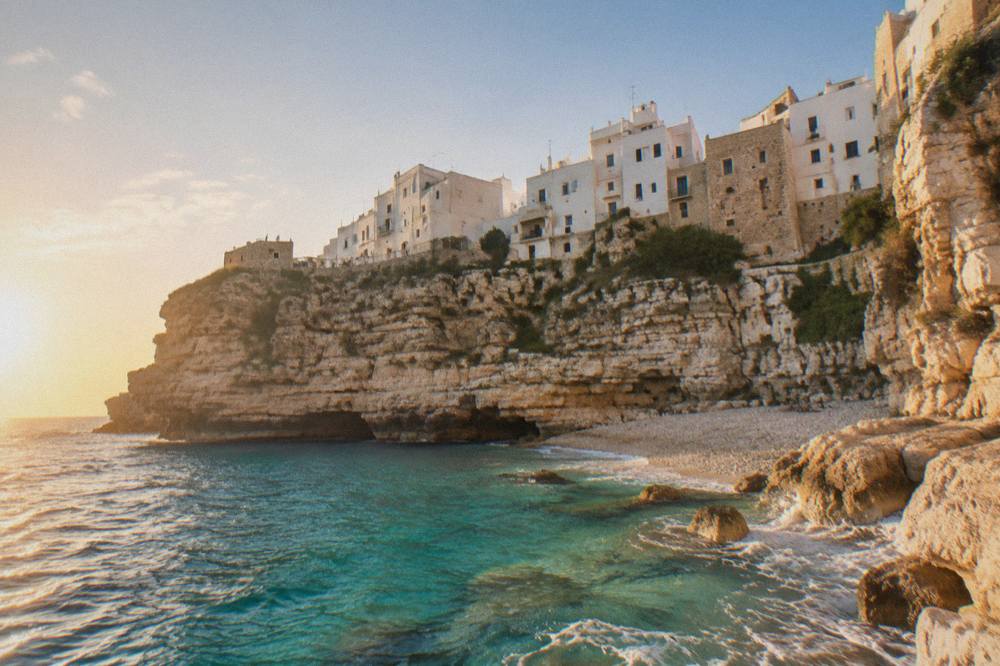
The whole southern arc fits into one booked day. The Van Tour with Castro Stop runs from Lecce through Otranto, Castro, Santa Maria di Leuca and Gallipoli, and the operator's live listing carries the current price and dates: Check availability.
For the coastal question in its own right, the site's page on the most beautiful beach town in Puglia takes the argument onto the sand, town by town, on the same sourced basis.
How Does The Rest Of Puglia Compare From Lecce?
The rest of Puglia sits mostly north of Lecce, and the sourced distances are long: Ostuni is 78.3 km and about 66 minutes by road, Alberobello 114.1 km and about 91, Polignano a Mare 116.3 km and about 88, and Bari 152.6 km and about 118. Matera is 176.9 km away but lies in Basilicata, a different region. By train, Ostuni is a direct 39 to 51 minutes and Polignano a Mare a direct 1h09 to 1h21.
The northern towns are real destinations and the distances are honest ones. Ostuni, the white hill town, Alberobello with its trulli, and Polignano a Mare on its limestone bluff all sit between one and two hours up the coast road from Lecce. This guide's sources give drive times and train times for them and nothing about their character, so no ranking against Salento is offered here. Matera lies furthest out, 176.9 km and about 161 minutes by road, and it belongs to Basilicata rather than Puglia.
| Place | Region | Road distance from Lecce | Free-flow drive time | Rail from Lecce |
|---|---|---|---|---|
| Ostuni | Puglia | 78.3 km | about 66 min | direct, 39 to 51 min |
| Alberobello | Puglia | 114.1 km | about 91 min | changes, about 2h30 to 3h+ |
| Polignano a Mare | Puglia | 116.3 km | about 88 min | direct, 1h09 to 1h21 |
| Bari | Puglia | 152.6 km | about 118 min | fastest 1h19 to 1h24 |
| Matera | Basilicata | 176.9 km | about 161 min | no direct train; bus about 3h30 to 4h10 |
Without a car the north still opens up, because Trenitalia runs direct regional trains to Ostuni and Polignano a Mare from Lecce station, and Alberobello is reachable with a change onto the FSE network. The site's page on day trips from Lecce without a car lays out the options route by route.
For the southern arc, the van day described above also books as a standalone card, with the operator's listing carrying the dates and the price:
In summer the buses thin out the need for either. Salento in Bus ran 13 June to 13 September in 2026 on lines 101, 104, 107 and 108, with fares from €1.10 to €5, a €1 surcharge bought on board, and children under 10 free; the 2027 dates had not been announced. Off-season, the train and the booked days carry the load.
What Do The Climate Numbers Say About This Part Of Puglia?
The ERA5 reanalysis for Lecce, 1991 to 2020, puts the mean daily high at 31.3 C in August and 31.0 C in July, with July the lowest month for rainfall at 15.3 mm and November the highest at 93.7 mm. January's mean daily low is 6.7 C. Sea temperatures around the Puglian coast run about 22.5 C in June and 25 to 27 C at the August peak, per seasonal data for the region.
These are modelled normals, ERA5 reanalysis for a grid cell near Lecce at about 48 m elevation, not a weather-station record, and they are labelled as such throughout this site. What they describe is a Mediterranean pattern: hot, dry summers with mean highs around 31 C in July and August, and mild, damp winters. November carries the highest monthly rainfall total at 93.7 mm, October nearly matches it at 91.3 mm, and July sits at the bottom with 15.3 mm.
| Month | Mean high C | Mean low C | Rain mm |
|---|---|---|---|
| Jan | 12.4 | 6.7 | 63.1 |
| Feb | 13.0 | 6.8 | 59.0 |
| Mar | 15.4 | 8.3 | 64.9 |
| Apr | 18.6 | 10.7 | 54.6 |
| May | 23.4 | 14.7 | 39.9 |
| Jun | 28.2 | 19.1 | 18.0 |
| Jul | 31.0 | 21.7 | 15.3 |
| Aug | 31.3 | 22.2 | 18.1 |
| Sep | 26.4 | 19.0 | 58.9 |
| Oct | 21.8 | 15.4 | 91.3 |
| Nov | 17.3 | 11.7 | 93.7 |
| Dec | 13.5 | 8.2 | 75.5 |
The sea follows the same curve. Seasonal data for the region puts coastal water at about 22.5 C in June, 25 to 27 C at the August peak, 20 to 22 C in October and about 14 C in February. The bathing season lines up with the Salento in Bus window, mid-June to mid-September, when the lidos are fully staffed.
Two practical notes close the planning picture. The tourist tax exists and is collected by the accommodation: the top reported rate is €5 per person per night for five-star properties in high season, and guests should confirm their own category and season at booking. The ZTL around the historic centre is camera-policed on reported hours rather than guaranteed ones, so visitors arriving by car should ask their accommodation to register their plate.
Common Questions About The Most Beautiful Part Of Puglia
The short answers: Salento is the peninsula and Lecce is its capital; Lecce sits about 13 km from the sea at San Cataldo; the baroque old town is compact and walkable; and the two coasts bracket the city at under an hour by road. The details below expand on each point from the same sourced base.
Is Salento the same as Puglia?
No. Puglia, also called Apulia, is the whole region running down Italy's heel, and Salento is the sub-peninsula at its southern end. Lecce is the capital of the Province of Lecce and the acknowledged capital of Salento, with 94,387 residents on 1 January 2026.
Is Lecce on the sea?
No. Lecce lies a few kilometres inland, and San Cataldo, the nearest beach, is 12.9 km away, about 14 minutes by road or about 20 minutes on SGM city bus line 32. The Adriatic and the Ionian coasts are both under an hour away by car.
Can you reach Otranto and Gallipoli from Lecce without a car?
Yes. A direct FSE regional train runs Lecce to Gallipoli, and Lecce to Otranto works with a change at Maglie on the FSE network. In summer, Salento in Bus lines 101 and 104 covered both corridors between 13 June and 13 September 2026, with fares from €1.10 to €5.
Which month has the most rain around Lecce?
November, on the ERA5 reanalysis for 1991 to 2020, with 93.7 mm falling just ahead of October's 91.3 mm. July is the lowest month at 15.3 mm. These are modelled normals for a grid cell near Lecce, not a station record.
What is the most beautiful part of Puglia?
On the sourced evidence, Salento around Lecce: a baroque limestone old town between two coasts, with Otranto about 44 minutes east by road, Gallipoli about 41 minutes west, and Santa Maria di Leuca at the tip about 78. No official ranking exists, and this guide's evidence covers Lecce and its Salento neighbours rather than the whole region.