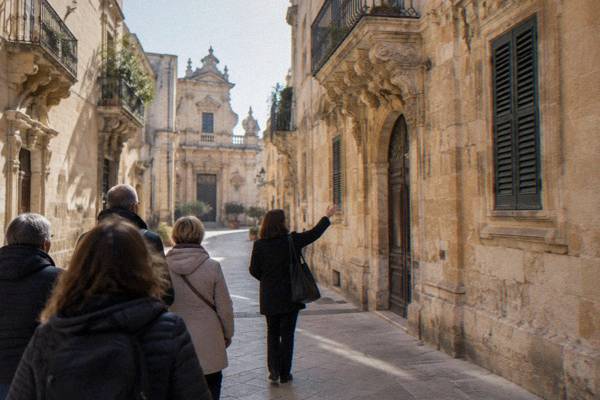
Are There Any Specific Areas To Avoid In Puglia?
No part of Puglia needs crossing off a list, but the ZTL cameras in Lecce, the swimming ban at Grotta della Poesia and August beach traffic all catch visitors out. Here is what the sources say.
Puglia, the region of southern Italy that holds Lecce and the whole Salento peninsula in its heel, has no district that travel advice treats as off-limits. What it does have is a short list of places where the rules changed recently, where the cameras are strict, or where the August crowds and traffic turn a pleasant stop into a frustrating one. This page reports what the primary sources say about each of them, from the ZTL cameras inside Lecce's old town to the swimming ban now enforced at Grotta della Poesia, so the question becomes not "where must I not go" but "what must I know before I go".
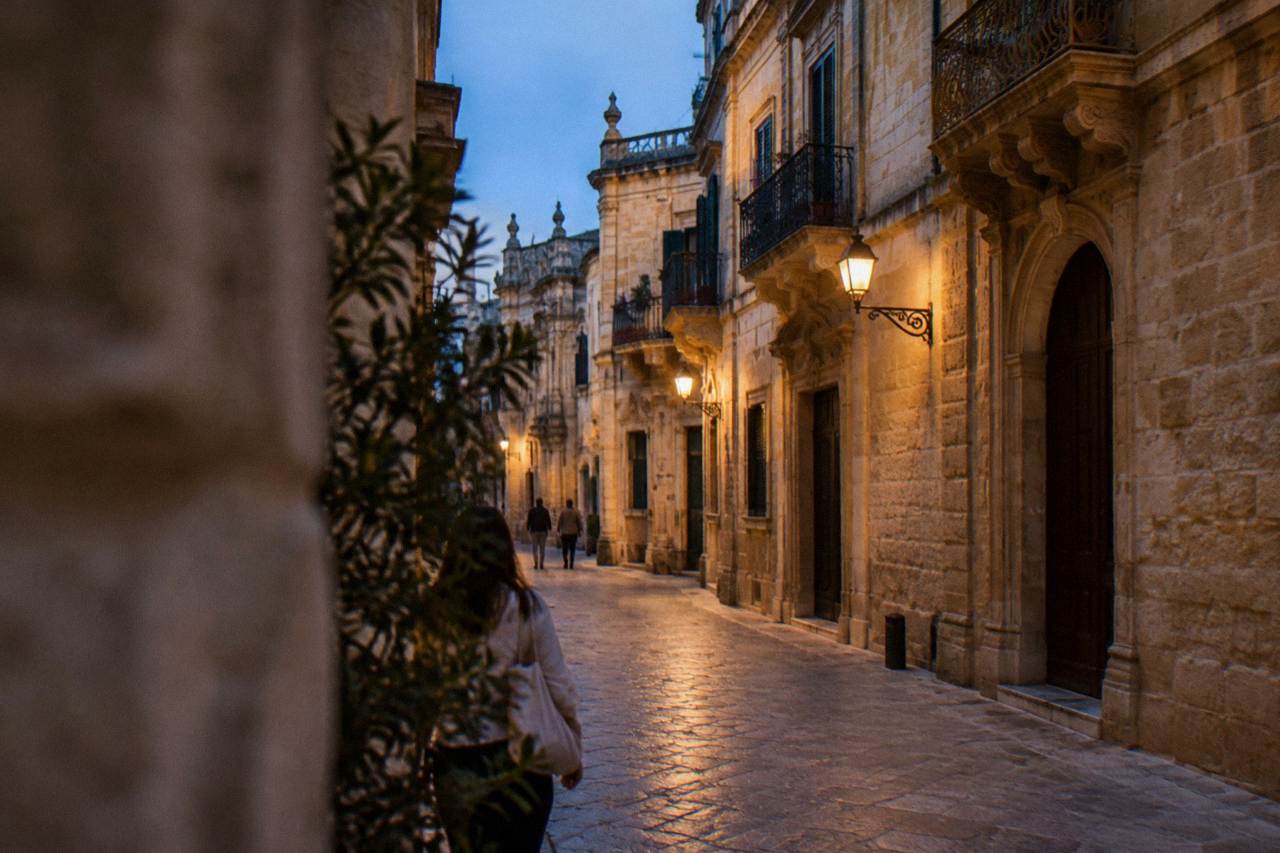
Are There Any Specific Areas To Avoid In Puglia?
No area of Puglia is advised against as unsafe or closed to visitors. The practical answer is that three things catch travellers out instead: driving into Lecce's camera-policed ZTL, ignoring the swimming and diving ban at Grotta della Poesia in force since summer 2026, and underestimating August traffic and lido prices on both coasts. None of these makes a place worth avoiding. Each makes a place worth arriving at informed, which is a different thing entirely.
Crime reporting bears out the general picture. Lecce is described in safety indices as a low-crime city where petty theft and pickpocketing are the main concerns, well below the levels of Italy's larger cities. The same holds across the Salento towns. The Lecce Travel Guide desk has found no source that names a Puglian neighbourhood as a no-go area, and any page that does so is usually describing traffic or crowds, not danger.
That framing matters because the region's real difficulties are seasonal and administrative rather than geographic. A quiet inland borgo in February and the same borgo during its patron saint's feast in August are two different experiences, and both are the "same place". The sections below take each friction point in turn, with the figures the sources actually publish.
Which Streets In Lecce Should Drivers Avoid Rather Than Walkers?
Drivers should avoid the historic centre's ZTL zone inside the old walls, which camera enforcement covers on weekdays roughly from 20:00 to 10:00 and 13:00 to 16:30, and around the clock on Sundays and holidays, with Porta Napoli always closed. Fines run from 83 to 332 euro. Walkers have no equivalent zone to avoid at all. The ZTL is a rule about licence plates, not about people.
The practical consequence is simple: arrive by train or park outside the zone and walk in. The municipal operator SGM runs blue-zone paid parking around the edge of the centre, and the Park Liberty underground car park near the centre has 466 spaces. Anyone whose accommodation sits inside the ZTL should ask the property to register their plate, which is the standard exemption route; the hours are reported rather than guaranteed, so confirming with the hotel or B&B is the reliable move.
Beyond the cameras, Lecce rewards walking. The city is compact, flat and built from pietra leccese, the honey-coloured limestone that gives the baroque facades their warmth. If the question behind the question is whether any part of the city feels sketchy after dark, the honest answer from the sources is no: nightlife centres on Piazza Sant'Oronzo and the streets off it, and the safety reporting shows high perceived safety both day and night.
A guided introduction also removes the first-day friction. A small-group walk through the old town works through the layout in a couple of hours, and travellers planning to range across the peninsula often book the private four-town Salento tour covering Otranto, Leuca, Gallipoli and Galatina, which puts the coastal driving in a local driver's hands on the days when the roads are at their fullest.
Which Beach Spots In Salento Have Rules That Catch Visitors Out?
Grotta della Poesia at Roca Vecchia is the one Salento swimming spot with a hard restriction: bathing and diving are banned, enforced since summer 2026, and non-residents of Melendugno paid a 5 euro ticket in the 2026 season to enter the archaeological area and view it from the paths. No other Salento beach carries a comparable ban. The natural pool remains viewable; it is no longer swimmable.
Elsewhere the frictions are milder but real. Baia dei Turchi near Otranto sits in a protected pinewood where vehicle access is limited: visitors park along the SP366, at 4 to 8 euro per day in high season, and walk 10 to 15 minutes through the trees. Punta Prosciutto and Pescoluse on the Ionian side are free to access but booked-solid with lidos in August, when an umbrella and two sunbeds can run to 40 to 70 euro a day at the busiest stretches.
| Spot | Rule or cost to know | Source basis |
|---|---|---|
| Grotta della Poesia, Roca Vecchia | Swimming and diving banned; 5 euro entry for non-Melendugno residents in the 2026 season | Reported 2026 season rules |
| Baia dei Turchi, Otranto | Park on SP366 at 4 to 8 euro per day in high season, then a 10 to 15 minute walk | Area listings |
| San Cataldo, Lecce's nearest beach | Lido umbrella plus two beds about 15 to 25 euro in June, 33 to 35 euro in August | 2026 consumer surveys |
| Torre dell'Orso and San Foca | Same lido set-up rising to 50 to 60 euro in August | 2026 consumer surveys |
| Pescoluse, Ionian coast | Free sections plus lidos; Blue Flag 2026; August demand peaks | Regional tourism listings |
The beaches themselves are not the problem, in other words. The problem is arriving in peak August without a reservation and reading the price board for the first time. Anyone planning a summer trip should weigh the trade-offs in the site's guide to beaches near Lecce and the wider Salento coast coverage.
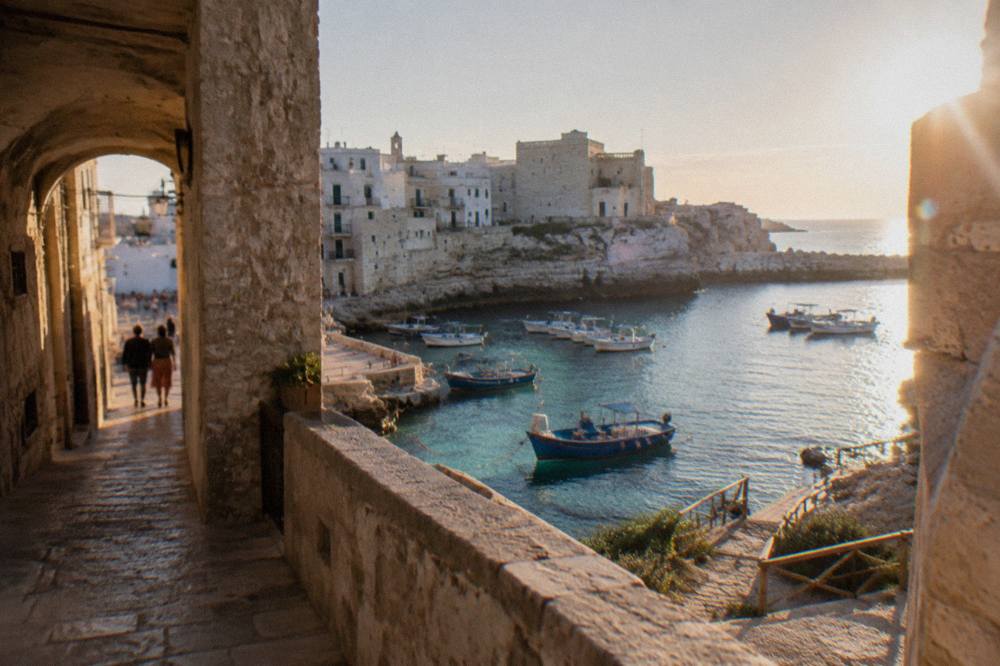
Should Any Puglia Day-Trip Be Avoided For Distance Alone?
No Salento day trip from Lecce should be avoided for distance: Otranto is 46.7 km and about 44 minutes by road, Gallipoli 41.0 km and 41 minutes, and even Santa Maria di Leuca at the tip of the peninsula is 83.2 km and about 78 minutes, all free-flow figures. What deserves caution is stacking distant towns into one day in August, when coastal traffic lengthens every leg. The arithmetic, not the destination, is the risk.
| Destination from Lecce | Distance | Free-flow drive time | Train alternative |
|---|---|---|---|
| Otranto | 46.7 km | about 44 min | FSE via Maglie, about 1h33 to 2h |
| Gallipoli | 41.0 km | about 41 min | Direct FSE, about 1h18 to 1h43 |
| Santa Maria di Leuca | 83.2 km | about 78 min | Bus, about 2h to 2h15 |
| Porto Cesareo | 28.0 km | about 34 min | Summer Salento in Bus line 104 |
| Galatina | 25.7 km | about 29 min | Direct FSE, about 38 to 55 min |
| Ostuni | 78.3 km | about 66 min | Direct train, about 39 to 51 min |
Two further cautions deserve attention. Matera, often folded into Puglia itineraries, is in Basilicata, a different region, and the bus from Lecce takes about 3h30 to 4h10; it is a long day rather than a natural afternoon. And travellers without a car should check seasonal service carefully: the Salento in Bus network, which connects Lecce to Torre dell'Orso, Otranto, Porto Cesareo, Gallipoli and Leuca, ran 13 June to 13 September in 2026 and is a summer-only service, with the 2027 dates not yet published.
When Is Puglia At Its Most Difficult, And For Whom?
Late August is the most demanding window, not because anywhere is closed but because the Santi Patroni feast in Lecce ran 23 to 26 August in 2026 and the Notte della Taranta Concertone in Melpignano fell on 22 August, drawing the peninsula's biggest crowds onto the same coastal roads. November is the wettest month at 93.7 mm of rain on the ERA5 1991-2020 reanalysis, and from October the sea cools to 20 to 22 C. Difficulty here is calendar-shaped.
None of this is a reason to avoid the region in either season, only to match expectations. August brings the full beach economy, the festival calendar and the traffic that comes with both; a traveller whose priority is baroque architecture rather than beach clubs may find the shoulder months a better fit, when the mean high falls from 31.3 C in August to 26.4 C in September and 21.8 C in October. Winter is quiet by comparison, and the towns do not close: Lecce's churches run their 9:00 to 18:00 winter schedule and the Castello Carlo V keeps its Tuesday-to-Sunday guided tours.
A note on one oft-repeated claim that belongs in the "avoid saying it" category rather than the "avoid going there" one: Lecce is not a UNESCO World Heritage Site. "Salento and the Barocco Leccese" sits on Italy's Tentative List, a 2006 submission, and no inscription has followed. Any itinerary built around a World Heritage designation for the city is built on a false premise.
Are There Areas To Avoid In Puglia At Night?
No source flags any Puglia town or district as unsafe at night; safety indices for Lecce report high perceived safety after dark, with petty theft the main concern, and the Salento towns are described in similar terms. The realistic night-time cautions are ordinary ones: unlit coastal roads between towns, August drink-driving around the beach towns, and the ZTL cameras in Lecce that run around the clock on Sundays and holidays. Night changes the logistics, not the risk map.
Practical steps follow from that. Keep valuables out of back pockets in the crowded August squares, as pickpocketing is the one recurring category in the reporting. If driving back to a rural masseria after dark, the secondary Salento roads are narrow and poorly lit, so the drive simply takes longer than the daytime figure suggests. And anyone parking near Lecce's centre for an evening out should check whether the ZTL hours apply, since the reported enforcement includes the 20:00-to-10:00 overnight window on weekdays.
For travellers who would rather not drive at all after dark, a car-free plan built on the trains and summer buses covers Otranto, Gallipoli and Galatina on the FSE network, and a boat trip to the caves of Santa Maria di Leuca keeps the day on the water rather than on the road. The e-bike option to Gallipoli, with a swim stop, a farm tasting and a taxi back, exists for exactly the reason this page keeps returning to: it removes the return-leg drive.
Common Questions About Areas To Avoid In Puglia
Are there any specific areas to avoid in Puglia?
No area is advised against. The practical list is Lecce's camera-policed ZTL for drivers, the swimming ban at Grotta della Poesia, and the August combination of traffic and peak lido prices on both coasts.
Is Lecce's historic centre off-limits to visitors?
No. The ZTL restricts vehicles, not people. Walkers enter freely at any time; drivers park outside the zone or arrange plate registration through their accommodation.
Can you still swim at Grotta della Poesia?
No. Bathing and diving have been banned since summer 2026, and non-residents of Melendugno paid a 5 euro entry ticket in the 2026 season to view the site from the paths. The 2027 rules had not been announced.
Which month is the most difficult in Puglia?
August combines the peak beach economy, the Santi Patroni feast in Lecce and the Notte della Taranta in Melpignano, all in late August. November carries the highest rainfall at 93.7 mm on the ERA5 1991-2020 reanalysis.
Is Puglia safe to walk around at night?
The reporting describes Lecce and the Salento towns as low-crime, with petty theft the main concern and high perceived safety after dark. Ordinary city precautions apply.
Are there no-go beaches in Salento?
No beach is off-limits. Some carry costs or rules: Baia dei Turchi requires paid parking plus a short walk, and the busiest August lidos charge 40 to 70 euro a day for an umbrella and two beds on the Ionian stretches.