Which Is Better, Sicily Or Puglia?
An honest comparison of Sicily and Puglia from the Lecce Travel Guide desk, built on what the sources actually verify: Lecce's baroque old town, Salento beaches, food, wine and transport figures.
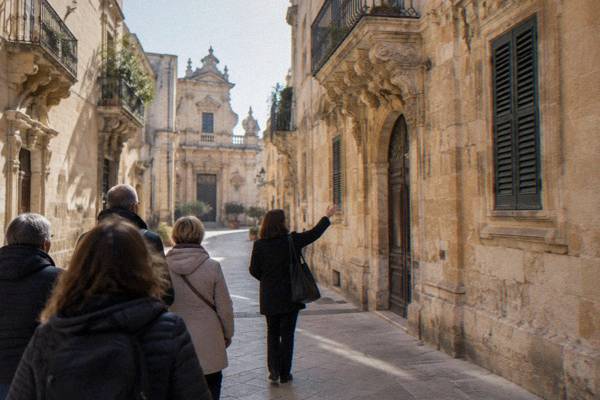
Lecce, the baroque capital of Salento in Puglia, southern Italy, is the city this desk covers, and it is the reason the Sicily-or-Puglia question has a defensible answer at all. The comparison gets asked constantly, and it deserves better than a coin flip dressed up as a verdict. Sicily is an island region with its own Greek temples, its active volcano and a food culture that needs no introduction. Puglia is the mainland heel of Italy, a peninsula of olive groves, whitewashed towns and two coastlines, with Lecce a few kilometres inland at its centre. What follows compares the two on the things this guide can actually source, and says plainly where the sources run out.
Which Is Better, Sicily Or Puglia?
Neither region is better in the abstract, because they answer different trip briefs: Sicily suits a longer, island-scale itinerary built around one dramatic landmark after another, while Puglia rewards a slower, shorter and more compact stay centred on small baroque towns, two seas and an inland food culture. For a one-week trip from a single base, the sourced case favours Puglia, and it favours Lecce as that base.
The honest version of this comparison starts with scale. Sicily is an island, which means every journey is a ferry or a flight or a long drive, and its headline sights are scattered around a large landmass. Puglia is a peninsula attached to the mainland, and its core sights sit close together: from Lecce, the drive to Otranto is about 44 minutes, to Gallipoli about 41 minutes, and to Galatina about 29 minutes, per the routing figures this guide computed from open routing data. A week in Puglia can be a week of short hops. A week in Sicily is usually a week of choices, because you will not fit everything in.
That is not a verdict against Sicily. It is a statement about what each region is for. Travellers who want an island road trip with a volcano in it, or Greek temples, or a city like Palermo with its own weight of history, are answering their own question, and this desk has no sourced basis to argue with them. The figures this guide holds are Lecce figures, Salento figures and Puglia transport figures, and those figures happen to describe a region that works extremely well for a first-time visitor on a seven-to-ten day budget of time.
The rest of this page lays out that ledger in the open: what Lecce and its region verifiably offer, what the drive and train times show, what the food and wine culture holds, and where the honest limits of the comparison sit. For a deeper look at the city itself, see things to do in Lecce, the root guide this desk maintains.
Where This Comparison Stands: What The Sources Cover
This guide's verified facts cover Lecce, the Salento peninsula and a handful of named Puglian towns, and they cover nothing about Sicily's sights, prices or ratings, so every Sicily statement here stays general while every Puglia statement carries a sourced figure. That asymmetry is the comparison's real shape: the Puglia side of the ledger is measurable, and this desk refuses to invent a Sicilian counterweight to match it.
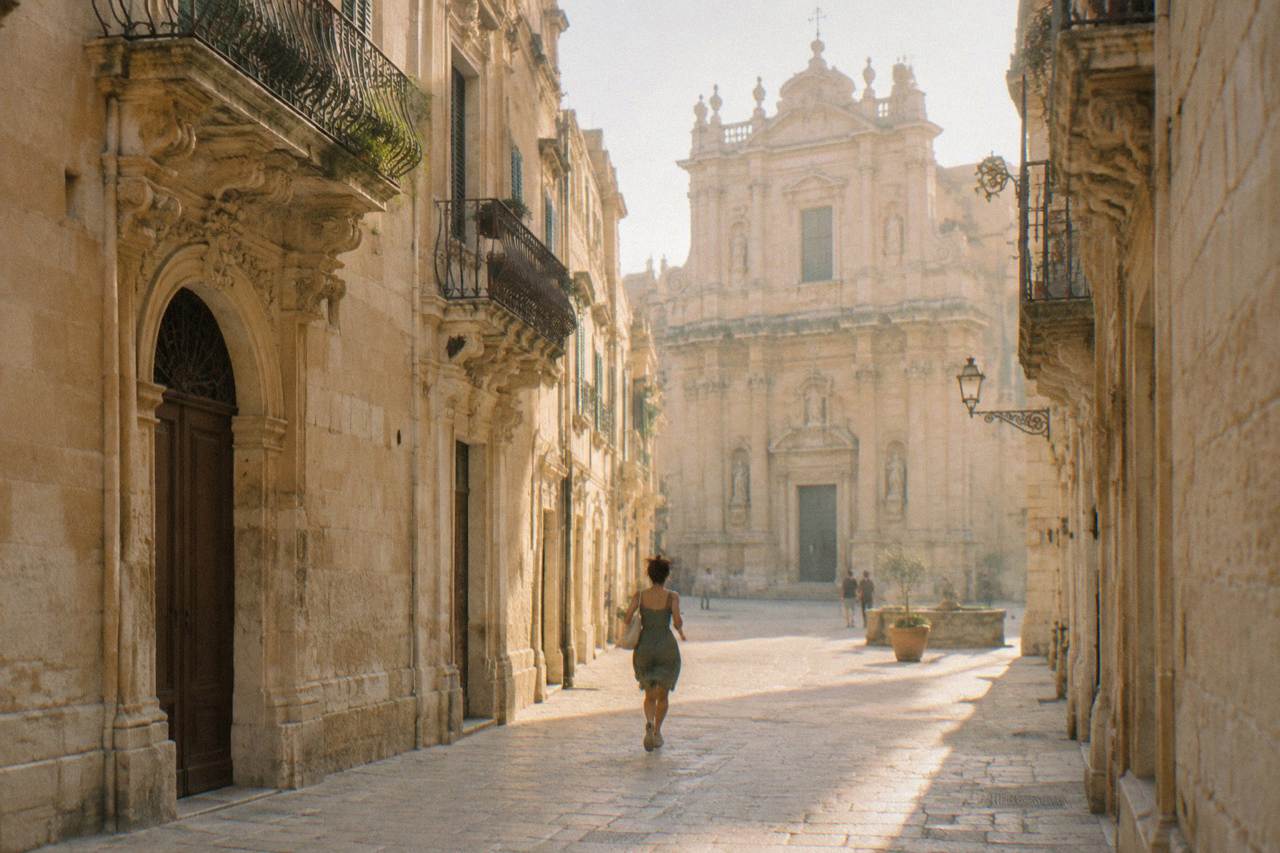
The Lecce ledger, in sourced numbers, reads like this. The city had 94,387 residents on 1 January 2026, and the province 761,927, per citypopulation.de. The Università del Salento enrols about 20,774 students, which keeps a mid-sized provincial city feeling young. The old town is built of pietra leccese, a Miocene limestone that is soft when quarried and hardens on exposure, which is the whole reason the Lecce Baroque facades could be carved into frills and faces at all. The city is not on the sea: San Cataldo, the nearest beach, is 12.9 km away. And Lecce is not a UNESCO World Heritage Site, whatever a brochure implies; "Salento and the Barocco Leccese" sits on Italy's Tentative List from 2006, which is a queue, not a title.
Here is that ledger in table form, with the Sicily column left deliberately thin where no source exists:
| Question | Puglia, from sourced figures | Sicily, from this desk's sources |
|---|---|---|
| Region status | Puglia (Apulia), mainland heel of Italy | Island region, no figures sourced here |
| Main base city | Lecce, 94,387 residents (1 Jan 2026) | Not covered by this guide's sources |
| Building stone | pietra leccese, Miocene limestone, soft when quarried | Not covered |
| UNESCO status | "Salento and the Barocco Leccese" on Italy's Tentative List (2006) | Not covered |
| Nearest beach to base | San Cataldo, 12.9 km from Lecce | Not covered |
| July mean daily high (ERA5 reanalysis, 1991-2020) | 31.0 C in Lecce | Not covered |
| Wettest month (ERA5 reanalysis, 1991-2020) | November, 93.7 mm in Lecce | Not covered |
The blank cells are not laziness. They are the line between a comparison and a fabrication, and this desk would rather show the line than cross it. A traveller who wants the Sicilian side of those rows filled in should read a Sicily guide, and there are good ones. This page's job is to make the Puglian side exact.
How Each Region Handles Getting There And Getting Around
Puglia wins the logistics argument for a short trip, and the sourced numbers say so: Lecce has no commercial airport, but Brindisi (BDS) sits 47.6 km away, about 43 minutes by road, with an airport bus at 6.50 EUR one way taking about 40 minutes, and from Lecce the region's headline towns are all under an hour by road or rail. Sicily's equivalent journeys are island-scale, and this desk holds no sourced times for them.
The gateway detail matters more than it sounds. Flying into Brindisi puts a traveller 43 road minutes from a walkable baroque city that then serves as a rail and bus hub for the whole peninsula. Trenitalia runs direct trains from Lecce toward Bari, Brindisi, Ostuni and Polignano a Mare on the mainland network, while the Ferrovie del Sud Est lines thread south and west through the Salento: FSE reaches Gallipoli direct in about 1h18 to 1h43, Galatina in about 38 to 55 minutes, and Otranto with a change at Maglie in about 1h33 to over two hours. In summer, the Salento in Bus network adds coastal shuttles, and it ran 13 June to 13 September in 2026, with fares from 1.10 to 5 EUR.
| Journey from Lecce | Mode | Sourced time | Sourced fare |
|---|---|---|---|
| Brindisi Airport (BDS) to Lecce | Airport bus | about 40 min | 6.50 EUR one way |
| Lecce to Otranto | Car (free-flow) | 44 min (46.7 km) | not sourced |
| Lecce to Gallipoli | FSE train | about 1h18 to 1h43 | from about 5 EUR |
| Lecce to Otranto | FSE train via Maglie | about 1h33 to 2h+ | from about 4-5 EUR |
| Lecce to Galatina | FSE train | about 38 to 55 min | from about 3 EUR |
| Lecce to Santa Maria di Leuca | Car (free-flow) | 78 min (83.2 km) | not sourced |
| Lecce to Matera (Basilicata) | Bus | about 3h30 to 4h10 | 11 to 37 EUR |
One warning that applies to any Puglia trip by car: Lecce's historic centre sits inside a camera-policed ZTL, with fines running 83 to 332 EUR, and the hours are reported rather than guaranteed. Ask the accommodation to register the plate, and treat the answer as part of the booking, not an afterthought. The same question in a Sicilian city has its own local answer, and this desk has no sourced version of it.
For a traveller weighing the two regions without a car, Puglia's compactness again does the arguing. The best month to visit Puglia question interacts with these timetables directly: the coastal buses are a summer service, and the FSE trains run year-round but to a regional rhythm, so shoulder-season travel leans harder on the train lines and the car.
What Food And Wine Look Like On The Puglia Side
Puglia's food case is specific and sourced, and it centres on Salento: the pasticciotto, whose 1745 birth date is one Galatina shop's own claim rather than settled history, the caffè in ghiaccio con latte di mandorla credited to Antonio Quarta in Lecce in the 1940s to 1950s, the Salice Salentino DOC established in 1976 on the Negroamaro grape, and a burrata and cheese culture that runs through the inland masserie. Sicily's counter-case is real, but this desk holds no sourced figures for it.
Start with the sweet one, because it comes with a caution attached. The pasticciotto, the custard-filled shortcrust tart that defines Salento's pastry counters, is claimed by Pasticceria Ascalone of Galatina, with a 1745 date tied to a patron-saint feast, and historians dispute the details, so the honest phrasing is "the shop says" and nothing firmer. Galatina is about a 29-minute drive from Lecce, and its Basilica di Santa Caterina d'Alessandria lists free entry in split morning and afternoon hours. The pastry and the basilica make an easy pairing.
The coffee is a Lecce original in a way few regional drinks are. The caffè in ghiaccio con latte di mandorla, espresso poured over ice with almond milk, is credited to Antonio Quarta of Quarta Caffè in the 1940s to 1950s, and the local serving tradition is to leave it unsweetened so the drinker seasons it. Historic bars anchor the scene: Caffè Alvino on Piazza Sant'Oronzo has roots to about 1880, and Pasticceria Natale has been family-run since 1978. An example price from Natale's own menu lists the "Santo Pasticciotto" at 2.20 EUR, which gives a visitor a fair sense of the pastry economy.
The wine story is short to tell and long to drink. Salice Salentino DOC dates from 1976 and is built on Negroamaro, the Salento workhorse grape, with the designation spanning the provinces of Lecce and Brindisi. Primitivo di Manduria, centred in the Taranto province corner of Salento, is the other regional flag. A tasting in a 15th-century courtyard in Lecce's old town is one of the bookable ways in, and the inland masserie offer the other: cheese made on the farm, burrata pulled the same morning, and a table under the olive trees.
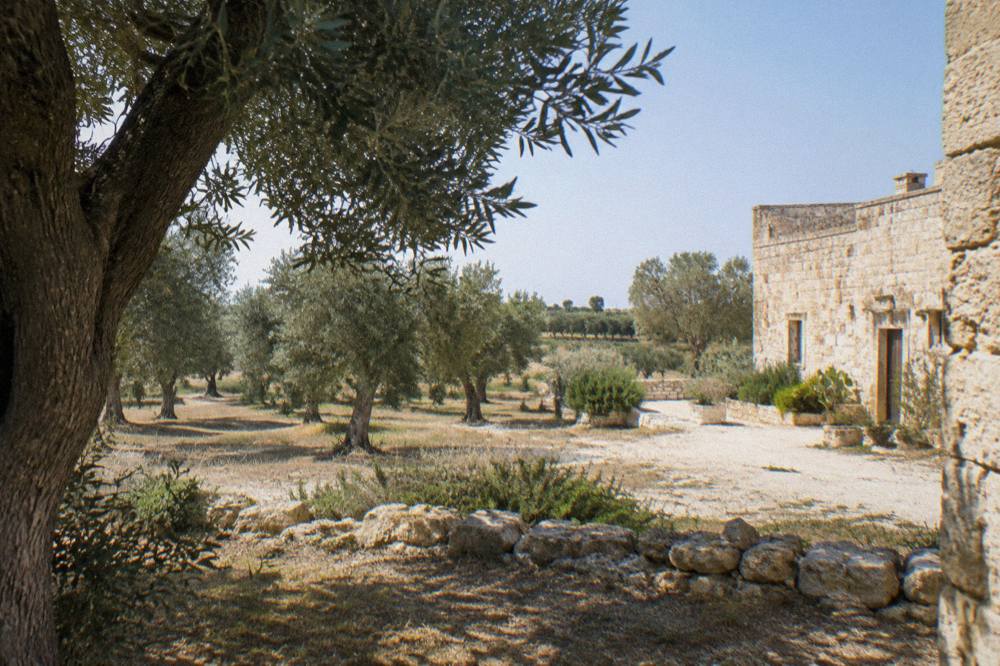
The masseria visit is the one experience that most clearly separates a Puglia itinerary from a Sicilian one at the same budget of effort, because it is an inland, agricultural, family-scale outing rather than a monument visit. A guided masseria tour with cheese and burrata tasting runs from the Lecce area, and this desk rates it as the featured trip of this page: Check availability.
What The Sea And Beaches Offer On The Puglia Side
Puglia's sea case is two coastlines within an hour of Lecce, and the sourced figures run from San Cataldo, 12.9 km out on the Adriatic, to the Ionian side's Porto Cesareo, with sea temperatures of about 22.5 C in June and 25 to 27 C at the August peak, per seatemperature.org's regional figures. Sicily's beaches are famous and this desk has no sourced prices or access rules for them, so the comparison here stays on the Puglian side of the water.
The Adriatic side is the near one. San Cataldo, Lecce's own seaside, is a low sandy coast backed by pine forest, per the comune's own description, and SGM line 32 runs there from the City Terminal in about 20 minutes in the summer schedule. Further north along the coast, Torre dell'Orso is reachable on the Salento in Bus line 101, which took about 60 minutes from Lecce in the 2026 season. Lido prices from the 2026 surveys give a real planning range: an umbrella with two sunbeds ran 15 to 25 EUR per day at San Cataldo in June, rising to 33 to 35 EUR in August, while the Torre dell'Orso and San Foca lidos ran 25 to 35 EUR in June up to 50 to 60 EUR in August, per the consumer-survey reporting this guide holds.
The famous pool needs a 2026 correction that many older guides still get wrong. Grotta della Poesia at Roca Vecchia, long a free-for-all swimming hole, charged non-residents of Melendugno a 5 EUR ticket in the 2026 season, and bathing and diving are banned there since summer 2026: the visit is now from the paths, not the water. The 2027 rules and any daily cap are unknown, so confirm before planning a swim that no longer exists. On the same stretch of coast, the Grotta Zinzulusa at Castro runs guided visits year-round at 7 EUR full and 4 EUR reduced, per the cave's own site.
The Ionian side answers with different water. Porto Cesareo sits about 34 minutes from Lecce by road, and Pescoluse, the "Maldives of Salento" at Marina di Salve, carries a Blue Flag for 2026, with long white sand and shallow turquoise water over dunes. Otranto, the Adriatic port town at the peninsula's eastern tip, pairs its aragonese castle with the cathedral mosaic laid by the priest Pantaleone between 1163 and 1165, and the Diocese of Otranto's own notice sets the cathedral's access terms: free for independent visitors, and 2 EUR for groups and visitors with a licensed guide since 1 March 2026.
For a fuller treatment of the seaside logistics, the how many days you need in Lecce question sets the pacing, and the Amalfi comparison over at is the Amalfi Coast or Puglia better runs a related argument for a different rival.
Which Should You Choose For Your Next Trip?
Choose Puglia for a one-week trip from a single base, for baroque architecture in a compact walkable city, for a two-coast beach culture reachable by train and summer bus, and for an inland food economy of masserie, burrata and Negroamaro. Choose Sicily for a longer island itinerary, for volcanic and ancient-history sights, and for a trip that accepts driving as the price of scale. Neither choice is wrong, and the sourced Puglia ledger is simply easier to plan against.
The decision rules this desk would actually give a friend, stated without hedging. If the trip is seven days or fewer, Puglia wins on geometry alone: the sights are close, the trains and summer shuttles exist, and Lecce functions as a hub in a way no single Sicilian town does for its island. If the trip is ten days or more and the traveller wants an island's worth of variety, Sicily's scale stops being a cost and becomes the point. If the traveller's dream list contains a volcano, Greek temples or Palermo's street food, no Puglian beach substitutes for it, and pretending otherwise would be dishonest.
There is also a seasonality argument, and it is sourced. The ERA5 reanalysis for Lecce, 1991-2020, puts the July mean daily high at 31.0 C and August at 31.3 C, with November the wettest month at 93.7 mm and July the driest at 15.3 mm. Summer is beach season and the coastal buses run then; spring and autumn are the sightseeing seasons, and the winter church hours in Lecce, 9:00 to 18:00 from October, are built for them. A Sicilian seasonality case would need its own sourced numbers, and this desk has none.
The tourist tax exists in Lecce and is collected by the accommodation, with a top reported rate of 5 EUR per person per night in the highest category in high season, per the comune's schedule, and the advice is simply to confirm the amount at booking. That is the kind of unglamorous planning fact that decides real trips, and it belongs in the comparison as much as the beach photos do.
Common Questions About Choosing Between Sicily And Puglia
The questions below are the ones this desk fields most often about the two regions, answered on the sourced Puglia ledger and left general where the sources run out, because a comparison page that invents its Sicily figures is worse than one that admits its shape.
Which is better, Sicily or Puglia?
Neither is better in the abstract. Puglia suits a compact one-week trip from a base like Lecce, with short drives, FSE trains and summer coastal buses; Sicily suits a longer island itinerary built around scale. This desk's sourced figures all sit on the Puglia side.
Is Puglia cheaper than Sicily?
No sourced price comparison between the two regions exists here. What is sourced: Lecce's 2026 lido prices ran 15 to 25 EUR per day for an umbrella and two beds in June at San Cataldo, and the tourist tax tops out at a reported 5 EUR per night in the highest category. Confirm Sicily's equivalents with a Sicily source.
Can you do Puglia without a car?
Yes, with planning. FSE trains reach Gallipoli, Galatina and Otranto (change at Maglie) from Lecce year-round, and the Salento in Bus network ran 13 June to 13 September 2026 for the coast. Outside summer, the coast leans on the train lines and fewer buses.
Is Lecce a good base for Puglia?
Yes. Otranto is 44 minutes away by road, Gallipoli 41, Galatina 29, and Brindisi Airport 43 minutes, per the routing figures this guide holds. The old town is walkable, with a camera-policed ZTL around it, so ask the accommodation about plate registration.
Which has better beaches, Sicily or Puglia?
This desk has no sourced Sicily beach figures. Puglia's sourced case: two coastlines, sea temperatures of 22.5 C in June and 25 to 27 C at the August peak, Pescoluse flying a Blue Flag in 2026, and Grotta della Poesia now a no-swimming, 5 EUR ticketed site for non-residents.
How many days do you need in Puglia?
Seven days cover Lecce plus Otranto, Gallipoli, Galatina and one Ionian beach day at a reasonable pace, using the drive and train times sourced here. Ten days add Leuca, Castro and the inland masserie without rushing.
The final word belongs to the honest shape of the question. Sicily and Puglia are both worth the flight, and the traveller who picks Puglia is picking a compact, sourced, walkable version of southern Italy whose numbers this desk can stand behind, from the 31.0 C July mean high in the ERA5 reanalysis to the 6.50 EUR airport bus from Brindisi. Pick the region that matches the length of the trip, and let the Lecce Travel Guide carry the Puglia half of the planning.