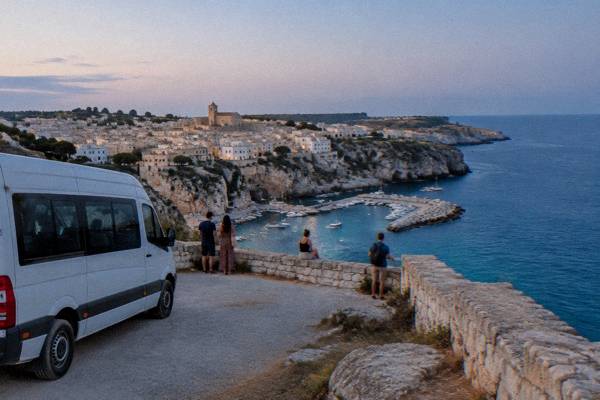
What Are Some Hidden Gems In Puglia?
Hidden gems in Puglia around Lecce: quiet Salento towns, caves, museums and beaches, with verified prices, hours and travel times from the baroque capital.
Lecce, the baroque capital of Salento in Puglia, sits a few kilometres inland at the heel of Italy, and the peninsula around it hides more than the standard circuit of Santa Croce and the Duomo admits. The region's quiet corners are real and reachable: a Roman excavation on the edge of the city that opens only on weekends, a sea cave at Castro with a fixed ticket, a Jewish museum inside a former synagogue, and a stretch of Ionian sand that carries a Blue Flag. This page gathers the places that sit one step off the obvious route, with the prices, hours and travel times the sources actually state.
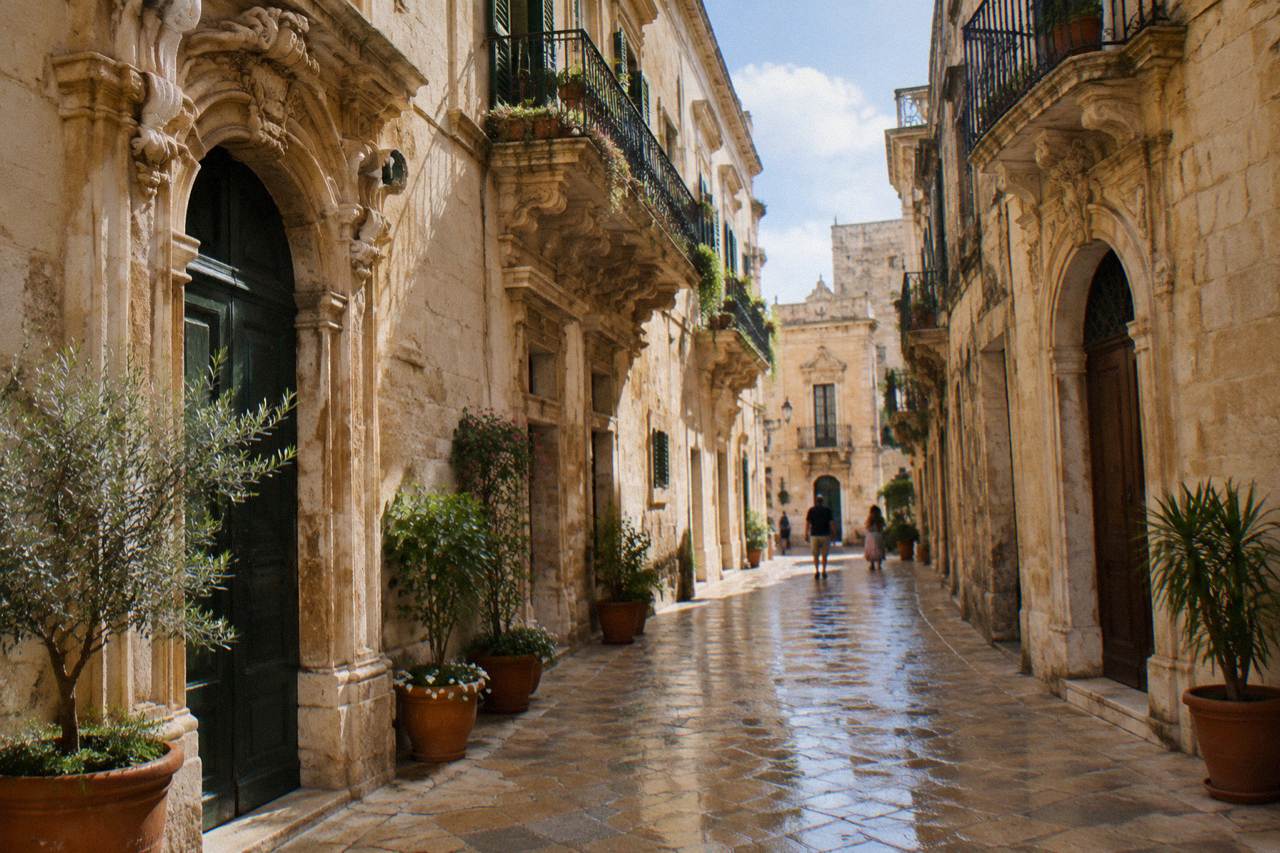
What Are Some Hidden Gems In Puglia?
The hidden gems within easy reach of Lecce are the Parco archeologico di Rudiae on the city's edge, the Museo Ebraico in a former synagogue downtown, the Grotta Zinzulusa cave above the sea at Castro, the free-frescoed Basilica di Santa Caterina in Galatina, and the dune-backed sands of Pescoluse on the Ionian coast. Each one is reachable from Lecce in under an hour and a half by car or regional train, and each has a published ticket or is free. That list is deliberately built on places this desk has sourced figures for, because the standard answer to this question tends to recycle names with no hours, no prices and no route. The sections below carry those details, plus the inland villages of Specchia and Presicce, both listed among Italy's borghi più belli, and the pine-fringed beach at San Cataldo, the closest stretch of coast to the city at 12.9 km from Piazza Sant'Oronzo.
Start in the city itself before heading out. Lecce's own things to do in Lecce page covers the headline circuit; what follows is everything that sits beside it, which is where the phrase "hidden gem" earns its keep. The sights below are quiet mostly because they keep unusual hours or sit one town past the tourist flow, not because anyone is keeping them secret.
Hidden Corners Of Lecce Itself
Inside Lecce the overlooked stops are the Museo Ebraico di Lecce at 5 euro with a guided tour required, the Parco archeologico di Rudiae at 5 euro with visits on weekends only, Palazzo Vernazza's phygital experience at 10 euro open daily from 15:30, and the MuDAS cloister at 1 euro, all inside the ring of the old town. Each figure comes from the official comune or museum pages, and each site sits within walking distance of Piazza Sant'Oronzo, which makes them fillers for an afternoon that would otherwise go to a second espresso. The Comune di Lecce's museum listings state the Rudiae park runs guided visits on Saturday and Sunday, weekdays by reservation, with a 5 euro full ticket, 4 euro reduced and free entry under 7.
The Museo Ebraico is the strangest of the four. It occupies a former synagogue building on Via Umberto I, and the listing on museionline states visits are guided only, 5 euro full and 4 euro reduced, with Sunday access by tour roughly every 45 minutes. MuDAS, the diocesan art museum in the Antico Seminario off Piazza del Duomo, sells a 1 euro cloister-only ticket or 4 euro for the full museum, which makes it the cheapest paid interior in the centre. Palazzo Vernazza runs daily from 15:30 to 21:00 per the comune's itinerary page, with a phygital tour at 10 euro and free entry under 12.
| Hidden sight in Lecce | Ticket | Hours per the listing |
|---|---|---|
| Museo Ebraico di Lecce | 5 euro full, 4 euro reduced | Guided visits only, roughly 10:00 to 18:00 weekdays |
| Parco archeologico di Rudiae | 5 euro full, 4 euro, free under 7 | Weekend guided visits, weekdays by booking |
| Palazzo Vernazza | 10 euro full, 8 euro reduced | Daily 15:30 to 21:00 |
| MuDAS cloister and museum | 1 euro cloister, 4 euro museum | Seasonal, split hours |
One more corner deserves a name: the city's underground. Several paid walks descend into cellars and a former synagogue basement under the old town, and the how many days do you need in Lecce question matters here, because these interiors only fit into a second or third day. The comune's own pages describe the Rudiae park as the excavation of Lecce's Roman-era predecessor town, which is the reason it keeps restricted hours: the visits are guided, and the site is not a drop-in museum.
Hidden Gems Near Lecce In Salento
South and west of Lecce the standout quiet spots are Grotta Zinzulusa at Castro, a guided karst cave at 7 euro open year-round, the Basilica di Santa Caterina d'Alessandria in Galatina with free entry and frescoes, the clifftop villages of Specchia and Presicce, and the Pescoluse dunes on the Ionian side, 34 minutes by car from Castro and listed with a 2026 Blue Flag. The drive times come from routing data for free-flow traffic from Piazza Sant'Oronzo: Galatina is 25.7 km and about 29 minutes, Castro 47.4 km and about 48, and Pescoluse sits on the far coast beyond Gallipoli. Galatina also carries the pasticciotto story, since the 1745 invention date belongs to Pasticceria Ascalone's own claim in that town, not to Lecce.
Grotta Zinzulusa is the clearest hidden gem because it combines a fixed price with year-round opening. The cave's own site states guided visits run in every season, winter hours roughly 10:00 to 15:00 or 16:30 and summer up to 18:00 or 19:00, at 7 euro full and 4 euro for children under 11. The basilica in Galatina, by contrast, is free, with split morning and afternoon hours per the local listing, and its fresco cycle is the reason the town earns a stop on the Galatina train line, 38 to 55 minutes from Lecce on the FSE network. Everything else covered here is indexed on Lecce Travel Guide.
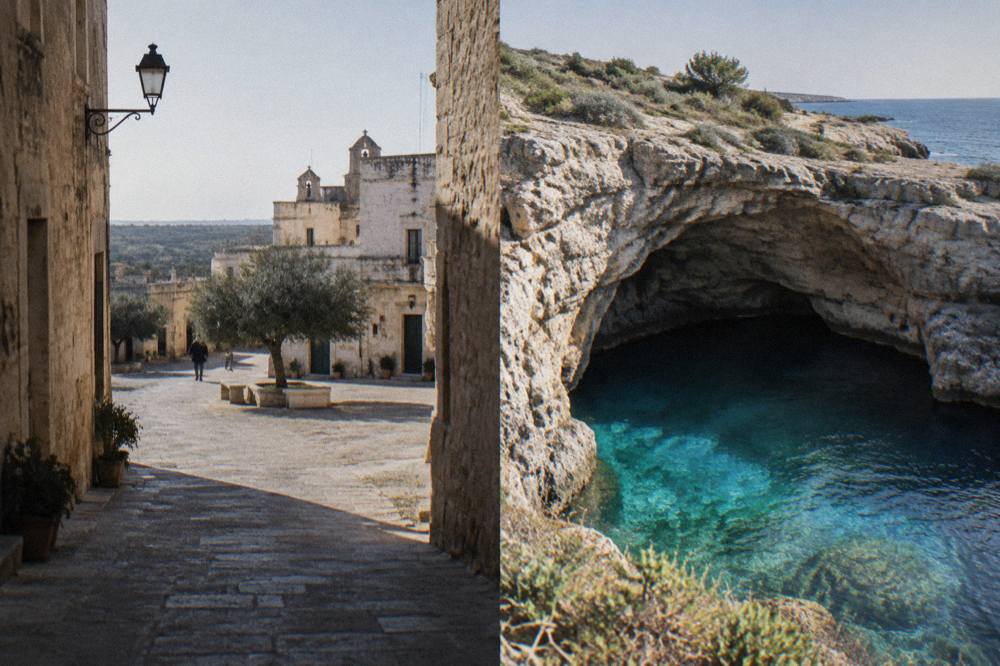
The inland villages need honesty attached. Specchia and Presicce both appear on Italy's borghi più belli lists, and both sit close enough to Lecce for an afternoon loop, but this desk holds no verified opening hours, tickets or sights for either, so the planning advice is simply to treat them as wandering villages and confirm locally what is open. The same caution applies to the Cave di Bauxite near Otranto: the red-quarry lake is real and photographed constantly, but no sourced access rules or tickets exist in the material behind this page, so check before driving out.
| Hidden gem near Lecce | Drive from Piazza Sant'Oronzo | Entry |
|---|---|---|
| Galatina, Basilica di Santa Caterina | 25.7 km, about 29 min | Free |
| Nardo | 28.6 km, about 29 min | Village streets, no ticket |
| Porto Cesareo | 28.0 km, about 34 min | Public beach access |
| Castro, Grotta Zinzulusa | 47.4 km, about 48 min | 7 euro, 4 euro under 11 |
| San Cataldo beach | 12.9 km, about 14 min | Free access, lidos charged |
How To Reach The Hidden Gems From Lecce Without A Car
The FSE regional trains reach Galatina directly in 38 to 55 minutes from about 3 euro, Otranto with a change at Maglie in about 1 hour 33 to over 2 hours, and Gallipoli directly in about 1 hour 18 to 1 hour 43 from about 5 euro, while the summer Salento in Bus network ran 13 June to 13 September 2026 with fares from 1.10 to 5 euro on lines to the coast. Those figures come from the FSE tariff pages and the operator's summer service notices, and they matter because the hidden-gem question and the no-car question usually arrive together. The day trips from Lecce without a car question has its own fuller answer, but the short version for this list is that Galatina, Castro via the Maglie change, and the Ionian coast via Gallipoli are all rail or bus workable.
The seasonal caveat is real. Salento in Bus is a summer-only network; the 2026 season ran 13 June to 13 September with the peak from 1 July to 31 August, and the 2027 dates had not been announced. Off season, FSE trains carry the load, with 2026 single fares scaling from 1.30 euro for 1 to 10 km up to 5.40 euro for 51 to 60 km, and Castro's cave is reachable on the Lecce to Otranto axis with a bus or taxi leg for which this desk holds no fare. For the coast straight east, SGM city bus line 32 runs from the City Terminal to San Cataldo in about 20 minutes, the one beach route that behaves like a city service.
Guided day tours cover the rest. The Ostuni, Alberobello and Polignano a Mare day trip from Lecce strings the northern towns together, and Check availability on the operator's live listing for current dates. A Salento-focused alternative loops Otranto, Castro, Leuca and Gallipoli by van, which puts Grotta Zinzulusa's coastline into a single day without any train changes. Boat trips from Leuca and snorkel cruises from San Foca cover the sea side of the same peninsula.
When To Hunt For Hidden Gems Around Lecce
The quietest sourced window is May or late September, when the ERA5 reanalysis 1991-2020 normals show mean highs of 23.4 C in May and 26.4 C in September against 31.3 C in August, with rainfall at 39.9 mm in May and 58.9 mm in September against 93.7 mm in November, the wettest month. The summer buses stop in mid September, so the trade-off is simple: swim-warm sea against empty villages. Sea temperature runs about 22.5 C in June, 25 to 27 C at the August peak, and 20 to 22 C in October, per seatemperature.org figures for the region.
| Month | Mean high | Mean low | Rain |
|---|---|---|---|
| May | 23.4 C | 14.7 C | 39.9 mm |
| July | 31.0 C | 21.7 C | 15.3 mm |
| August | 31.3 C | 22.2 C | 18.1 mm |
| September | 26.4 C | 19.0 C | 58.9 mm |
| November | 17.3 C | 11.7 C | 93.7 mm |
Beach costs follow the same curve. The 2026 lido surveys put an umbrella and two beds at San Cataldo at 15 to 25 euro in June rising to 33 to 35 euro in August, with the Torre dell'Orso and San Foca stretches reaching 50 to 60 euro at the peak and the Ionian lidos running higher. Free beach access exists year-round along the same coasts, so the hidden-gem budget version is simply the untended sand beside the lido. For the crowds question the is Lecce very touristy page has the fuller picture; the short version is that these villages stay quiet precisely because the summer pressure pools in a handful of famous spots.
Common Questions About Hidden Gems In Puglia
What Are Some Hidden Gems In Puglia?
The Parco archeologico di Rudiae and the Museo Ebraico in Lecce, Grotta Zinzulusa at Castro, the frescoed Basilica di Santa Caterina in Galatina, the borghi of Specchia and Presicce, and the Pescoluse dunes on the Ionian coast. All are within about 90 minutes of Lecce by car or regional train.
Are the hidden gems near Lecce reachable by train?
Yes for Galatina, about 38 to 55 minutes direct on FSE trains from about 3 euro, for Gallipoli in about 1 hour 18 to 1 hour 43, and for Otranto with a change at Maglie. Castro and the inland villages need a bus or car leg, and the summer Salento in Bus network, which ran 13 June to 13 September in 2026, covered several coastal lines.
What does Grotta Zinzulusa cost?
The cave's own site states 7 euro full and 4 euro reduced for visitors under 11, with guided visits year-round and hours that shift by season.
Is Pescoluse worth the drive from Lecce?
The beach at Pescoluse, Marina di Salve, carries a 2026 Blue Flag, with fine sand, shallow turquoise water and dunes, plus free sections alongside paid lidos. It sits on the Ionian coast beyond Gallipoli, so the drive is over an hour from Lecce.
Are there hidden gems inside Lecce Old Town itself?
Yes: the Museo Ebraico at 5 euro with a guided tour, Rudiae's weekend archaeology park at 5 euro, the MuDAS cloister at 1 euro and Palazzo Vernazza at 10 euro, plus the free Castello courtyard and the amphitheatre seen from Piazza Sant'Oronzo.
The honest frame for the whole list: Puglia's hidden gems are hidden by logistics, not by secrecy, and every place above has a published route, ticket or season. Pick two, check the hours against the official pages the day before, and the region's quiet half opens up on the same train lines that serve its famous half.